


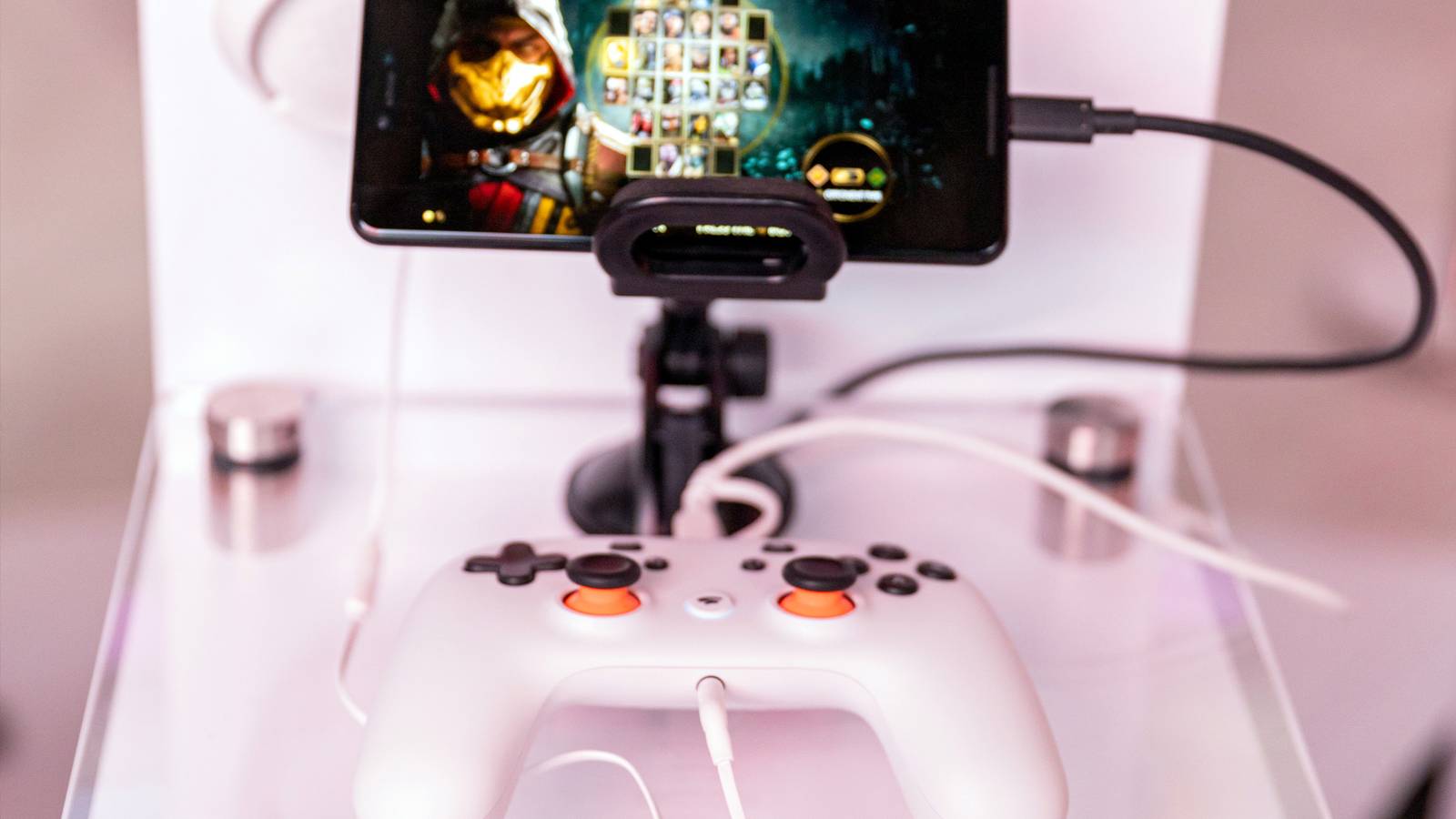
When I think about Google Stadia, my mind instantly wants to scream “New Coke! But in crummy cloud form.” And sure, it’s true that the Big G’s game streaming platform wasn’t a success. In retrospect, though, it’s not quite the complete laughing stock most folks view it as today, years after it was shuttered in early 2023. Particularly in an era where cloud streaming has now transformed the way I use my Steam Deck.
While the business model was overly muddled from a commercial standpoint and downright confusing from a consumer one, Google Stadia was a hopeful product that bet on the future of cloud gaming. Now that we’re far removed from its launch in 2019, such is the state of game streaming services today, I actually think Stadia would have a fighting chance in the current market. Let me explain myself.
Why did Google Stadia fail?
Tech issues and pricing models doomed the cloud service
Looking back, Stadia’s befuddling subscription model had about as much chance of succeeding as trying to sell turkeys on the idea that Thanksgiving should be a month-long celebration. If you wanted to pick up the Founder’s Edition bundle, which included a Stadia Controller, a Chromecast Ultra, plus a three-month Stadia Pro subscription, you’d need to pony up $130. After that first sub had expired, you’d then be moved to a $10 tier. As I said, “befuddling.”
Yet despite its contrived service structure, there’s no denying Google was trying to envisage a gaming future that wasn’t heavily dependent on expensive native hardware. As a nerdy dude who owns a PC that costs more than my car, my battered bank balance is all for cloud gaming in 2026 (especially when you consider the skyrocketing costs of GPUs, RAM, and storage).
Back in 2019, though, the online infrastructure of the day just hadn’t come far enough to make Google Stadia an enticing prospect to lure gamers away from their consoles or PCs. Skip back to when Stadia launched, and average broadband speeds in the US were around 55Mbps. Fast-forward seven years, and that figure now hovers around 300Mbps. Simply put, average broadband speeds weren’t up to the task of servicing the Stadia Pro tier’s top-end 4K/60 FPS ambitions.
The networking restrictions when Google Stadia first launched meant input lag and poor image quality (largely caused by compression artifacts) were always going to be a hard sell for gamers dining on the delights of an Xbox One X or an RTX 2080 Ti-powered rig. That’s a real shame, because not only did Stadia have its qualities, you could argue it helped pave the way for the cloud gaming options we have today.
Google Stadia was subpar but forward-thinking
A polarizing yet pioneering piece of kit

It’s probably a step too far to say that Google Stadia set the table for the likes of Xbox Cloud Gaming or Nvidia GeForce Now, but it was still a service that looked to innovate.
After pressing a button on the Stadia Controller, which paired to your device of choice (be it a phone, tablet, or smart TV) via Wi-Fi, you’d then connect to a Linux-based, remote Google server. Your game would then be rendered, before the subsequent video stream was pinged back to you in just a few short milliseconds. Sounds great on paper, right?
Sadly, the execution left a lot to be desired. Despite the notion that connecting straight to Google servers rather than dealing with a local device as a latency-inflating go-between would reduce lag, in-game experiences could still feel crappy. Even on the fastest Wi-Fi or Ethernet connections of the day, input lag was often rife when playing Stadia games.
Add in the fact that not even AMD GPUs in Google’s data centers could prevent heavily compressed video feeds, and Stadia streaming was often a jittery, ugly mess. It also didn’t help that not only did you need to fork out for a dedicated Stadia subscription, in most instances, you’d also often have to physically own the game you were trying to stream.
That’s a whole lot of negatives, no doubt. Yet I still think Google deserves some credit. It threw the dice on a cloud-based future for gaming, and although the gamble didn’t pay off for Stadia, we’re now in a place where its subsequent competitors offer a valid alternative to enjoying games on native hardware.
Could cloud gaming ever completely replace consoles?
Making the case for an entirely cloud-based future
For my money, GeForce Now Ultimate is the cloud nine version of streaming Stadia could only dream about. I won’t lie, cloud gaming got so good so fast that I regret buying my gaming laptop. If you subscribe to the most expensive model of Nvidia’s service, you can enjoy your favorite PC games at 4K/120 FPS (provided you have a Wi-Fi connection that hits minimum download speeds of 45Mbps).
GeForce Now Ultimate has completely won me over in recent times. By utilizing data centers that essentially give you access to a remote RTX 5080 GPU, you can stream Cyberpunk 2077 in 4K at console-beating frame rates with ray tracing cranked to the max if your broadband is up to the task.
Thanks to quality video encoding that helps to reduce artifacting, image quality is generally very good — even if it’s not quite comparable to playing a title natively on an RTX 5080 PC through a 4K display. Input lag also shames what Google Stadia was capable of serving up, and latency-reducing Nvidia Reflex tech can take credit for such responsive results. If you want my two cents, GeForce Now is in a class of its own in the game streaming space. Especially compared to a Steam feature you should avoid at all costs.
I’m not saying Nvidia’s cloud service wouldn’t be as accomplished as it is now if Google’s take on cloud gaming hadn’t stumbled way before the finish line. Still, I do think Team Green benefited from seeing the pitfalls the California colossus made with Stadia, before subsequently sidestepping them.
Google Stadia proved there was a future for cloud gaming
If Stadia had launched years later, when broadband speeds were significantly faster and Google’s data centers could rely on more powerful remote GPUs, it may well still be going. In reality, a fumbled subscription model and streaming hiccups meant its shelf life was never going to last long. The Big G probably lost a bundle on Stadia, so the company certainly can’t claim the last laugh with Stadia. Still, it was a forward-thinking device that potentially helped knock down doors so that the current iteration of GeForce Now could be so impressive today.

- Operating System
-
Windows 11
- CPU
-
AMD Ryzen AI 9 HX 370
- GPU
-
Nvidia GeForce RTX 5080
- RAM
-
32 GB DDR5
- Storage
-
2TB SSD
- Display (Size, Resolution)
-
14-inchs, 2.8K
The Asus ROG Zephyrus G14 (2025) is a high-end Windows 11 gaming laptop with an Nvidia GeForce RTX 5080, an AMD Ryzen AI 9 HX 370 CPU and 32 GB of DDR5 RAM. This 14-inch laptop has a 2.8K OLED screen with a max refresh rate of 120 Hz.