




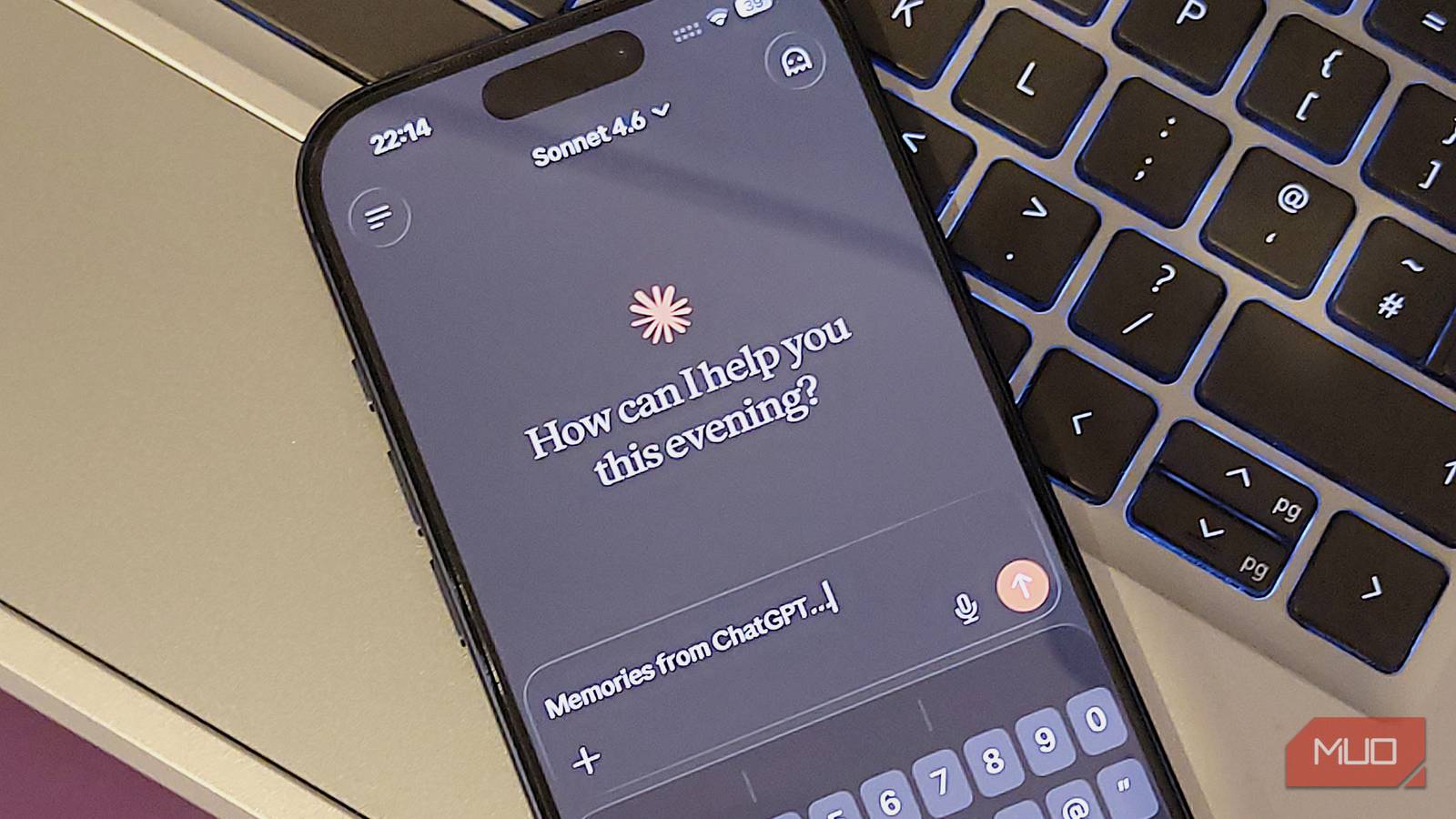
I’d be lying if I said I was a Claude user from the beginning. For the longest time, ChatGPT was my go-to AI tool for everything, whether it was automating tasks, brainstorming ideas, or simply handling work I didn’t want to spend hours doing myself. So much so that I have also used ChatGPT on CarPlay, and I absolutely love it. But after using the paid versions of both Claude and ChatGPT extensively, I’ve slowly come to one conclusion: ChatGPT’s decline feels very real.
And no, I’m not saying that for the sake of it — I tested both tools across my everyday workflow, and more often than not, Claude came out ahead. ChatGPT still has the bigger name and more features, but it no longer feels as consistent or as reliable as it once did. The responses often feel repetitive, less thoughtful, and sometimes oddly disconnected from the actual context. Meanwhile, Claude simply feels more natural, focused, and better at understanding nuance.
Before moving on to the tasks, I think it’s worth knowing that I gave Claude and ChatGPT the exact same prompts at the exact same time. And when I say the same, I mean literally copy-pasted word for word. I didn’t tweak a sentence, replace a word, or even accidentally change the phrasing because I wanted the comparison to be as fair and accurate as possible.
6 Reasons I Use Claude Instead of ChatGPT
ChatGPT is great; don’t get me wrong. But Claude is so much better.
The simplest task became the biggest giveaway
Basic tasks shouldn’t expose such a big gap

One of the first things I use AI for almost every single day is also one of the simplest: generating headline ideas. In the kind of work I do, the headline matters more than people realize. It’s the first thing readers see, and honestly, many decide whether they want to click on a story based on that one line alone. So finding the right headline is part of my daily routine. To test both tools fairly, I gave ChatGPT and Claude the exact same prompts every day just to see which direction each one would take. And surprisingly, Claude almost always felt one step ahead.
Its headline suggestions had personality. They felt sharper, more whimsical, more attention-grabbing — like actual headlines written to make someone stop scrolling. ChatGPT, meanwhile, kept giving me the same safe, predictable suggestions that started to sound repetitive after a while. They weren’t necessarily bad, but they rarely felt exciting enough to stand out.
What really made me notice the difference is how basic this task actually is. We’re not talking about complex coding or deep research here. This is headline generation — one of the simplest things an AI tool should absolutely excel at. And when one tool consistently struggles to make even simple writing feel fresh, it naturally makes you question how much you can rely on it for bigger tasks.
The moment trust became part of the workflow
Not everything is wrong, but not everything feels right either

The second, and most critical, part of my daily workflow is research and brainstorming. With AI tools becoming faster and more intelligent, I don’t want to waste time manually digging through long articles or connecting scattered points myself. I still care about doing proper research, but I simply don’t always have the time to read everything in full. So, especially for time-sensitive topics, I usually just feed the material into an AI tool and ask it to break things down, simplify it, and help me make sense of it quickly. But this is also where things started feeling a bit off with ChatGPT.
There have been moments where the summaries didn’t just miss nuance — they were actually incorrect. Even when it cited sources, the way it interpreted or represented the information didn’t always match what was originally there. That gap made it harder to rely on it for anything, even something slightly important.
I’m not saying Claude is perfect or something I blindly trust either. AI, at the end of the day, can get things wrong — that’s just reality. But in my experience, Claude felt far more stable and consistent when brainstorming and breaking down information. The output feels cleaner, more aligned with the source material, and I’ve rarely come across anything that felt clearly off. Of course, I still double-check everything. But over time, one thing has become clear in my workflow — one tool helps me think better, while the other occasionally makes me pause and verify twice as much.

Why Claude feels more human to talk to than ChatGPT, and what that actually means
It’s not magic. Here’s what’s actually going on.
The automation test I didn’t have to think twice about
This is the real meaning of hands-free
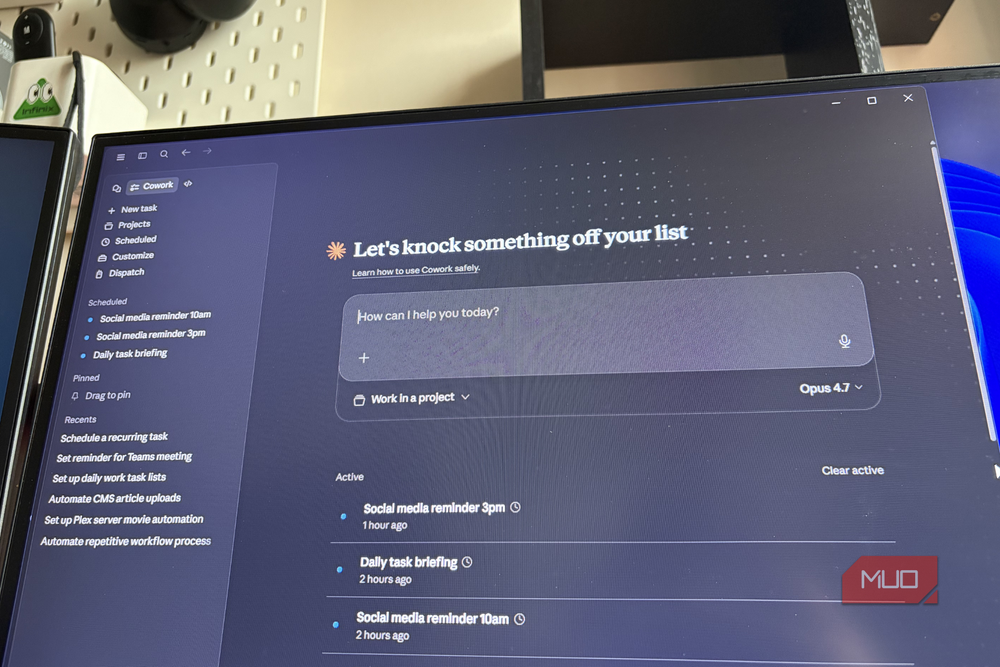
Automation is probably the part of AI I enjoy the most — the idea that all the repetitive, boring work can just disappear into the background while I focus on things that actually matter. I’ve tried both ChatGPT and Claude quite extensively for this, and for me, the difference became pretty clear over time. Claude just fits into this role better.
From setting up simple reminders in chats, cleaning up duplicate files, organizing and renaming folders, to handling small but annoying workflow tasks — Claude has been able to take on a lot of it. What stood out most is that it doesn’t blindly execute tasks. It actually pauses, asks questions when something is unclear, and tries to figure things out step by step. Yes, it makes mistakes sometimes — that’s unavoidable. But the way it recovers and keeps going makes the whole experience feel more reliable.
ChatGPT can technically do similar things, but the experience isn’t the same for me. I often find myself repeating instructions or re-explaining the same intent in slightly different ways just to get the result I want. And at that point, the whole idea of automation starts losing its meaning. At the end of the day, I don’t want an AI that needs constant steering. I want one that just gets the job done. And in my experience, Claude is much closer to that kind of assistant.

- Developer
-
Anthropic PBC
- Price model
-
Free, subscription available
Claude is an advanced artificial intelligence assistant developed by Anthropic. Built on Constitutional AI principles, it excels at complex reasoning, sophisticated writing, and professional-grade coding assistance.
The tool that slowly took the lead for me
After putting both Claude and ChatGPT through the same daily workflow, the difference was consistent. ChatGPT still feels powerful and familiar, but in actual use, it often needs more steering, corrections, and second-guessing than I expected from a tool I rely on this heavily. Claude, meanwhile, didn’t try to do more — it just felt more aligned with how I think and work. It stayed closer to the context, handled nuance better, and reduced the back-and-forth needed to get things right. It wasn’t about perfection on either side; it was about effort.