





10. Bremont Terra Nova 38
| Bremont Terra Nova 38 specs | |
|---|---|
| Movement | Modified calibre 11 ½” BE-36AL |
| Power reserve | 38 hours |
| Water resistance | 100 metres |
| Diameter | 38 mm |
| Weight | 62g (excluding strap) |
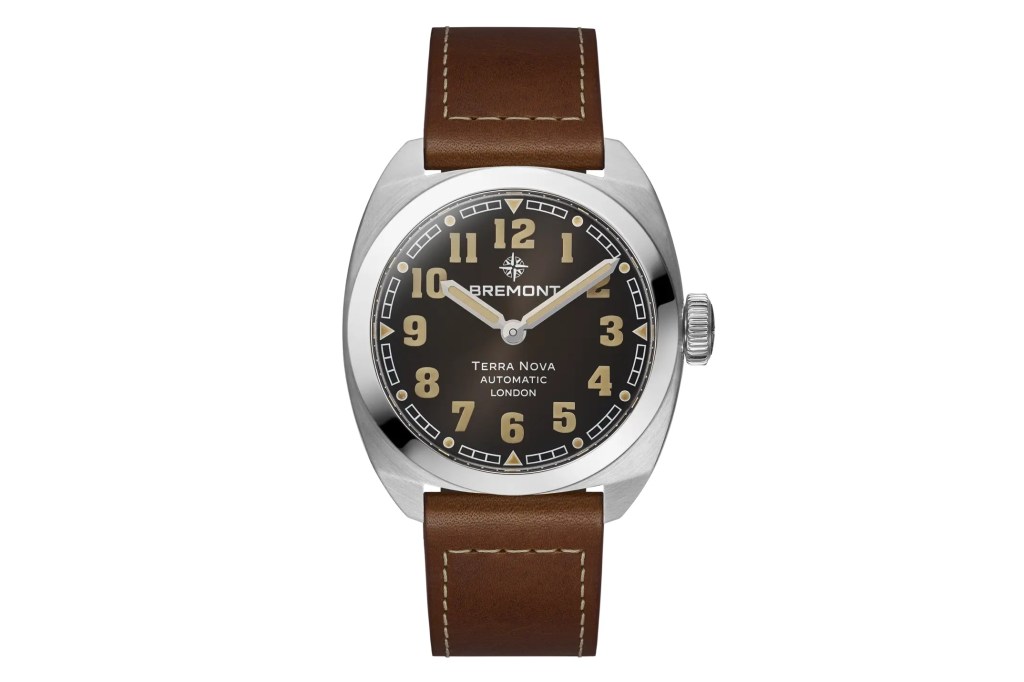
British watchmaker Bremont has close ties to the military, so it’s no surprise that the company produces some great field watches, too. This 38 mm watch is part of the Terra Nova collection of field watches inspired by military pocket watches from the early 20th century.
As any field watch should, this one majors on simplicity, legibility and durability. We’re particularly keen on the cushion-shaped stainless steel case, which helps it stand apart from other field watches, and how the oversized Arabic numerals really pop from the black dial. These numerals are also smothered in SuperLumi-Nova, making them glow green at night, along with the hands and hour markers around the circumference of the dial.
Turn the watch around, and the steel case back features an engraving of a charted map of the world. Inside, the watch is powered by a modified calibre BE-36AL movement with 26 jewels and 38 hours of power reserve. There’s a domed, scratch-resistant sapphire crystal on the front, water resistance is 100 metres, and the watch comes on a brown leather strap with cream stitching.
Why we chose it
Bremont’s military links give this watch real credibility, but it’s the distinctive cushion case and strong legibility that sealed its place in this guide. It feels robust, purposeful, and slightly different from the usual field watch designs. A great fit for someone who wants a British-made field watch with genuine presence on the wrist.
What to consider when buying a field watch
Buying a field watch isn’t just about looks – it’s about choosing a watch that stays true to its military roots while still working for modern life. Personal taste always plays a role, but the best field watches tend to follow a set of principles shaped by decades of real-world use. Here’s what to look for.
Durability and toughness
Field watches were originally built for soldiers, so toughness comes first. A good one should feel solid without being bulky, typically with a stainless steel case that can handle knocks, scrapes, and daily wear. Sapphire crystal is worth prioritising, as it resists scratches far better than mineral glass or acrylic.
Case size matters too. Traditionally, field watches sit between 36 mm and 39 mm, which keeps them compact and less prone to catching on gear or clothing. Some modern versions go larger, but smaller sizes remain truer to the original purpose and tend to wear more comfortably over long periods.
Bronze is also worth considering. It’s durable, and over time, it develops a natural patina that gives each watch its own character.
Legibility and readability
Clarity is non-negotiable. Field watches are designed to be read instantly, often in difficult conditions, so simplicity is key. Look for high contrast between the dial and numerals, clean layouts, and minimal clutter.
Most traditional models show only the time, with large Arabic numerals and strong lume on the hands and markers. This ensures you can read the watch at a glance, whether you’re outdoors, travelling, or just checking the time in low light.
Matte dials, usually in black, green, or off-white, help reduce glare and improve visibility.
Water resistance and everyday practicality
While field watches aren’t dive watches, they still need to handle the elements. A minimum of 50 m water resistance is enough for daily wear, including rain and hand washing, while 100 m gives extra peace of mind if you’re frequently outdoors.
More importantly, a field watch should feel like something you don’t have to worry about. It’s meant to be worn regularly, not kept for special occasions.
Movement type: mechanical vs quartz vs solar
Field watches come with four main movement types, each with its own appeal.
Hand-wound mechanical field watches are the most traditional. They’re rugged, reliable, dependable, and connect directly to the mechanical heritage of military watches. However, they require you to wind the watch every few days manually.
Automatic movements are becoming more popular. They’re powered by your wrist motion, so they will keep working as long as you wear them.
Quartz movements, powered by a battery, are more affordable and extremely accurate. They’re also more shock-resistant, which makes them ideal if reliability and low maintenance are your priority.
Solar movements offer the best of both worlds. Powered by light, they eliminate battery changes almost entirely, making them perfect if you want something you can just wear and forget about.
Comfort and fit
Comfort is one of the defining strengths of a field watch. Their smaller size, slim profile, and lighter weight make them easy to wear all day, every day.
Strap choice plays a big role here. Canvas and fabric straps stay true to military heritage and are especially comfortable in warmer weather. Leather adds a more refined feel while still keeping the rugged character intact. Steel bracelets are sometimes available, but they can make the watch feel less authentic and slightly heavier on the wrist.
Heritage and authenticity
Part of the appeal of a field watch is its history. Many of the best examples come from brands with genuine military connections, which adds depth and credibility to the design. That said, heritage isn’t everything – what matters most is that the watch stays true to the core principles of durability, clarity, and reliability.
Frequently asked questions
The best field watch for hiking is one that’s lightweight, durable, and easy to read at a glance. You’ll want to look for features like a scratch-resistant crystal, a high-contrast dial, and at least 50–100 m water resistance. These watches are built to handle rough outdoor conditions while staying comfortable on the wrist for long periods, which makes them ideal for trekking and camping. Some field watches, such as the Hamilton Khaki Field Expedition and Seiko Aplinist, have compass bezels for navigation.
Not really… It’s true that field watches were originally designed specifically for military use, prioritising durability, reliability, and instant readability in harsh environments. Many models still follow military design principles. But you’re more likely to find a tough digital watch, such as a G-Shock, on the battlefield these days.
Absolutely – field watches are excellent everyday watches thanks to their tough construction, comfortable size, and clear, simple displays. They’re designed to handle daily wear, from office life to outdoor activities, without feeling fragile or overly precious.
Recent updates
- 24th February: Updates to the structure of the article.