



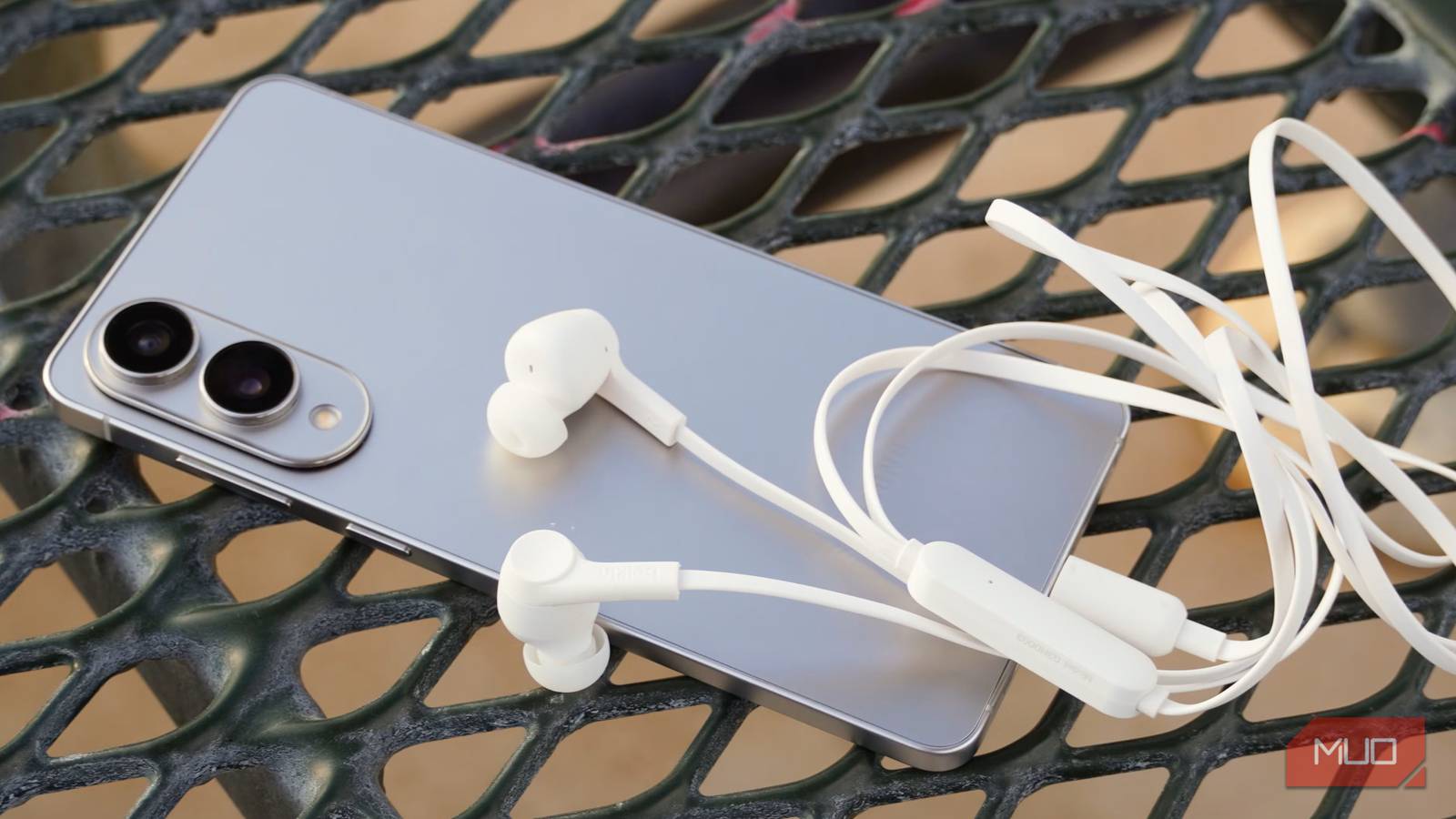
I’ve been using wireless headphones ever since smartphone manufacturers collectively decided the headphone jack needed to disappear. So yes, it’s been a few years, and during that time I went through plenty of pairs, from budget earbuds to more premium options.
I like the convenience of wireless audio, but when my Galaxy Buds2 recently died, I decided to stop the cycle. Instead of buying yet another expensive pair, I picked up a pair of wired earphones for roughly one-tenth of the price. Sure, part of the reason was the recent “wired headphones are cool again” trend, but trust me, that novelty alone isn’t why I stuck with them.
Don’t bother with Spotify Lossless unless you do this first
It’s not as simple as just firing up Spotify Lossless making your music magically better.
Better sound at less price
Who says no?
Honestly, my biggest reason for switching back to wired earphones was the price itself. I just wasn’t keen on spending $150 on another pair of wireless earbuds. Yes, cheaper options exist, but most of them sit in this awkward middle ground where nothing really feels good enough. I’ve tried plenty of budget TWS over the years, and they were all disappointing in one way or another, whether it was weak sound, connection issues, poor battery life, or annoying touch controls.
With wired headphones, a lot of these problems simply don’t exist, and they’re ridiculously cheap compared to most wireless earbuds. The pair I ended up buying cost me just $10. But even if you go for Apple’s EarPods or even those IEMs, prices rarely cross the $50 mark.
More importantly, cheaper doesn’t mean they sound worse. In fact, it’s quite the opposite in this case. I can confidently say my $10 wired earphones sound just as good as my $150 Galaxy Buds2 and my $249 AirPods Pro 2. While they don’t have fancy extras like noise cancellation, transparency mode, or wear detection, I personally don’t miss them as much. For me, the price-to-performance of wired headphones makes up for all of it.
Wired headphones eliminate so many frustrations
Wireless earbuds normalized way too many annoyances

Better sound at a low price is great, but an underrated benefit of wired headphones is reliability. They either work or they don’t. There’s no weird in-between state where they refuse to connect or start lagging out of nowhere. You just plug them in, and they work.
The biggest relief for me, though, is not having to charge yet another device. Wireless earbuds are undeniably convenient, but they also come with this endless charging cycle. You have to charge the earbuds, then the case, and the battery also loses capacity over time.
Wireless earbuds are also incredibly easy to misplace because of how tiny they are. Anyone who has used a pair knows the pain of watching one earbud vanish and never be seen again. With wired earphones, the cable almost acts like a safety rope. It not only makes them easier to spot but also much harder to lose.
Of course, all these benefits are quite obvious, but the thing is, I only truly appreciated them after I actually started using wired earphones again. I guess that’s what years of using wireless earbuds does to you. You just accept all those tiny inconveniences as normal until you switch to something simpler and realize it never had to be that complicated in the first place.
That in-line microphone is still unbeatable
Old-school call quality still wins

Wireless earbuds love advertising all kinds of fancy microphone technology. AI voice isolation, noise reduction algorithms, wind suppression, and whatnot. And yet, somehow, most wireless earbuds still make you sound terrible on phone calls. But that tiny microphone attached to a cheap wired earphone cable somehow sounds miles better.
A big reason is simply placement. Since the microphone sits much closer to your mouth, your voice naturally comes through clearer. There’s no aggressive audio processing or Bluetooth interference causing random glitches during calls.
In fact, I see a lot of my favorite content creators still relying on wired earphone microphones for quick recordings, which just tells you how good they are. Also, physical buttons are something I’ll happily take over touch controls any day.
USB-C is convenient, but 3.5mm works with everything
When I decided to buy wired earphones again, I had two options: USB-C or the good old 3.5mm headphone jack. I went with the latter because it just works with almost everything. Besides phones and laptops, I can use the 3.5mm earphones on my monitor, PS5 controller, smart speakers, USB microphone, and basically every other audio device I come across. Heck, even today, most in-flight entertainment systems still have a 3.5mm headphone jack.
Of course, my S26 sadly doesn’t have a headphone jack, like most phones. But honestly, that’s not a problem because I have the USB-C to 3.5mm adapter. And even with that adapter attached, it still feels less annoying than dealing with wireless earbuds.