





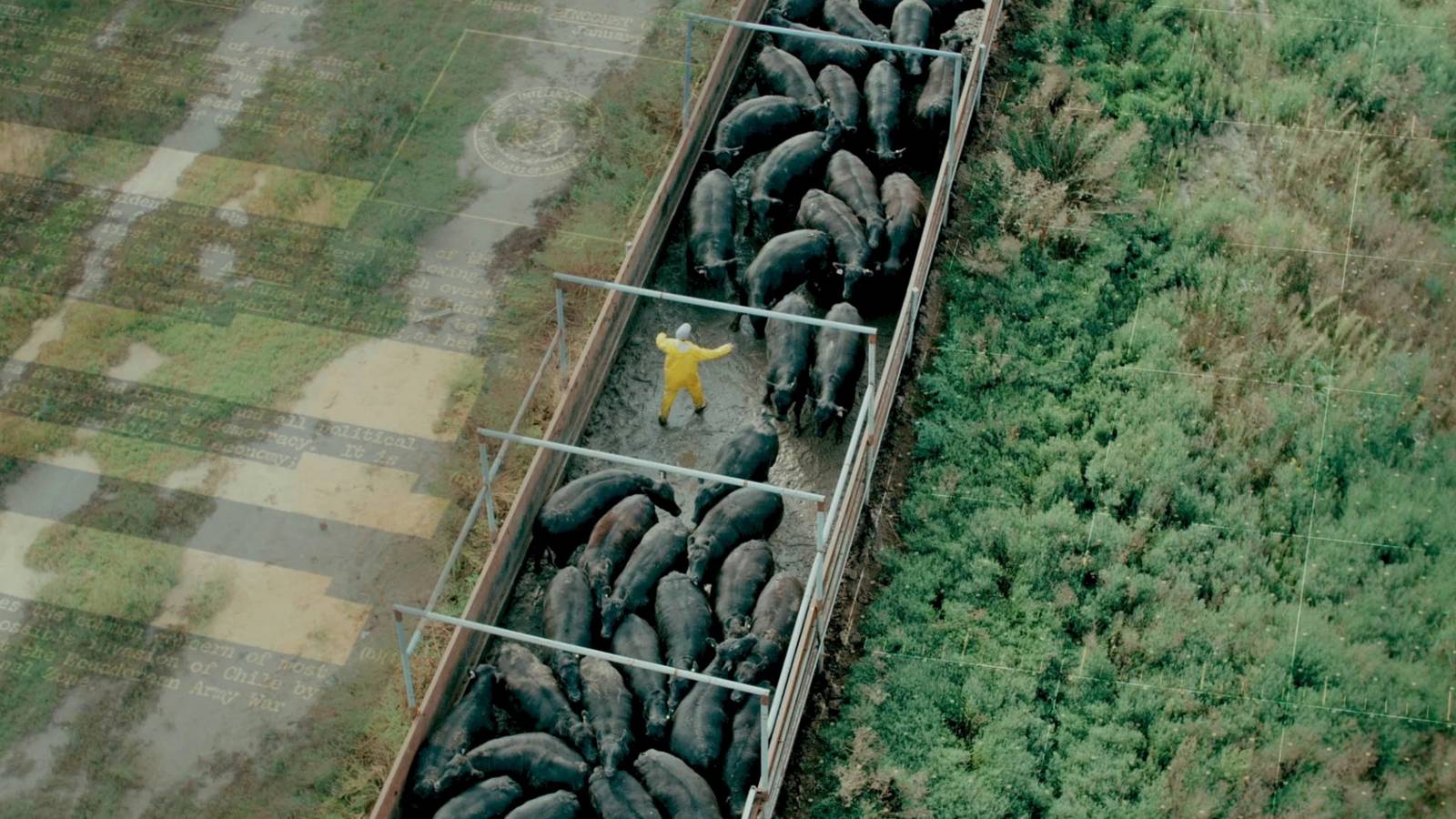
The Grab begins with a former U.S. intelligence officer calmly telling us that, in his opinion, World War III isn’t an unlikely prospect.
That’s a pretty intense way to begin a documentary, but The Grab makes a good case that it’s warranted. This 2022 film comes from Gabriela Cowperthwaite, best known for her 2013 doc Blackfish, about the consequences of keeping orca whales in captivity. The Grab swings quite a bit wider, arguing that various countries around the world are quietly preparing for massive resource collapses that could define what life is like for the next few decades on the planet Earth.
But I’m sure it’ll be fine.
The Grab is a gripping story about resource control
Which is more relevant to our lives than we think
Our guide through this maze is Nate Halverson, an investigative journalist who started down this road by looking into the 2014 sale of Smithfield Foods to a Chinese company for $4.7 billion. That’s a little disquieting on its own, since it means a Chinese company is effectively in charge of a quarter of the U.S. pork supply, but it gets weirder when you learn that the Chinese government had a lot of influence on the deal. What does the Chinese government want with so many American pigs?
Halverson and his team keep digging, with Cowperthwaite recording all the while; The Grab took six years to make. We learn about a Saudi company buying up land in Arizona and pumping out the groundwater to the point where the locals find their wells drying up. Private military companies force people off land in Africa, and Russia imports American cowboys to work agricultural jobs on land that, until recently, was too cold to support agriculture.
How is all this related? The Grab argues that various countries around the world are making land grabs (hey, that’s where the title comes from) so they can secure food and water supplies. And they’re doing this because they think that, over time, climate change and its consequences — extreme weather, drought, etc — will make it so that food and water become the most precious resources on the planet. So in the future, if these bets are correct, wars could be fought not over oil but over food.
How The Grab grabs you
Back to basics
This idea isn’t immediately intuitive, because most people in developed countries probably take for granted that access to food and water are a given. But if you’re like me and watch a lot of post-apocalyptic movies, you may have a very melodramatic idea of what this could look like. Will we brave the dusty expanses in search of precious water like Mad Max? Will resource scarcity force us to eat each other like in Soylent Green?
The Grab doesn’t have to resort to using those kinds of examples. It’s built like a standard documentary, with extensive use of archival footage, talking head interviews, and infographics. There isn’t a need to reference Mad Max when the subject material is interesting enough to carry the story on its own. The job of The Grab is to synthesize all the information and draw linkages in a way that’s digestible for the viewer, and it does a great job. The movie shares some producers with the Oscar-winning film Spotlight, and fans of that movie will enjoy how deeply The Grab digs into the journalistic rigor required to investigate and break big stories like this.
There are some exciting spikes of drama, too, like when the journalists and filmmakers are detailed at an airport in Zambia. The case is made that the lot of them are being tracked by people that would rather they not look too deeply into these matters, which adds to the sense that the movie is exposing something tremendously important.
The Grab isn’t about a conspiracy
It’s much worse than that
That said, a sense that these issues are important isn’t the same thing as evidence, and the predictions the film makes need not actually come to pass. The Grab presents a compelling thesis, but reality has a way of defying even the most carefully considered prognoses. The movie does what any good documentary does: build its case, present what facts it can find, and let viewers come to their own conclusions about it.
The Grab just presents its case very well, telling us not just about what’s happening but looking into the historical roots. For instance, it argues that the Chinese government’s interest in U.S. pig farming may be rooted in the Great Chinese Famine of the 1950s and 60s, and that China is taking measures to make sure nothing like that ever happens again…even if it means it may happen elsewhere.
In the abstract, The Grab sounds like a movie about a conspiracy, but that’s not what it’s arguing. The film shows us various different countries all seeing the same issues presented by climate change and all coming to the same conclusions about what to do about them. It’s not a conspiracy because there’s no one person or group in charge, which could make it even harder to stop.
Watch The Grab, on Hulu or for free
How a random piece of internet lore became the most exciting horror movie of 2026
Backrooms has taken a very strange route to the big screen, and it’s one that will likely become more common in the future.
The Grab may be a tricky watch for some people. There’s no clear villain or even a clear hero to root for, which is inevitable since the problem it’s examining is so diffuse and nebulous. There may be too many interviews with experts and too few with ordinary people who are experiencing these crises up close and personal, and it should probably go without saying that the tone of the film is quite grim. This is not a documentary that’s going to make you laugh; you won’t even get black humor here.
But that doesn’t make The Grab any less trenchant and compelling. The movie won the Best Documentary award at the San Diego International Film Festival in 2023, but it deserves more plaudits than that.
The Grab is available to watch on Hulu, and can also be watched in its entirety on YouTube, at least for the moment. The more people who see it, the better.

- Release Date
-
September 8, 2022
- Runtime
-
104 minutes
- Director
-
Gabriela Cowperthwaite
- Producers
-
Dan Cogan, Amanda Pike, Anil Godhwani, Lauren Ubben, Nathan Halverson, Lessing Stern, Jan McAdoo, Debbie McLeod, Doree Friedman, Christa Scharfenberg, David Fialkow, Nancy Stephens, Patty Quillin, Nina Sing Fialkow, Nicole Rocklin, Maiken Baird, Jenny Raskin, Geralyn White Dreyfous, Blye Pagon Faust, Rick Rosenthal