


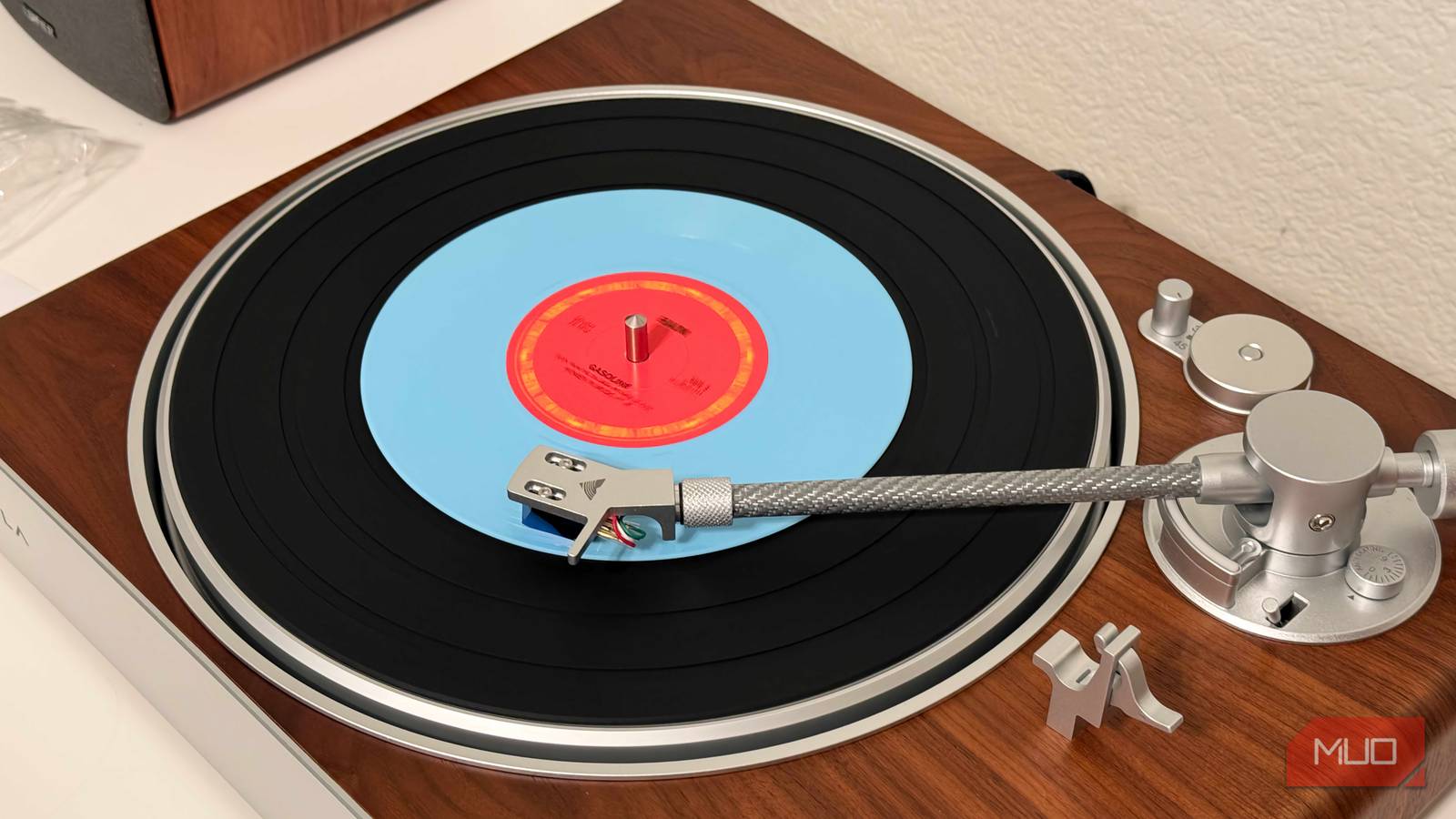
We’re more than a decade into the music streaming era, and if we’ve learned anything thus far, it’s that physical media and streaming services can coexist. Spotify, Apple Music, and YouTube Music combine to account for roughly a billion users, and there’s no underestimating the behemoth that is the streaming industry. However, physical media isn’t exactly hurting either. Vinyl is the most popular physical media format, with 46.8 million EPs and LPs sold last year in the U.S. The medium started making its comeback in the late 2000s after virtually dying in the heyday of CDs, and it’s officially surging in this decade.
I’ve been collecting vinyl for a decade, and have around 350 records in my collection. Yes, I do actually play them, using one of the three Audio Technica turntables in my household — I have an AT-SB727 (Sound Burger), an AT-LP60, and the AT-LPW40WN as the centerpiece of my main listening station. I’m thrilled with the state of my collection today. If streaming services ceased to exist tomorrow, I’d still be able to listen to all my favorite tunes on a durable physical media format for decades without skipping a beat.
The problem is that it took me a while to get here, and I spent a fortune doing it. The median value of my collection is around $10,000, according to Discogs, and that gives you an idea of the investment I’ve made over the years. It’s only becoming more expensive, with record labels chasing sales records, encouraging variant collecting, and preying on “FOMO” with limited-edition versions. It’s hardly the feel-good comeback story it was a decade ago.
Record players are seeing a resurgence in Gen-Z, but not for the reason you might think
They’re starting to understand the value for reasons that might surprise you
Why vinyl records are making a comeback
Music streaming isn’t as fun, high-quality, affordable, or sustainable

Everyone has their own reasons for preferring physical media over digital ownership or streaming. I probably won’t hit all the reasons why vinyl is making a resurgence, but I can key you into some of the reasons I’ve invested thousands in the format. The big one is intentionality. When I start spinning a record, it’s my main focus. I play albums from start to finish and have album artwork to look at or lyric booklets to flip through while I listen. It’s too easy to skip around or get distracted while streaming music on your phone.
I’m still an Apple Music subscriber, because I view physical media as an addition to the convenience of everyday streaming rather than a complete replacement. I’ve found that my record listening habits have changed the way I stream music, too. Instead of focusing on playlists or singles, I now listen to complete albums on streaming services more than I ever did before.
It’s also about preservation. Music disappears from streaming services all too often, and artists have gotten too comfortable changing songs after their release. Maybe it’s because they don’t like how something sounds, or want to remove a phrase that hasn’t aged well. Either way, I don’t want to be at the whim of an artist or platform that could alter or remove my favorite songs at any time. When I buy a record, no one can change it after the fact. It’s mine.
Speaking of preservation, vinyl records are more durable than they get credit for. They can last over a century if properly cared for, outlasting CDs or cassettes, which commonly suffer from issues like disc rot or film deterioration.
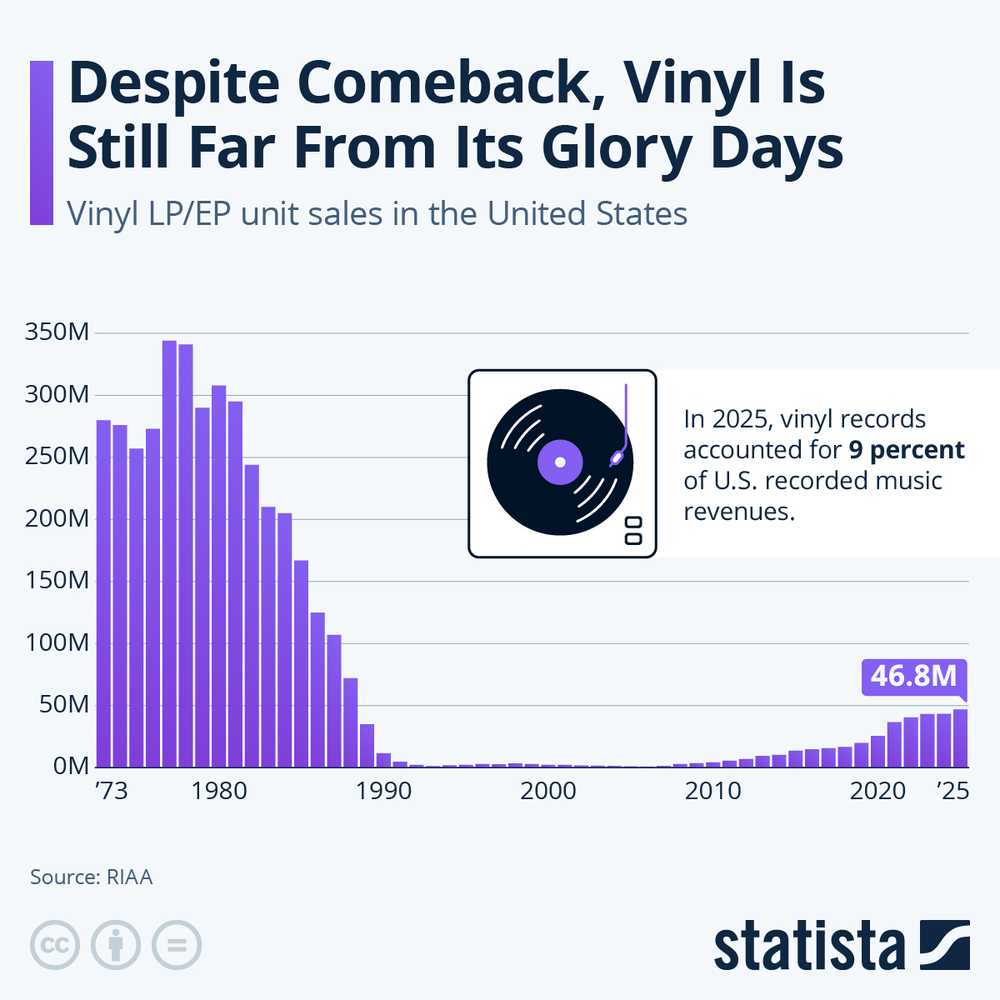
The Recording Industry Association of America (RIAA) keeps tabs on vinyl sales, and it reports that vinyl sales grew 9.3% in the U.S. last year. It’s a billion-dollar industry, and that’s just stateside. Of course, as Statista shows, the vinyl industry is a shell of its former self. That’s to be expected. It’s impressive that vinyl records are selling as well as they are in 2026.
This was the moment I knew it was time to buy CDs again — and drop Spotify
I hit play on an artist I loved, and Spotify gave me everything except their music.
Greedy labels are pricing out vinyl’s true fans
More variants, limited releases, premium packaging, and rising prices
Fast-forward to 2026, and vinyl is a booming industry. It isn’t all sunshine and roses, though. Prices are rising across the board, with standard LPs and double LPs frequently costing between $30 and $50. A deluxe album, limited-edition pressing, or exclusive variant could run you even more than that. The way to score great deals while building a vinyl collection is to buy used, but it’s still astonishing just how expensive the record collecting hobby has become, especially when buying new.
The explanations for the shift aren’t hard to find. It starts with the cost of making a vinyl record. There is more demand for vinyl record pressing than there is available capacity. The industry is limited by the number of pressing plants and their maximum output, and when demand exceeds supply, prices go up. The materials used to make a vinyl record, including PVC, nickel, and cardboard, all cost more than they did a decade ago. With higher material costs and strained production capacity, it’s no wonder a vinyl record costs more than it used to.
Labels have also become greedy. It’s no secret that music streaming royalties pay little to artists and labels. Vinyl records are a completely different story, as profit margins can reach between 40% and 60% with this format. A record label makes more from a single vinyl record sale than it does from someone streaming an album a few thousand times.

There are also the charting advantages. Charts like Billboard use “album units” to quantify performance, and you need 1,000 paid streams to get one album-equivalent unit. Buy a record, and that’s one album unit in itself. Selling physical vinyl records is an incredibly attractive way for artists and labels to boost an album’s performance on the charts.
So, record labels and artists have multiple incentives to sell you vinyl records at higher prices, and more of them. The higher the sticker price, the more profit earned. The more record variants available for purchase, the more album units earned. That’s why we see expensive deluxe or limited-edition pressings paired with up to tens of different vinyl variants. Artists and labels benefit twice — once with the sale, and again on the charts.
Another stat worth keeping in mind: half of vinyl buyers don’t own a record player, according to 2023 figures from Luminate. When a large portion of the record industry’s market isn’t buying for the music, everything else becomes more important. Money is invested into packaging, aesthetics, and extras, and this all affects the final price you pay at the record store. That’s why we see albums sold as gatefold double LPs for $50 when a single LP for $30 would’ve been just fine.
The easiest way to rip lossless audio from CDs isn’t software — it’s this accessory
Forget iTunes or Exact Audio Copy, this portable CD player handles ripping by itself.
Don’t let the industry tell you what to buy
Keep the vinyl spirit alive by buying what YOU actually want

Record collecting is still one of my favorite hobbies, and I don’t intend to stop buying records anytime soon. I do hope to change my purchasing habits, however. I’ve made all the mistakes you can make when shopping for vinyl. I’ve succumbed to the fear of missing out (FOMO) and collected multiple variants of the same album. I’ve bought limited-edition records based on the pressing count instead of the music. Name a mistake, and I’m sure I’ve made it.
What I’ve learned throughout a decade of collecting is that your collection is what you make it. You don’t need to buy $50 splatters or $100 box sets if that’s not in your budget. You can have just as good of a time collecting by purchasing from used bins or rummaging through estate sales. One of my favorite finds ever was a $4 greatest hits album I discovered in a random antique store, and it was more satisfying than any expensive or limited-edition record in my catalog.
That said, don’t be afraid to have a little fun. If there’s an album on Record Store Day you genuinely want, go out and buy it. This year, I camped out for Record Store Day 2026, and my best scores weren’t on any music columnist’s rankings — they were the EPs and LPs I genuinely listened to or had a personal connection to. Buying the music you want and building a collection that’s truly your own is exactly what the vinyl revival is about, not collecting the deluxe albums or variants labels want to sell you.
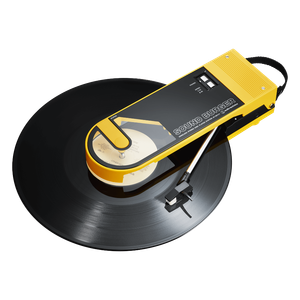
- Brand
-
Audio Technica
- Built-in Pre-amp
-
Yes
- Drive
-
Belt-driven
- Bluetooth
-
Yes
- Speeds (RPM)
-
33-1/3 and 45 RPM
- Connections
-
USB-C (charge only), 3.5mm, wireless
The Audio Technica Sound Burger is a brilliant revival of a nostalgic classic portable turntable. It uses a belt-driven system with high-quality sound reproduction capable of playing at 33-1/3 and 45 RPM speeds. The portable turntable has a wired 3.5mm output and Bluetooth support.