


There was a multi-year stretch in the mid-2010s when true crime docuseries took over pop culture, from Serial to Making a Murderer to The Jinx. Those series are still remembered today, but others got lost in the shuffle, even if they were as good or better.
The Keepers is one such series. This seven-episode Netflix show explores a mysterious death, which is pretty much standard for this genre, but expands its scope to look at the corrupt systems that let it happen (and maybe covered it up), and finds something almost inspiring in the perseverance of the dogged citizens who wouldn’t let the matter go.
The Keepers pulls you in with an unsolved mystery
And it keeps you there with its sensitivity and patience
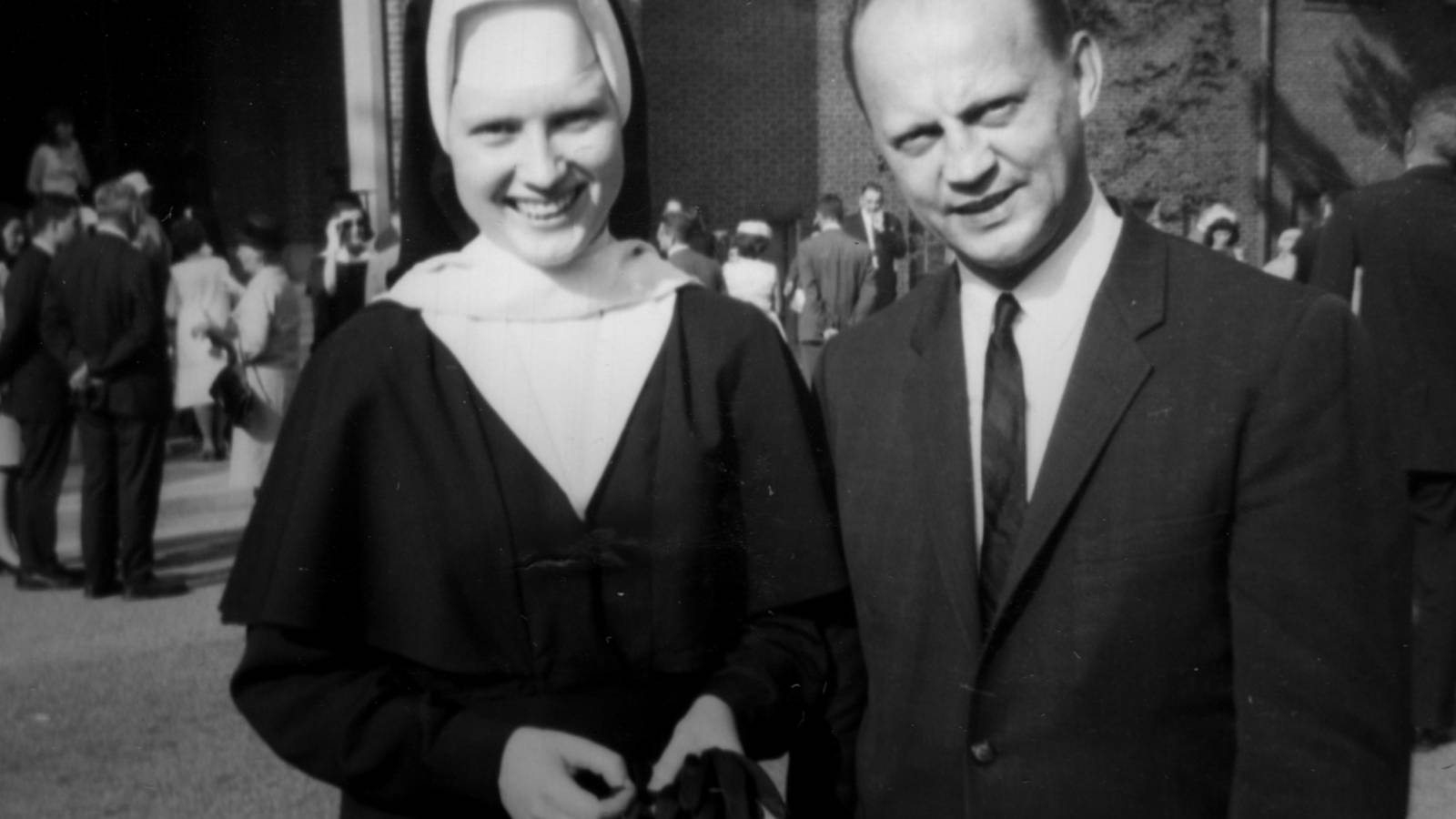
Released in 2017, the story of The Keepers starts in the late 1960s, when 26-year-old Catherine Cesnik was a nun teaching English and drama at the all-girls Archbishop Keough High School in Baltimore, Maryland. Cernik, who is remembered by her students and lively and empathetic, disappeared on November 9, 1969. A few days later, 20-year-old Joyce Malecki, who resembled Catherine, disappeared. Her body was found on by hunters on November 13. Catherine’s body wasn’t found until January 3, 1970 in a remote landfill. The cause of death was found to be blunt force trauma to the head.
So we have here the makings of a chilling murder investigation, and The Keepers lays out the crime in all the chilling detail you’d expect a good true crime docuseries to have. Cesnik’s car was found with mud on the brake pedal and a twig near the steering wheel, parked illegally across the street from her apartment building. She had gone out that day to run errands but never arrived home. The mystery pulls you in.
But once you’re there, The Keepers is interested in more than just luridly obsessing over a cold case. It focuses on the people affected by Cernik’s murder, including Gemma Hoskins and Abbie Schaub, two former students of hers who dedicated chunks of their lives to investigating the case. They gather stories from other people of the time and put together a theory of what happened.
Since the true crime heyday in the 2010s, citizen investigators have sometimes been accused of inserting themselves into criminal dramas as a way to produce content or to get thrills; it’s part of why the true crime wave eventually crested and receded. But people like Hoskins and Schaub were actually affected by the murder they’re investigating. They came by their curiosity honestly, and it’s inspiring to watch them keep at it in the face of a system that would rather they drop the matter.
The Keepers pulls the curtain back on a system of abuse
The murder is just the starting point
After establishing its true crime credentials, The Keepers gets into why Catherine Cesnik may have been killed, and it’s a story that will sound sadly familiar to anyone who follows the news. According to heartbreaking testimonials from former students like Jean Hargadon Wehner, who’s one of the more compelling voice in the series, a priest who worked at Keough named A. Joseph Maskell was sexually abusing students at this time. Although it was never proven (Maskell died in 2001), the implication is that Cesnik knew of the abuse and was planning to speak out about it, and that Maskell and his network of collaborators killed her to silence her.
Even if the murders in this series remain technically unsolved, The Keepers makes an irrefutable case that abuse was going on at the Keough for years without anybody in power doing anything to stop it, or even helping to cover it up. The Boston Globe published its seismic report on sexual abuse within the Catholic Church in 2002, which changed the way a lot of people look at the institution. But before that, the idea that there could have been this sort of widespread criminality within the Church was largely seen as far-fetched.
Watching The Keepers is an interesting trip through historical trends. In the ’60s (and well beyond), the students would have had to endure at a time when few people would believe them if they reported some of the things they saw and experienced. In the early ’90s, a pair of students filed a lawsuit against the priest, the school, and the archdiocese, but it was thrown out in part because of institutional mistrust of repressed memories, which was then a very big talking point. Also, the statute of limitations on the case had run; the documentary ends with a hopeful story about efforts in Maryland to get it extended, so at the very least, things like this won’t happen again.
The testimonies of the students who remember their abuse can be difficult to take, but The Keepers never feels leering or sensationalized. It lets these people tell their stories without flinching, showing them respect of a kind you don’t always find in the true crime genre. That’s why The Keepers holds up so well; it’s about a sordid murder, but it’s true sympathy is with the victims and the people trying to change things for the better.
The Keepers isn’t a perfect docuseries
Nearly perfect will have to do
No series is perfect, and there are a couple of drawbacks to The Keepers worth noting. It’s not immune from the melodrama that sometimes plagues the genre; it gives us shots of a dead deer and vultures landing on a snowy tree, in case we haven’t picked up that this is a moody story. It over-relies slightly on musical cues, there are a couple of cliffhangers that don’t seem worthy of the seriousness of the subject, and re-enactments are always a dicey proposition.
Finally, some viewers might find The Keepers a bit too sprawling and long for their liking, but I think it makes great use of the time it’s given. It’s not a small story and needs to spread out a bit.
6 detective shows sharper, stranger, and better than Sherlock
Sherlock is a fun show, but these detective series make it look like it’s playing cops and robbers.
True Crime All The Time
There’s really no end to true crime documentaries out there to watch, on Netflix and elsewhere, but few are made with the sensitivity of The Keepers, which was directed by Ryan White. It’s an uncommonly moving docuseries that will stay with you long after you watch it.
And if you’ve had your fill of true crime docuseries, there are always true crime dramas to check out.