


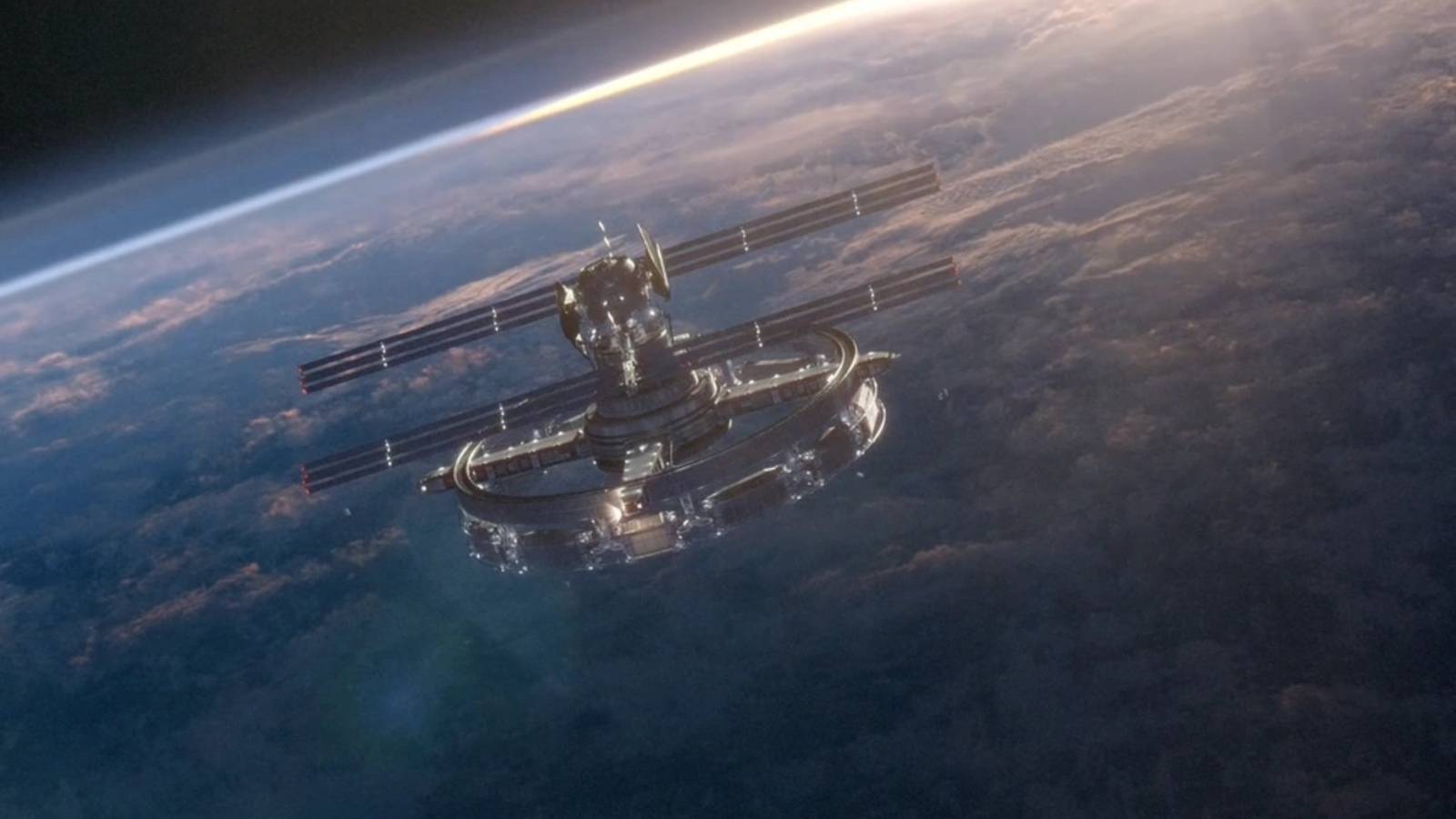
We’re going through a golden age of sci-fi on TV, especially on Apple TV+, which feels like it’s run by the biggest dorks on the planet. They can’t stop debuting new sci-fi shows over there. Severance and Pluribus have both become cult hits, the bizarre sci-fi detective show Sugar is about to come back for its second season, and there are even sci-fi comedies like Murderbot turning heads.
But none of them would be here if wasn’t for Apple’s first big sci-fi swing, a sprawling epic with feet planted firmly in the earth and eyes on the stars. The best sci-fi series of the past decade is For All Mankind.
One small step for sci-fi, one giant leap for TV
For All Mankind has generational ambitions
For All Mankind begins in the late 1960s, where we meet a NASA astronaut named Ed Baldwin (Joel Kinnaman). The space race between the U.S. and the Soviet Union is on, but the show quickly introduces a twist: the Soviets land the first man on the Moon before the Americans do.
Everything that happens in For All Mankind spins out from that small historical change. Over the next five seasons, the show builds out an alternate history where the space race never stopped, where the U.S. and the Soviet Union (and eventually other countries) compete with each other to reach further and further beyond Earth’s orbit. Each season jumps ahead by around 10 years, allowing us to see how else history has warped in the meanwhile. By the 1980s (Season 2), we have bases on the Moon. We set foot on Mars in the ’90s (Season 3). By the 2010s (Season 5), we’re so established on Mars that the people who live there are demanding independence. Pursuing space travel like this has knock-on effects for society at large. Technology develops much faster in the world of For All Mankind than it did in our world; for example, we have Facetime-like video calls much earlier.
The longer For All Mankind continues, the more impressive this scale becomes. You start to realize how carefully all this must have been planned, and wonder at the small details that have been maintained over 50+ years of in-show time. That ambition is what I’d argue at least puts For All Mankind in the running for the title of best sci-fi show of the past decade, together with series like The Expanse.
It takes a village to populate a solar system
The characters of For All Mankind
The premise of For All Mankind is ground-breaking, but TV shows can’t get by on premise alone. They need to entertain people minute to minute, which is where the characters come in.
Because For All Mankind tells its story over a period of 50 years (and counting), characters come and go as the story demands. Only a few have appeared in all five seasons, and several undergo enormous evolutions. Take Kelly Baldwin (Cynthy Wu), who’s introduced in the second season as the adopted daughter of Ed and Karen Baldwin (Shantel VanSanten). She’s a young woman unsure of her place in the world. By the third season, she’s a scientist and astronaut working alongside her father. In the fifth season, she’s raising a teenaged son of her own (Sean Kaufman), and is now a prominent enough character to hold down the big emotional climax in the finale.
Because the show is willing to shed and add characters as needed, anyone can go at any time, which adds tension. The upcoming sixth season will be the show’s last, and I’m curious to see if anybody who was there at the start will make it all the way to the end. Anybody who starts the show fresh has a long, eventful journey ahead of them.
For All Mankind is hopeful about the future
That helps it get over a couple of rough patches
It must be said that the show’s most recent season, its fifth, was among its weaker outings, although it’s still good watching. The closer For All Mankind gets to our own time, the riskier the storytelling becomes, because the producers have to do it without the benefit of hindsight.
Still, the ambition of this show cannot be gainsaid. There is nothing like it on TV, and I have every expectation that the cast and crew are saving something special for the sixth and final season. And if you get through the whole thing and miss the retro vibes of the early years, Apple just started airing a spin-off show called Star City, which retells the events of the series from the Soviet perspective.
Finally, it’s worth noting that while a lot of sci-fi shows predict the doom of humanity, For All Mankind is optimistic about our future. Underneath all the conflict, it’s a show that believes in the power of science to make people’s lives better, which stands out at a time when people worry that scientific advances in fields like AI could put them out of work.
NASA says this movie has the most realistic rocket science
Woman in the Moon may not be the most accurate sci-fi movie ever made, but it was decades ahead of its time.
For All Mankind could only happen at Apple
For All Mankind has never been hugely popular show, but Apple has kept investing in it year after year and even greenlit a spin-off. Apple can afford to do whatever it wants, but a lot of other networks probably would have cancelled a show like For All Mankind long before now.
But again, that’s what makes Apple TV+ different as a streaming service: they invest in series whether or not they become breakout hits. And whoever is running the place clearly likes to invest in sci-fi. As long as they keep producing bold series like For All Mankind, it’s hard to complain about the strategy.

- Release Date
-
2019 – 2027-00-00
- Network
-
Apple TV
- Showrunner
-
Ronald D. Moore
-

-
Michael Dorman
Gordon ‘Gordo’ Stevens
-

-