


Netflix is lousy with great historical dramas, so many that some are bound to slip through the cracks. Such was the case with The Dig, a 2021 period piece with a timely message about the power of discovery in the face of immense hardship. Directed by Simon Stone and anchored by great performances from Carey Mulligan and Ralph “Voldemort” Fiennes, The Dig is a terrific, gentle watch that deserves more attention than it got.
The story of The Dig
Uncovering the secrets of the past in your own backyard
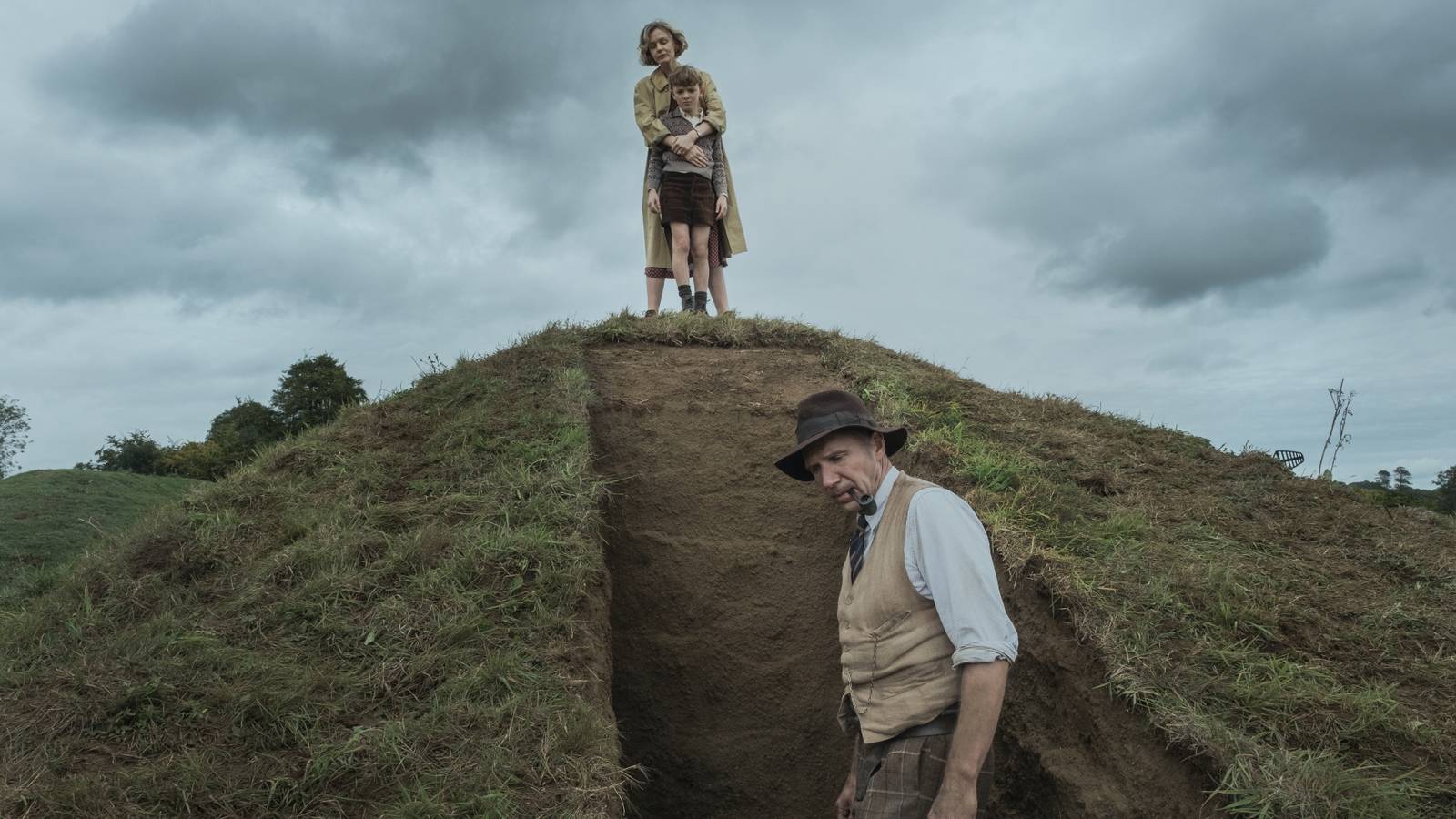
The Dig tells the (mostly) true story of the 1939 excavation of Sutton Hoo, a rural country estate in Suffolk, England. The estate is owned by Edith Pretty (Mulligan), a widow who lives there with her young son Robert (Archie Barnes, lately of House of the Dragon). Edith is curious about the mounds on the property, and hires archeologist Basil Brown (Fiennes) to excavate them.
Although they come from completely different worlds — Basil comes from a working class background while Edith is a patrician landowner — they share a thirst for knowledge that leads to an unlikely kinship. And they’re both beyond thrilled when Basil discovers a ship buried beneath one of the mounds of Edith’s estate, apparently a grave for someone of huge importance.
That brings attention from the likes of Charles Phillips (Ken Stott), a premiere archeologist who is one of several people who descend on Sutton Hoo once it becomes clear that it could be a site of historical significance. There’s a bit of David vs Goliath energy here as the elite archeologists look down on the self-taught Basil as they try and take credit for his find, even as Edith pushes back on his behalf. Everyone loves an underdog story, and it’s easy to root for Basil and Edith as the movie moves into its more contentious second half.
But in the end, Charles is allowed his humanity, and everyone is joined in the excitement of discovery. The Dig dramatizes events for the sake of entertainment, but never so much that it becomes unbelievable. It’s a respectful, well-paced, beautifully photographed movie that believes in the power of history.
Discovery in the face of obliteration
War and Past
The Dig distinguishes itself by paying attention to the minutia of an actual historical dig, showing us the process bit by bit. We’re a million miles from Indiana Jones, where archeology is one part investigation and two parts punching Nazis in the face. The Dig finds a lot of meaning in the methodology of archeology itself, which gives the movie a quiet power.
What action there is happens offscreen. The Dig takes place on the eve of World War II, and we can see hints of the coming conflict everywhere. People on the radio can talk about nothing but the conflict in mainland Europe, and Royal Air Force planes fly back and forth over the estate. Everyone knows that once war breaks out, the excavation on Sutton Hoo will have to stop as people tend to more pressing matters, which puts a ticking clock on the dig itself. There’s a sense of urgency to get it done well and get it done quickly.
The movie does a great job of convincing us that this dig matters, and that the discovery the team is making means something. Before the find at Sutton Hoo, it was thought that the people who lived in England during the Dark Ages — the period after the Roman Empire receded but before the Norman Conquest, depicted in other great Netflix period dramas like The Last Kingdom — were mostly living dreary, bleak existences, but the burial site proved that they had culture and art. The finds can still be seen today at the Ipswich Museum in Suffolk.
Dogging on The Dig
It’s not a perfect movie, but what is?
The Dig works as a drama and as a period piece, but if you’re a real stickler for historical accuracy, there are a few things that might put you off. For instance, the ages of a lot of the people involved are changed. Charles Phillips was in his late 30s at the time of the dig, but he’s played by the 60-something Ken Stott, probably so the movie would have an easier time depicting him as a stuffy interloper. Going the other way, Edith Pretty was in her 50s by the time of the dig, by is played by the 30-something Carey Mulligan (originally, she was going to be played by the older Nicole Kidman).
The movie alters reality for the sake of romance, which is probably the weakest element. There’s nothing in the record to suggest that the relationship between Edith and Basil was anything other than platonic, but The Dig includes enough yearning glances to raise an eyebrow. The movie also adds a subplot involving a romance between Peggy Piggott (Lily James), a real archeologist who actually worked on the dig, and Rory Lomax (Johnny Flynn), a fake young man most likely invented to add some spice to the proceedings. This subplot isn’t offensively bad, but the movie needn’t have bothered.

The Best Movies on Netflix You’ve Never Heard Of (but Should Watch Tonight)
I’m willing to bet you’ve not heard of these incredible films hiding away on Netflix.
Dig The Dig
The Dig has a little in common with period pieces like Downton Abbey, since both are understated British historical dramas made by master craftspeople. But The Dig never gets as soap operatic as Downton. Powered by excellent performances, it’s a poignant movie that can move you without needing to resort to battles and explosions.