




There’s an expectation that science fiction stories at least try to adhere to the rules of real-world science; after all, the word is right there in the name of the genre. But every sci-fi fan learns to let some things slide. Star Trek and Star Wars are both science fiction, but they both have methods of travel — the Warp Drive and the Hyperdrive — that allow characters to zip through the vast emptiness of space at speeds inconceivable by anyone in our world. In an old episode of Star Trek: The Original Series, the Enterprise is attacked with a sonic weapon despite the fact that sound cannot exist within the vacuum of space.
You just kind of roll with this stuff, but there are some sci-fi shows that try harder to keep the facts about outer space straight. Among those, none does it better than The Expanse.
The Expanse has a lot of science in its fiction
In space, no one can hear you scream until a realistic amount of time has elapsed
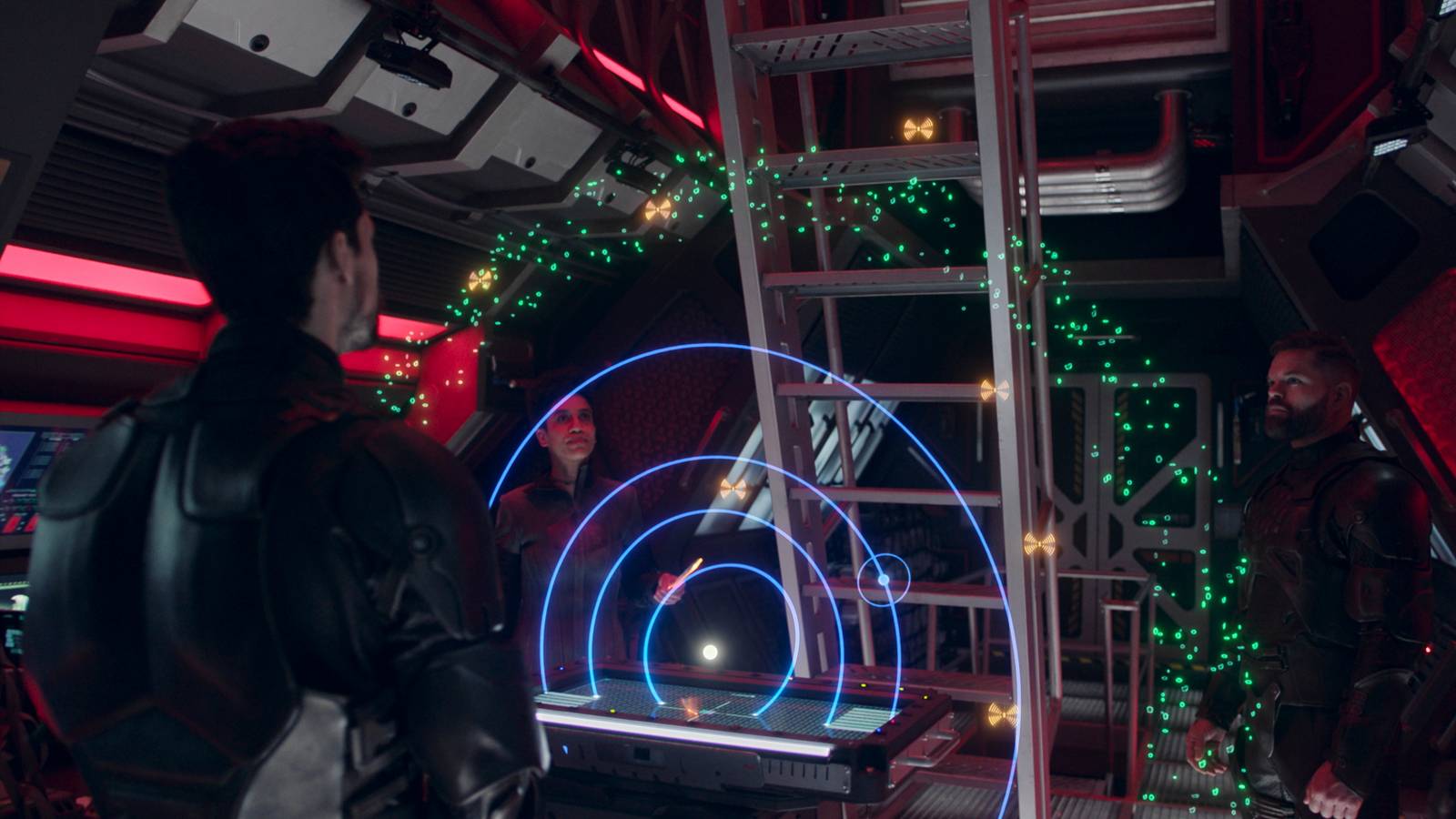
The Expanse is about a near future where humanity has spread out to occupy not just Earth but also Mars and the asteroid belt, and the three groups do not always coexist peacefully. We get a lot of conspiracies and Game of Thrones-esque power plays, which is all well and good, but a lot of shows do that. What makes The Expanse different is its commitment to depicting these conflicts in a scientifically realistic way.
A simple example is that there are delays in communication throughout space. To use Star Trek as a counter-example again, characters there can talk instantaneously, no matter how many billions of miles apart they are, which the show waves away by saying the communications are sent through a subspace dimension. And maybe they are, but that essentially amounts to “science magic.” In The Expanse, communication isn’t capable of traveling any faster than the fastest thing in the universe: light. So, communication between Earth and the moon is near-instant; messages sent between Earth and Mars take around 13 minutes, and it keeps going up from there.
This proves crucial to many plot points, as characters have to improvise while they wait for solid information to cross the void. And it’s just one example of The Expanse at work. Spaceships in The Expanse don’t just fly through space like they’re airplanes. They “flip and burn,” meaning they accelerate until about halfway through their journey, then turn around and point the thrusters toward their destination, since it takes a long time to decelerate in the frictionless vacuum of space. This also creates artificial gravity, something many sci-fi shows feature but few explain. And The Expanse pays attention to the harmful effects that moving through space this fast would do on the human body; characters must inject themselves with a cocktail of chemicals before enduring high G-force maneuvers.
We could keep going. For instance, when a character is on a rotating space station, he pours a drink only for it to curve in space before it hits the bottom of his glass, an example of the Coriolis Effect (see the video above). Why invent space aliens and subspace dimensions when real-world science is just as strange?
Not even The Expanse gets everything right
In space, someone will still hear you scream if the story demands it
Now that we’ve complimented The Expanse for its scientific literacy, it’s time to remember that it is, at the end of the day, a TV show. There are facts about space travel that it also fudges for dramatic effect. The most glaring example is the Epstein Drive, which spacecraft used to travel between Earth, Mars, and the asteroid belt in a matter of days or weeks, rather than the months it would take now.
The Epstein Drive is a highly efficient fusion engine that is at least based on real-world science. But there are oversights. For instance, fusion reactions of the kind that could propel spacecraft through space at these sorts of speeds would produce tons of radiation. The crew members would require a lot of protection, but some of the sleek ships we see on the show don’t seem to have nearly enough shielding. And yes, we could just assume that some scientific advancement we don’t know about has made this possible, but that’s the same as saying that the Millennium Falcon can jump to lightspeed because…it’s sci-fi, man.
A similar nit to pick involves the recycler, a machine that can break down anything — food waste, dirty dishes, human bodies — into base molecular components and then 3D print new items. It’s not that this isn’t conceivably possible, but it seems to leap further ahead in time than a lot of the other technology on the show, and sometimes feels like a convenient excuse for the characters not to have to deal with practical problems that would otherwise arise.
It’s okay to have a little fiction in the science sometimes
Accuracy vs. truth
But it’s too much to expect that even the most rigorously researched sci-fi stories will be 100% accurate. Fans will mostly be okay giving up some realism for the sake of drama.
It helps to have a good attitude about it. The Expanse is based on a series of books by authors Daniel Abraham and Ty Franck. There’s an interview at the end of their book Leviathan Wakes when they’re asked how the Epstein Drive works. “Very well,” they reply. “Efficiently.” Sometimes you’ve gotta adopt this mindset. And The Expanse does so much right, it’s easy to overlook a few gaps in logic.
These time-travel movies actually try and get the science right
Unravel the mysteries of time travel in these scientifically-grounded movies.
Runners-up
If you’re looking for another sci-fi show that takes pains to get the science right (if not note-perfect), you consider For All Mankind, an alternate history drama about a world where the space race between the United States and the Soviet Union never ended. It’s the best sci-fi drama no one is watching, although it struggles to come up with a fully plausible way for people to quickly travel through the gulf of space. Someday, some writer will crack that, or better yet, some scientist.
And of course, there are other sci-fi shows out there that aren’t concerned with exactly how the technology works and are happy to hand-wave away specifics in the name of entertainment, and those can be just as fun. Sometimes realism is overrated, but The Expanse deserves props for making it a priority.

- Release Date
-
2015 – 2022-00-00
- Network
-
SyFy, Prime Video
- Showrunner
-
Naren Shankar, Mark Fergus, Hawk Ostby
- Directors
-
Breck Eisner, Jeff Woolnough, David Grossman, Kenneth Fink, Rob Lieberman, Terry McDonough, Thor Freudenthal, Bill Johnson, David Petrarca, Jennifer Phang, Mikael Salomon, Sarah Harding, Marisol Adler, Anya Adams, Nick Gomez, Simon Cellan Jones
- Writers
-
Georgia Lee, Robin Veith, Hallie Lambert, Matthew Rasmussen, Ty Franck, Naren Shankar, Mark Fergus, Hawk Ostby, Daniel Abraham, Dan Nowak