




There is the rare piece of science fiction media that actually has a lot of science in it, but by and large, people know not to think too hard about the laws of physics when watching, say, Star Wars or Star Trek. Most sci-fi movies just set themselves in outer space and call it a day.
But it’s nice when you come across a movie or TV that goes the extra mile to keep things grounded, which is what you’ll get if you watch the little-seen Netflix movie Stowaway.
Everyone is in danger in Stowaway
The science of air
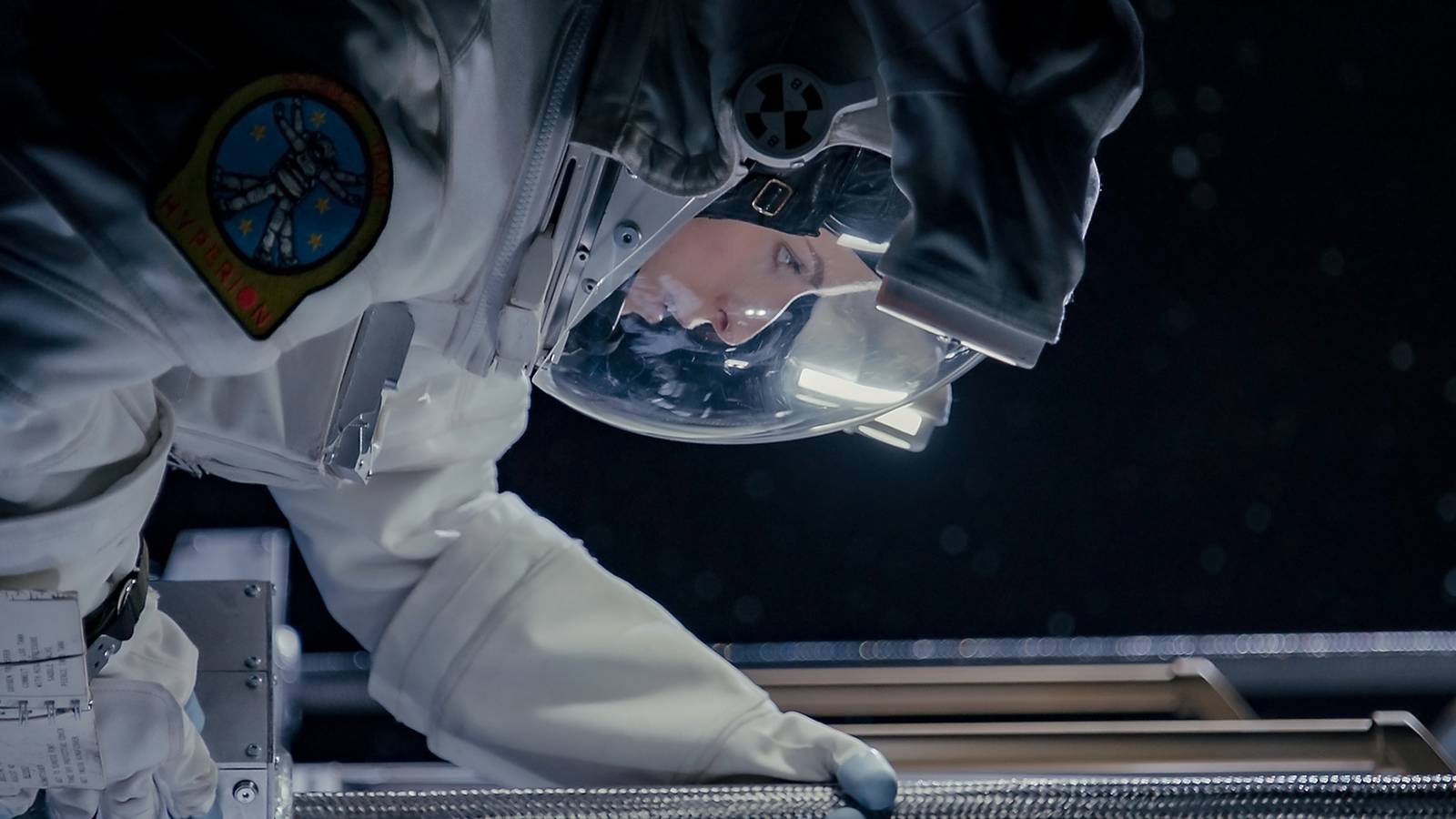
This 2021 film has a simple premise: a trio of astronauts — doctor Zoe Levenson (Anna Kendrick), biologist David Kim (Daniel Dae Kim), and commander Marina Barnett (Toni Collette) — are on a two-year voyage to Mars, where they’ll conduct scientific research as part of the early stages of getting the Red Planet ready for human habitation. But they haven’t been gone from Earth for a day before they encounter a problem: a launch support engineer named Michael Adams (Shamier Anderson) has accidentally stowed away, and is found unconscious between two modules. Worse, he was tangled up in a device that scrubs CO2 from the air. The device is now out of commission, meaning the air is becoming unbreathable.
Most of the movie is spent following this quartet as they try to solve these sorts of problems, and writers Joe Penna and Ryan Morrison keep things as grounded in real science as possible. First, the crew tries to use lithium hydroxide canisters to purify the air, something that lithium hydroxide is indeed used for on actual spacecraft, but the canisters can’t handle the extra load. Then David cultivates an algae experiment meant for Mars; algae produces over half of the oxygen on Earth, so obviously that could help. But the conditions aboard the spacecraft aren’t ideal for this experiment, and the extra oxygen produced isn’t enough to last everybody the full two years.
Stowaway also explains why the ship can’t just make a U-turn and go back to Earth; like most spaceships, this one has been very particularly designed to do the task it’s being used for, which is crossing the vacuum of space using mostly momentum and minimal propellant. In a show like The Expanse, which itself makes sure the science in the story is as accurate as possible, spaceships can perform a “flip and burn” maneuver to turn around in space, but our 21st century spacecrafts don’t have fuel to spare for something like that.
Also, the spacecraft in Stowaway is particularly badly suited for that kind of maneuver…
Stowaway gets artificial gravity right
And uses it to great dramatic effect
A lot of sci-fi movies and shows feature artificial gravity, probably because it would be too expensive to get all the ropes and pulleys needed to fly actors through the air. But a lot of them don’t bother to explain how it works, or when they do they kind of hand-wave it away. In Star Trek, spaceships have artificial gravity because they’re built with “gravity plates” that emit theoretical particles called gravitons, and that simulates gravity. And okay, who’s to say that that kind of thing couldn’t happen in the distant future? But it’s not based on anything our Earth scientists have ever observed.
Stowaway brings it down to Earth, so to speak. Like a lot of spaceships, the one in Stowaway is a multi-stage craft, meaning that one rocket helps them break the atmosphere, and then is discarded as the second travels with them the rest of the way to their destination. In this case, the second stage rocket is connected to the crew habitat by 450-meter-long cables and acts as a counterweight. Both crafts spin around each other. That creates centrifugal force which pushes the people in the habitat towards the outer hull, which they’ll understand to be the floor. For All Mankind, another TV show that takes science seriously, does something similar with the Polaris Orbital Hotel in season 3.
And this design choice doesn’t just explain why the characters aren’t floating around in space; it also gets integrated into the drama. One solution is to oxygen problem involves the crew members climbing the cables from the habitat to the second-stage rocket and retrieving liquid oxygen, so we get some pulse-pounding spacewalk scenes.
It’s one thing after another in Stowaway
Great, now the sun is causing problems
Once the characters are out in space, of course there’s another problem: the sun undergoes a coronal mass ejection, exposing anyone outside the craft to dangerous levels of radiation. This is the final obstacle to overcome, and again, it’s one based in real science.
As much effort as the writers put in to making sure Stowaway stays true to the laws of physics, a lot of it is actually concerned with the moral dilemmas at play, since for a lot of the runtime the crew has enough oxygen to last three of them the whole way to Mars…but not four. Whether they end up solving these problems, I’ll leave for you to find out.
These time-travel movies actually try and get the science right
Unravel the mysteries of time travel in these scientifically-grounded movies.
Drawbacks
While Stowaway got solid marks from critics, audience members had some concerns. We never learn exactly how Michael Adams ended up stowing away on the spaceship, which bothered some to no end. Also, although I won’t reveal the specifics here, many viewers didn’t like the ending, thinking it left too many questions hanging.
But if you’ve got two hours and a hankering for a sci-fi film that doesn’t spit in the face of plausibility, Stowaway could be your ticket.

- Release Date
-
June 24, 2021
- Runtime
-
117 minutes
- Director
-
Joe Penna
- Writers
-
Ryan Morrison
- Producers
-
Anna Kendrick, Nate Bolotin, Aram Tertzakian, Clay Pecorin, Jordan Yale Levine, Nick Spicer, Russell Geyser, Maximilian Leo, Jonas Katzenstein, Ulrich Schwarz, Philipp Stendebach, Russ Posternak, Jordan Beckerman, Jane Oster Sinisi, Maxime Cottray
-

Anna Kendrick
Zoe Levenson
-

Toni Collette
Marina Barnett
-

-

Shamier Anderson
Michael Adams