


For too long, I treated all music players pretty much the same. Whether I was listening through Spotify, Apple Music, or another desktop app like VLC, the software seemed like a minor detail compared to the headphones, speakers, or music format. I prioritized usability and familiarity, but I didn’t pay enough attention to what was happening behind the scenes.
All that changed when I started producing my own music, and it became essential to hear exactly what my music sounded like during the mixing and mastering process. While researching tools that audiophiles use, one name kept appearing in forums, reviews, and recommendations: Roon. While its subscription price initially made me skeptical, I quickly began to understand what I’d been missing.
After a decade of streaming, I finally tried Jellyfin — and I’m never going back
I’m tired of the give and take that comes with premiums streaming services, so I’m making Jellyfin my home for media streaming.
Roon transforms your music collection into a discovery platform
It connects your library with useful, contextual information
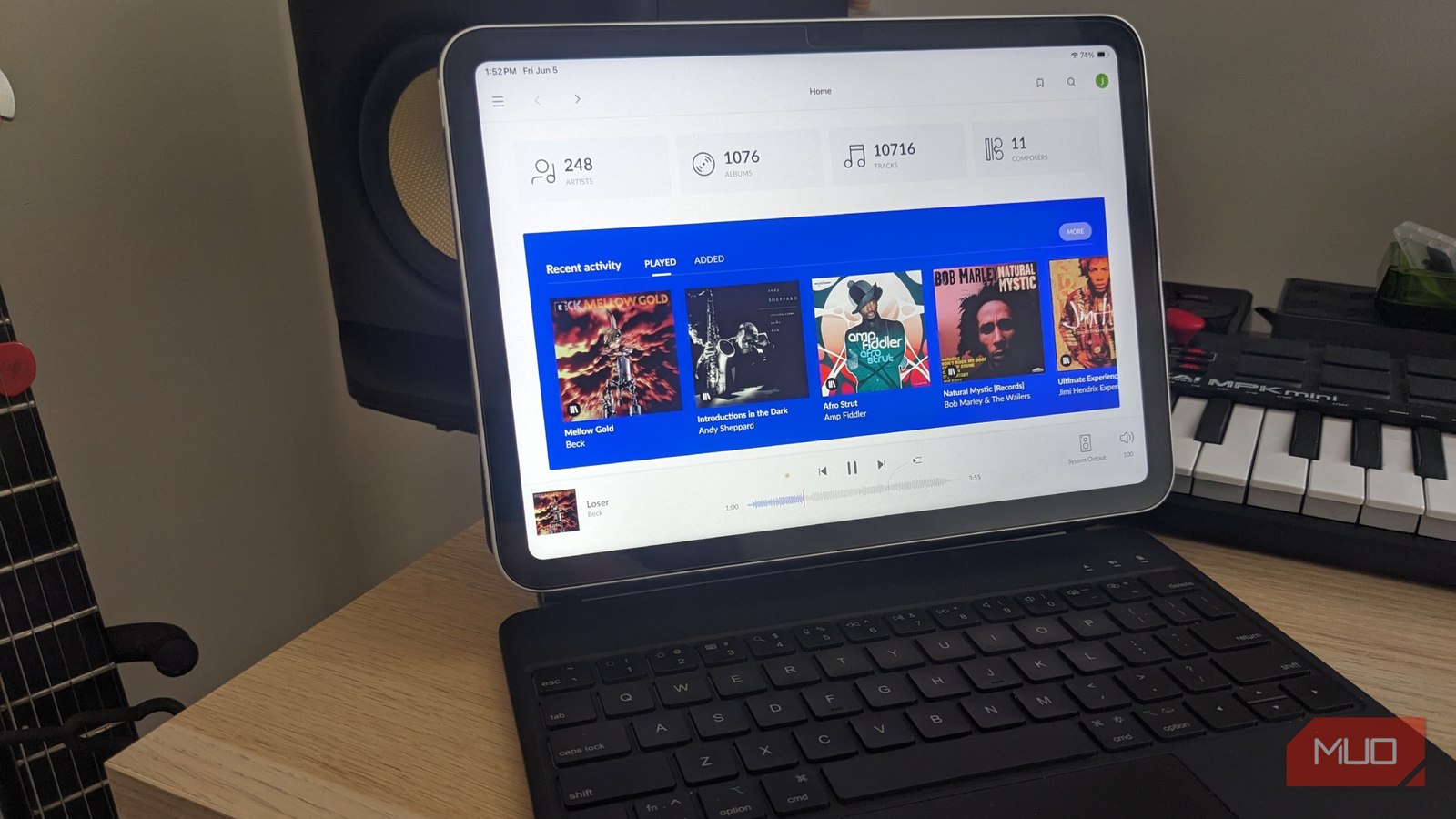
One of the things that first struck me about Roon was how detailed its interface was. Most music players display albums, artists, and playlists in a relatively uniform way. Roon goes much further by enhancing your library with biographies, reviews, recording credits, related artists, producer information, and links between albums.
As a vinyl collector who misses the old days, when you were presented with a wealth of information about what you were listening to, I really appreciate this aspect of Roon. Instead of simply choosing an album, I often find myself exploring the musicians behind it, discovering related artists, or learning more about a recording’s history. It feels less like browsing files and more like an interactive experience.
Roon handles large music libraries exceptionally well
Organizing thousands of tracks feels easy compared to many apps

Over the years of creating my own music, compiling a collection from libraries across multiple locations, and subscribing to various streaming platforms, keeping everything organized has at times been frustrating.
This is where Roon excels. The software combines local music collections with supported streaming services into a single, unified library. Albums, artists, playlists, and recommendations appear together, creating an experience that feels remarkably cohesive regardless of where the music originates. This is assisted by powerful search tools, sophisticated filtering options, and intelligent metadata management, which make it easy to locate specific recordings or rediscover forgotten favorites.
Roon delivers a premium listening experience across multiple devices
Multi-room audio is one of its most impressive strengths
For those listeners who have invested in multiple audio systems, this functionality could be transformative. Instead of juggling separate applications for different rooms and devices, everything operates on a single platform, regardless of where the Roon server is located.
The biggest drawback is that Roon can be expensive
The subscription cost creates a significant barrier for many

Despite its strengths, I wouldn’t recommend Roon to everyone.
The most obvious challenge is the price. Unlike many traditional music players, Roon requires either an ongoing subscription or a lifetime purchase. For casual listeners who primarily stream music through a single device, the cost can be difficult to justify. Even I was forced to ask myself whether I really needed another subscription on top of my current streaming services, and had I not had a large private music collection, I’d likely have passed on Roon.
Not everyone needs advanced metadata, multi-room audio, or deep library management. For most people, a standard streaming application already provides everything they need from a music player. There is also a learning curve associated with setting up a Roon server and understanding how the platform operates, which might be another barrier that some may not wish to deal with.
Why the subscription is worth it for serious music fans
Once I experienced the ecosystem, it became difficult to leave

I understand why many would hesitate to spend money on a service that essentially compiles music that they already own or subscribe to. However, after spending time with Roon, I realized that the platform is not simply charging for audio playback; it delivers an experience that combines library management, music discovery, streaming integration, and advanced playback controls into a single, aesthetically pleasing, functional environment.
That said, Roon is not the only option available. For users who prioritize complete customization, technical control, and a free price tag, foobar2000 remains an excellent alternative. It offers extensive flexibility and powerful playback features, though it requires considerably more effort to configure and personalize, and it’s not as Mac-friendly, so Windows users might gravitate towards it more than I did.
Roon showed me that not all music players are the same
Having spent years treating music playback software as an afterthought, Roon has changed my perspective. Unlike most plug-and-play alternatives, the platform has delivered something truly unique and genuinely helpful, combining sophisticated library management, music discovery tools, streaming integration, and multi-room audio support.
Roon has reminded me that the software I used to access my music matters. Just as I carefully selected the headphones, active speakers, and external soundcard that I use, the music player itself can play a surprisingly important role in getting the most out of music.