


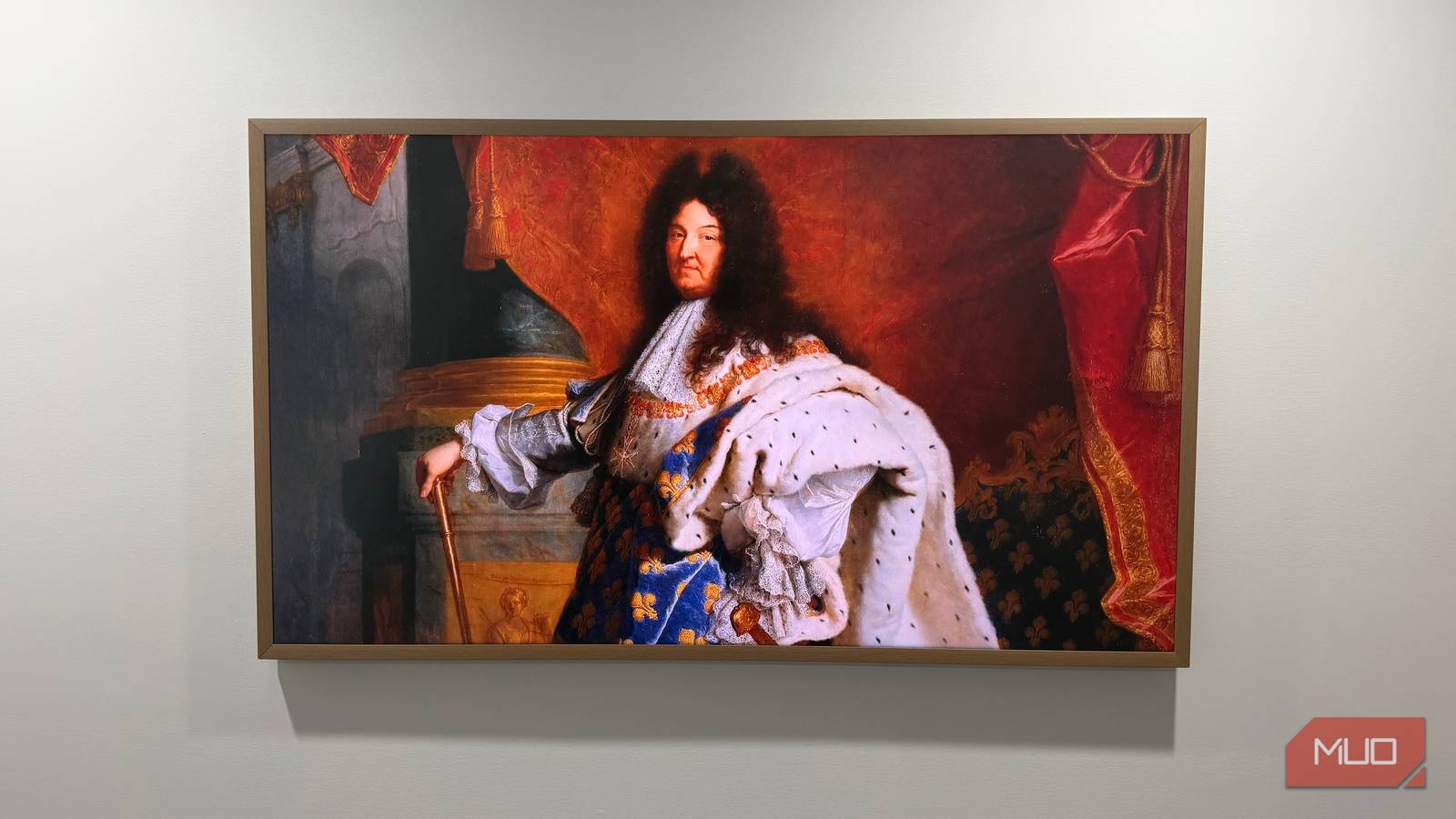
Two 65-inch TVs hang on my basement walls, and their price tags aren’t close. One is a Hisense CanvasTV that ran about $1,000. The other is a TCL 4-Series Roku TV I grabbed for roughly $300 a few years back. I’ve written before about how the Hisense’s matte screen makes it read like a framed painting, so I figured the expensive set would pull away the second both were in view. From my couch, eight feet back, it didn’t. For everyday streaming, the two sit much closer than the price gap implies. Only two things told them apart from there: how each screen handles a bright room, and what it turns into when you shut it off.
The picture gap is smaller than the price gap suggests
Everyday content from eight feet away hides most of the difference
Both sets are 4K, and both run their streaming apps without complaint. The TCL 4-Series Roku TV I bought for around $300 (it sells for around $500 now), from couch distance, it keeps up with the Hisense far better than that number suggests.
Part of that comes down to the content. A lot of what I watch lives on free ad-supported apps, and those cap their resolution well below 4K, so the source limits the picture more than either panel does. Skin tones, daylight scenes, a talking-head interview: at eight feet I can’t reliably say which screen is which. By enthusiast standards, the 4-Series is a plain panel, with no Quantum Dot color and no local dimming, and its contrast is ordinary. For the stuff most people watch, from where most people sit, that shortfall mostly vanishes.
The first difference is glare in a bright room
The Hisense scatters light the TCL bounces straight back
My basement runs on recessed lighting and a couple of lamps, and this is where the two screens split. The Hisense uses what it calls a Hi-Matte Display, a low-reflection coating the company pegs at roughly 5%. Light lands on it and diffuses, so the surface reads flat and faintly textured, more paper than glass. The TCL has a glossier panel, and it treats my lamps like a mirror. Turn on the overheads during a daytime show and the cheaper set picks up bright hotspots across the picture, along with a soft reflection of the room behind me. The Hisense soaks all of it up. This isn’t a subtle, lean-in effect. From the couch, in a lit room, the glare on the TCL is the first thing my eye lands on, before I’ve taken in anything on screen. Close the blinds and cut the lamps and the gap narrows, but I don’t watch every show in a dark cave, and I doubt you do either.
The second difference shows up when the screen is off
One turns into wall art, the other into a black slab

The other split appears the moment I hit the power button. The Hisense CanvasTV includes a magnetic teak frame and an Art Mode that shows a painting or a photo when the set is idle. Mounted flat on its UltraSlim bracket, it reads as framed art on the wall, which is the whole reason I bought into the category and wrote about choosing it over a Samsung Frame. That version runs about $1,000.
The TCL, switched off, is a black rectangle in a plastic frame, and that’s the end of it. During a movie the two look similar from the couch. The instant the screen goes dark, one of them settles into the room as decor while the other announces itself as a powered-down television. If your TV sits in a bedroom, a living room, or anywhere you look at it more than you watch it, that idle state is doing real work every hour the set is off. In a media room where the lights stay low and the screen is either on or you’ve gone to bed, it barely registers.
Where the gap actually widens
Up close, in HDR, and in fast motion, you get what you paid for

None of this makes the two panels equals. Step to within a couple of feet and the Hisense holds its faint texture in the bright areas and shadows while the TCL starts to look like a lit screen. Put on an HDR movie with real contrast and the CanvasTV pulls ahead on brightness and color, with Quantum Dot and Dolby Vision doing the work, neither of which the 4-Series has.
Gamers and sports fans get a third gap: the Hisense runs up to 144Hz against the TCL’s 60Hz, and fast motion looks cleaner for it. The money isn’t buying nothing. It’s that none of those advantages reach the couch during an ordinary evening of streaming. The TCL runs Roku, and I’ve turned up channels worth watching on it that look perfectly good on that panel. You reach for the extra picture quality up close, or when the content is sharp enough to ask for it.

- Brand
-
Hisense
- Display Size
-
65″
Which one belongs on your wall
The choice between these two comes down to your room, not a spec sheet. If your TV lives somewhere bright, or somewhere you see it all day whether it’s running or not, the Hisense earns its premium on those two counts alone: it beats glare, and it becomes art when you’re done watching. If it lives in a darker room where you sit, watch, and walk away, the $300 TCL covers nearly everything that reaches the couch. I kept both, and each one earns its place. Spend the extra where you’ll notice it, and pocket it where you won’t.