


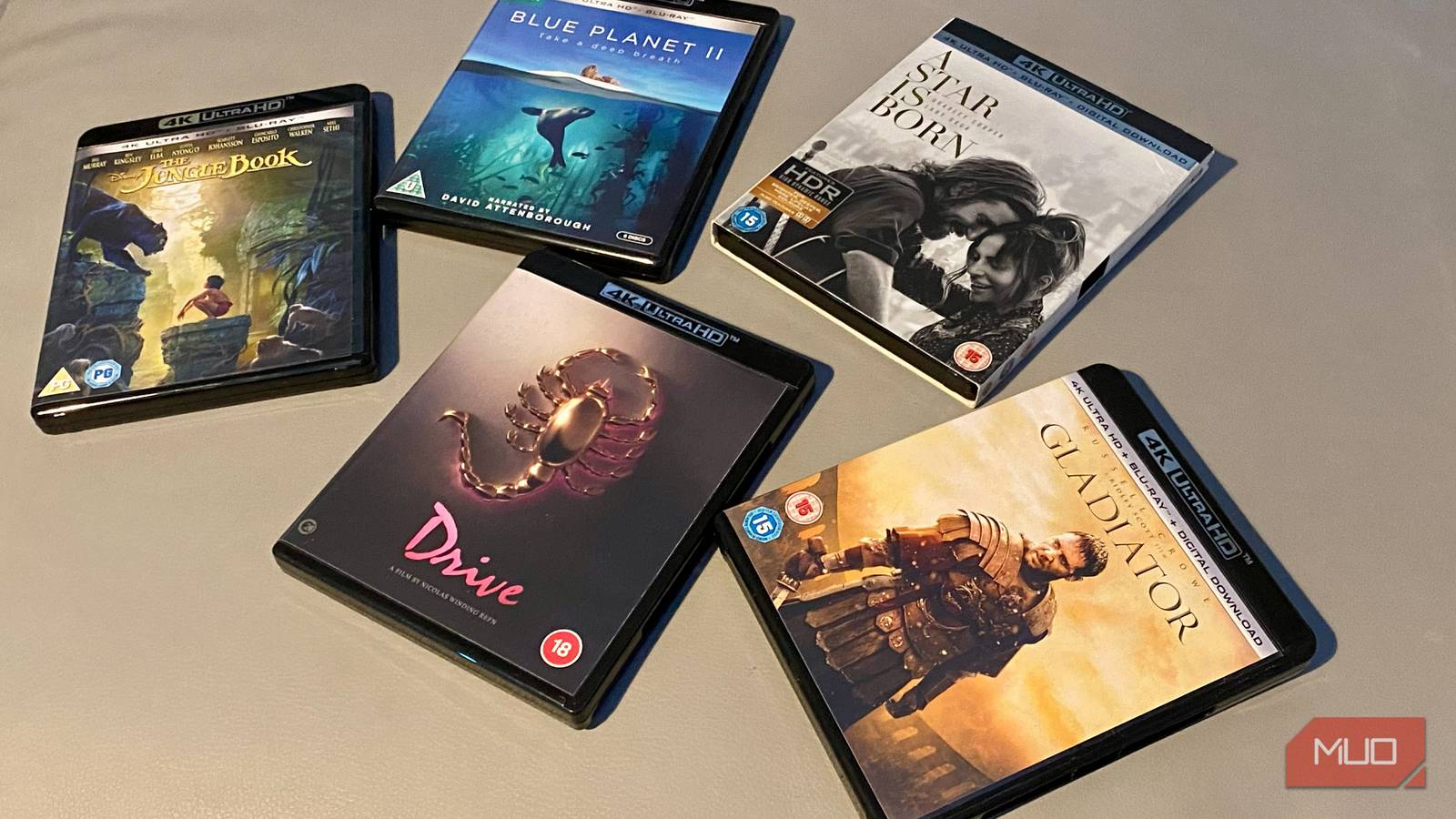
Since I bought it back in November 2024, I’ve barely touched my PS5 Pro. Why would I, when my PC costs more than my car? Actually, let me rephrase that: I’ve hardly used Sony’s prosumer machine as a games console. As a media device, my PS5 Pro gets a ton of use.
Like the base PS5, the Pro is a solid entry-level 4K Blu-ray player. Though annoyingly, you have to buy an optional $80 disc drive for the upgraded system. Despite that irritating additional expense, I use my PS5 Pro weekly purely because of its ability to play my 4K Blu-rays.
Make no mistake: the picture quality you get with the best 4K Blu-ray discs easily outshines any Ultra HD content you can stream from Netflix. Let me break down why 4K Blu-rays remain the Holy Grail for AV nerds.
4K Blu-rays look a lot better than 4K streams
Better bitrates = a superior viewing experience
Probably the biggest reason 4K Blu-rays look immediately more appealing to the eye than your average 2160p stream is down to bitrates. To put it simply, Ultra HD Blu-ray discs use far higher bitrates than streaming content.
Though you might not be able to tell the difference between the images above of Disney’s 2016 Jungle Book remake at first glance, the 4K Blu-ray version is far more detailed than the House of Mouse’s streaming version. When you’re watching that latest movie on a 4K stream, it’s probably going to max out at around 25 Mbps. Compared to a 4K Blu-ray, you’re likely watching a piece of content that hovers around 50–100 Mbps.
In short, higher bitrates lead to better image quality. Watching a well-mastered 4K disc looks sharper and richer in detail compared to an Ultra HD stream simply because the images you’re watching have more data encoded into them.
Discs handle HDR more effectively than streams
High Dynamic Range content benefits from Blu-ray treatment
Another example where physical trumps digital. HDR content can definitely look good on the main streaming platforms. Yet if you want to get the most out of High Dynamic Range, 4K Blu-rays remain the pinnacle. The reason discs look better than streams when handling HDR is that the former typically exhibit superior tone mapping for color reproduction.
Not only do HDR hues look punchier on 4K Blu-ray discs, but they also usually exhibit more detailed shadows on this display format. Streaming HDR movies or shows can lead to noisy images where brightness can fluctuate, whereas physical Blu-rays are more consistent, vibrant, and stable.
Sound is superior on Blu-ray
Lossless audio kicks streams into touch

To absolutely sound like a stuck record, bitrates massively matter when comparing 4K Blu-ray vs. 4K streams. Lossless audio is far less compressed than the streaming alternative, with Blu-ray tracks reaching up to 8,000 Kbps, compared to stream bitrates that may top out at under 800 Kbps.
The best 4K Blu-rays support Dolby Atmos, while Ultra HD streaming is often limited to Dolby Digital Plus. How do the two sound formats compare? A lossless Dolby Atmos-mastered movie will exhibit a fuller dynamic range and more pronounced bass, while a heavily compressed streaming soundscape will probably feel much flatter to your ears.
Picture quality never wavers
Subpar Wi-Fi won’t affect Blu-ray pictures

Even though my broadband is so fast that it killed my need for massive SSD drives, I generally don’t want to rely on a super-speedy Wi-Fi connectionto achieve a top-tier 4K viewing experience. My 1GB fiber-optic connection is generally excellent 95% of the time, yet in a windy city like my native Edinburgh in Scotland, bad weather can cause my broadband speeds to plummet.
For those of you with internet connections that just barely match the minimum requirements for 4K streaming, patchy Wi-Fi can really drag down movie time. Random drops in resolution and maddening buffering periods can ruin a bingeing session. Thankfully, unless you’re obsessed with Blu-ray Live features, watching 4K discs over subpar broadband won’t reduce the image quality of the content you’re viewing.
Even 4K streams can heavily compress images
It’s far easier to make out small details on 4K discs

I really hate the visual compromises heavy video compression throws up when it comes to streaming. To reduce the amount of bandwidth a stream is using, feeds from your favorite platforms like Netflix and Apple TV show off ugly compression artifacts, like macroblocking and color banding. As much as I hate the latter defect, vertical OLED banding is the TV fault I loathe the most.
While artifacting issues normally look horrendous with 720p streams, 4K content can still look pretty dang bad due to compression issues. Dark scenes can be hit particularly hard, producing images where shadows might look incredibly noisy. Conversely, compression is much less of an issue with 4K Blu-rays thanks to those aforementioned, sky-high bitrates.
4K streaming can’t compete with the best Blu-rays
As someone who primarily bought a PS2 to watch DVDs, it’s a full circle moment that I now mainly use my PS5 Pro to enjoy 4K Blu-rays. But hey, I’ve made my peace with my movie-obsessed decision. Ultra HD discs both look and sound superior to the vast majority of 4K content Netflix, Amazon Prime Video, or Disney Plus can serve up. As long as studios keep making 4K Blu-ray versions of my favorite films, my physical movie collection will continue to balloon in size.