




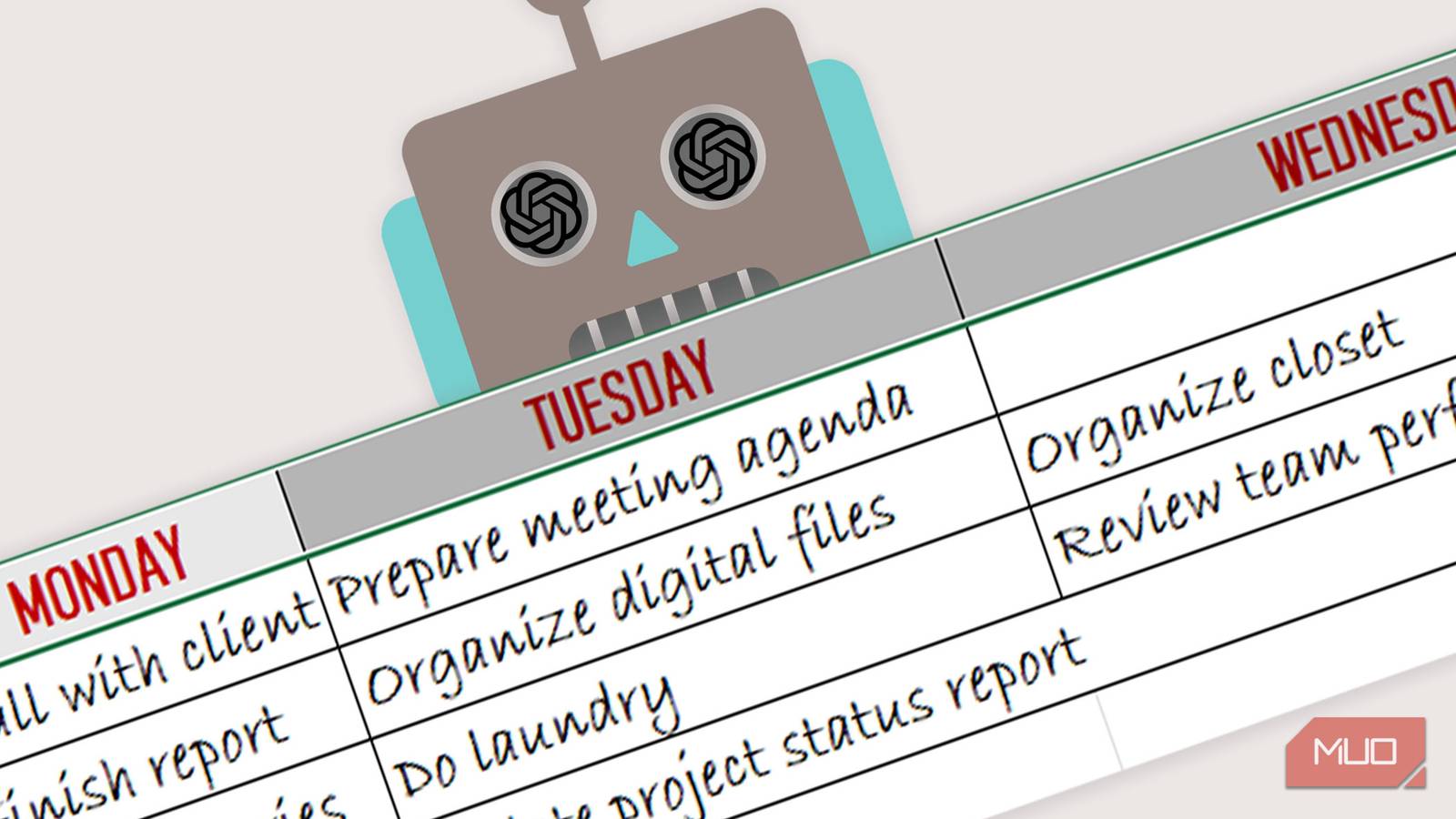
In a previous article, I shared the weekly planning system I built using ChatGPT to stop drifting from one week to the next. It’s still working, but there have been stumbling blocks along the way. As always, the best-laid plans fail when they meet real life. So, this follow-up isn’t about adding more tools or smarter prompts. It’s about the tiny tweaks and changes that turn a good planning system into one I can actually keep using with more intention.
In the earlier article, I explained how using ChatGPT as a weekly planning assistant helped turn vague intentions into clearer plans. But the tiny tweaks in this article can be applied to any planning system you use, whether with or without AI.
I started treating weekly planning as maintenance
Planning works better with decluttering
Productivity systems are great, but mindset shifts are better. So, I started thinking about what I could subtract from my list of tasks and routines rather than add more. Weekly tasks stopped being something I had to check off as done. Instead, I borrowed a minimalist’s mindset for planning.
Instead of opening the to-do list and immediately looking ahead, I now start by dealing with leftovers from the previous week. These overheads include unfinished or half-complete tasks, vague notes, and half-made decisions. Each stealthily piling up from one week to the next. And each contributes to the reasons why planning habits fall apart.
Once I treated planning like pruning, decision fatigue was reduced. I wasn’t designing the perfect week anymore. I was removing these overheads before moving on with a lighter load.
Here’s what I didn’t finish last week. Help me decide what to delete, defer, simplify, or schedule. Be practical, not optimistic.
Remember, adding more context with the right prompt framework leads to better answers. I don’t outsource how unfinished tasks make me feel. Guilt, relief, or resistance are signals that take the answers from ChatGPT and make me add the human touches.
I only schedule work that actually deserves time on my calendar
Planning gets easier once you stop scheduling everything

My calendar used to be packed because everything seemed urgent or important. With just 8 to 10 workable hours in the day, it’s tough to decide what gets space there.
Some tasks need protected time. Others just need attention when space opens up. A few need buffer time (remember to slot the right type of breaks too). Once I accepted the constraints, overplanning stopped.
Now, my calendar is reserved for work that’s Uncomfortable, Meaningful, or Time-sensitive. Everything else stays off it by default.
These are the tasks I might schedule next week. Which ones truly deserve calendar time, and which should stay off it?
I don’t ask the chatbot to decide on commitments that affect relationships or personal boundaries. Those decisions need human context.
I plan my week around energy levels, not just time blocks
Plans can only work with emotional and physical fuel

Time blocking only works if your energy is predictable. Mine isn’t. Some days are better for thinking. Others are better for routine work. Sometimes life gets in the way. Instead of forcing myself every day to work like a metronome, I now plan (with mixed results) around those patterns.
You have to be absolutely honest when you do your best work. Time-tracking your efficiency is a great way to gain insight into this information.
I’m low-energy on Mondays, sharp midweek, and tired by Friday afternoon. Help me assign these tasks to days that match how I actually work.
I don’t rely on it to discover my energy patterns. That comes from paying attention over time or using a time tracker for a week. ChatGPT simply helps me apply what I already know.
I built failure into my weekly plan, so I wouldn’t abandon it
A successful plan has a built-in failure plan

Most weekly plans fall off the bandwagon the moment a task slips. When that happens, it pulls our discipline with it.
Instead of tightening my schedule, I loosen it to kill any productivity anxiety. I now assume I’ll fall behind on at least one or two important tasks. And I plan accordingly.
Assume I’ll fall behind on at least one important task next week. Where should I add buffer time, so the plan doesn’t collapse?
It’s an idea borrowed from the concept of anti-fragility. They can make every kind of plan far more resilient. As a result, my mindset shift is more accepting of failure as critical feedback. Missing a task isn’t a failure for me anymore. Abandoning the entire weekly planning system would be.
The one question I ask every Sunday before I plan anything
A single question sets up the entire planning session

Before I touch my calendar, I answer one question that sets the baseline for the week. It keeps me from over-planning and helps me prioritize progress over perfection. The idea is to have a “minimum viable week.”
A simple prompt like “Based on these responsibilities and constraints, what’s one outcome that would make next week feel successful even if nothing else happens?” is perfect.
I don’t let it choose between things I deeply care about. Some expectations for the week stay human. ChatGPT simply helps me through the noise of multiple chores.

This One Productivity Rule Fixed My Whole Week
Cruise control for all my tasks.
The idea is to reduce friction instead of forcing discipline.
This weekly planning system will hopefully stick for a long time. It not only sounds smarter but also more forgiving. ChatGPT isn’t running my week. It’s working like a filter, helping me with cleanup, filtering, and realism while judgment stays mine. Bottlenecks are inevitable, but if I can manage a balance between reality and expectation, then the planning system will be scalable in the future.