


Choosing the best iPhone used to be easy. With the original, you picked a storage size. A year later, there were colour options too. (Well, black or white.) Then – boom – you owned one of the best smartphones on the planet. Now? You’re faced with an increasingly complex selection of shiny new iPhones and last-generation stragglers.
Our guide is here to cut through the noise. We’ll spell out who each currently shipping iPhone is best for, dig into the highs and lows, point you towards the ideal older iPhone for kids, and tackle common questions that might otherwise derail your upgrade plans.
Why you can trust Stuff: Our team of experts rigorously test each product and provide honest, unbiased reviews to help you make informed decisions. For more details, read how we test and rate products.
Quick list: What’s the best iPhone for you?
The iPhone 17 Pro Max (buy now) ramps up the power (again) and takes iPhone photography up another level. It’s the iPhone for when you want the best of the best – and a much better option than the iPhone Air for experienced users.
The iPhone 17 (buy now) is the first standard iPhone in years that almost feels like an act of rebellion. Power. Clout. The least nosebleed-inducing price tag. Almost no compromises. Boring? Sure. Brilliant? Absolutely.
The iPhone 16e (buy now) makes you realise what you actually need for a good smartphone, with its lightweight design, solid performance, consistent camera and all-day battery. A solid entry point to the range.
The iPhone Air (buy now) is beautifully and painstakingly designed, with plenty of power and a great display. But the flip side of that is bang average battery life, a single mono speaker, only one camera and a high price.
The iPhone 14 (buy now) gets you most of the good bits of the 16e – and even one or two bonuses – for less cash. It’s a smart option for kids – if you can find a refurb at a cheap enough price.
The best iPhone you can buy today:
Best iPhone overall

1. iPhone 17 Pro Max
Stuff Verdict
With the upgraded camera, the Pro Max is the ultimate powerhouse – again. The Pro lineup certainly presents a much better option for experienced users than the iPhone Air.
Pros
- Stellar performance
- Great new design – love the colours
- Taking photography up another level
Cons
- Aluminum less appealing than titanium
- Very expensive (of course)
- Standard iPhone 17 is a very good alternative
| Apple iPhone 17 Pro Max specs | |
|---|---|
| Screen | 6.9in 2868×1320px 120Hz OLED HDR at 460ppi |
| Processor | Apple A19 Pro |
| RAM | 12GB |
| Storage | 256GB/512GB/1TB/2TB on-board |
| Software | iOS 26 |
| Cameras | 48MP Pro Fusion rear (main, ultra wide, telephoto; up to 8x optical zoom) / 18MP Centre Stage front |
| Battery | 4823 mAh (nanoSIM), 5088 mAh (eSIM) / MagSafe wireless charging up to 25W |
| Dimensions | 163.4×78×8.75mm / 6.43×3.07×0.34in |
| Weight | 231g / 8.15oz |
Looking for the best iPhone there is? That’s the iPhone 17 Pro Max. It offers blistering performance, a superb triple-lens camera and a bright, beautifully crafted display.
It blazes through anything you throw at it, and our tests suggested this phone had single-core scores that more than match the desktop Mac Studio’s M3 Ultra chip. Yet the new vapour chamber cooling system manages to keep things cool. Battery life impresses too: we got close to two full workdays from the 4823mAh cell, and it hit 50% in just 20 minutes using a 40W charger.
The 6.9in OLED display is the same 120Hz ProMotion stunner as on last year’s Pro Max, but with higher 3000 nits peak brightness outdoors. Even direct sunlight couldn’t dull it during testing. The cameras get bigger changes. The upgraded 48MP triple-lens setup truly delivers. Shots at 8x optical zoom are crisp and full of detail, and the 40x digital zoom is cleaner than anything we saw from the iPhone 16 Pro.
We’re less sold on the move from titanium to aluminium – our review unit picked up a small ding after a few days – but the build still feels premium. iOS 26’s new Liquid Glass look is divisive, though it shines on this big screen.
If you’re after the ultimate iPhone for performance, this is the best you can buy. And there’s a smaller Pro if you don’t want a giant iPhone. That all said, you might be better off saving some cash and going for our next option, which is now even closer to the Pro than ever…
- Read more: iPhone 17 Pro Max review
Best iPhone for most people
2. Apple iPhone 17
Stuff Verdict
The first standard iPhone in years that almost feels like an act of rebellion. Power. Clout. The least nosebleed-inducing price-tag. Almost no compromises. Boring? Sure. Brilliant? Absolutely.
Pros
- Superb display
- Hugely powerful
- Excellent ecosystem
- Meaningful camera upgrades
Cons
- No telephoto lens
- USB 2.0 data speeds
- iOS 26 design issues
| Apple iPhone 17 specs | |
|---|---|
| Screen | 6.3in 2622×1206px 120Hz OLED HDR at 460ppi |
| Processor | Apple A19 |
| RAM | 8GB |
| Storage | 256GB/512GB on-board |
| Software | iOS 26 |
| Cameras | 48MP Dual Fusion rear (main, ultra wide; up to 2x optical zoom), 18MP Centre Stage front |
| Battery | 3692mAh / MagSafe wireless charging up to 25W |
| Dimensions | 149.6×71.5×7.95mm / 5.89×2.81×0.31in |
| Weight | 177g / 6.24oz |
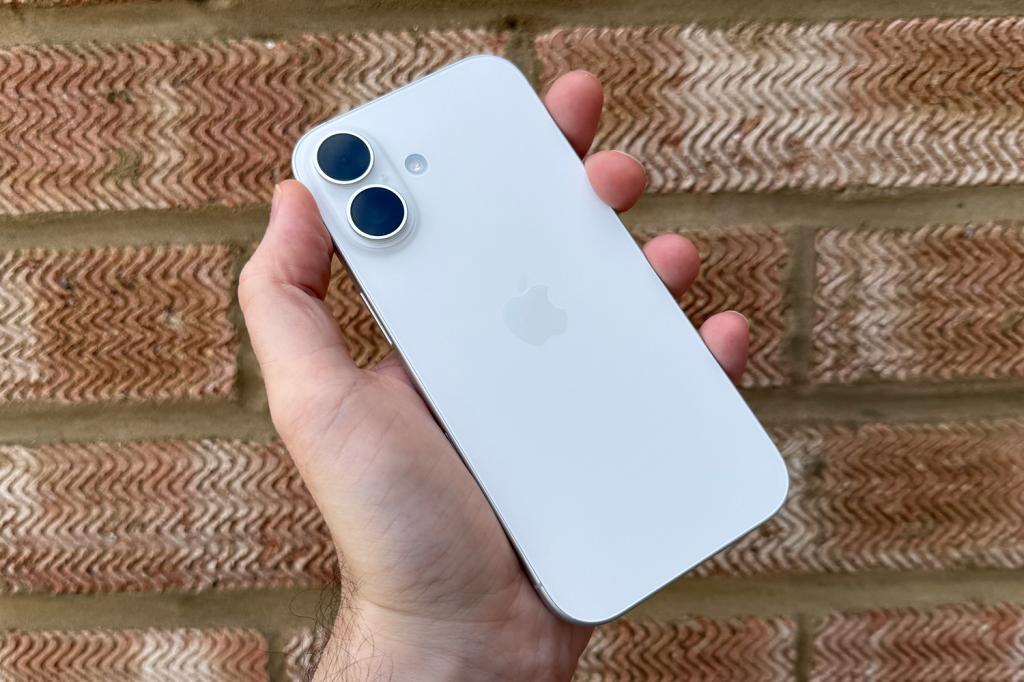
The iPhone 17 is Apple’s best all-rounder yet – and arguably the iPhone most people should buy right now. This is the closest that the standard iPhone has ever been to the Pro, yet it still lacks the eye-watering price tag of Apple’s flagship – and quite a bit of its bulk.
The design is unexciting but robust and premium. The new Ceramic Shield 2 improves scratch resistance. The bigger win, though, is the display, which finally gives the standard iPhone a 120Hz OLED panel. It’s the same one that’s in the Pro, meaning silky smooth scrolling and an always-on 1Hz mode with StandBy support.
The dual 48MP camera system impresses in most conditions. Macro shots are sharper than on the iPhone 16, while standard 1x snaps are rich and detailed. The lack of a telephoto lens remains the biggest gap versus the Pro models, though. Digital zoom quickly loses quality beyond 2x.
Performance can’t quite match the Pro either, but it’s close. The odd high-end game will stutter and the phone can get a bit toasty under sustained load. But this is still a highly capable device, from more casual gaming through to surprisingly high-end creative tasks like music production. The battery impresses too, typically lasting a full day of mixed use.
Unless you need a telephoto lens or ultra-thin bragging rights, we’d say the iPhone 17 nails the essentials. It’s powerful, practical and a sensible choice.
- Read more: iPhone 17 review
Best budget iPhone
3. iPhone 16e
Stuff Verdict
A lightweight design, solid performance, consistent camera and brilliant battery make the iPhone 16e a great value option for those wanting a (slightly) less expensive iPhone.
Pros
- Lightweight and updated design
- Superb battery and performance
- Great single-lens camera
Cons
- No MagSafe
- 60Hz display
- Limited colour options
| Apple iPhone 16e specs | |
|---|---|
| Screen | 6.1in 2532×1170px 60Hz OLED HDR at 460ppi |
| Processor | Apple A18 |
| RAM | 8GB |
| Storage | 128GB/256GB/512GB on-board |
| Software | iOS 26 |
| Cameras | 48MP Fusion rear (up to 2x optical zoom) / 12MP TrueDepth front |
| Battery | 4005mAh / Qi (not MagSafe) wireless charging up to 7.5W |
| Dimensions | 146.7×71.5×7.8mm / 5.78×2.82×0.31in |
| Weight | 167g / 5.88oz |
The iPhone 16e might not be Apple’s cheapest phone ever, but it strikes a smart balance between price and performance. At $200/£200 less than the standard iPhone 17, there are obviously some compromises – which we’ll get to in a bit. But let’s first look at the good stuff.
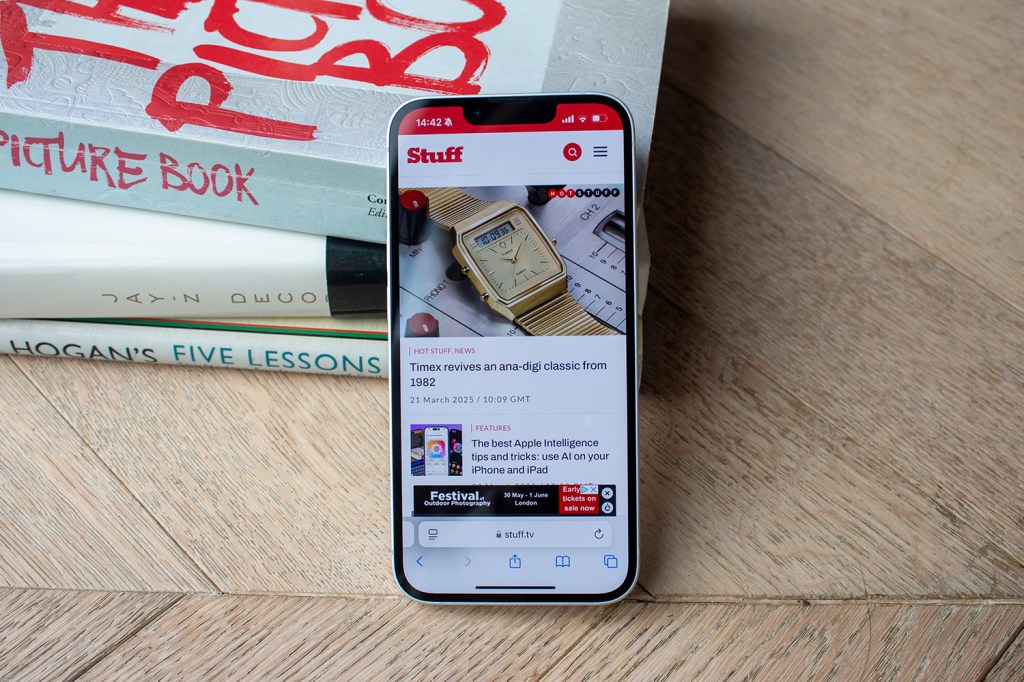
The design’s not cutting edge, but it moves on from 2022’s 3rd-gen iPhone SE by ditching the Home button and chunky bezels. There’s a notch rather than Dynamic Island – from the front, this is basically an iPhone 14. But the flat edges, light 167g build and compact size do make it a joy to handle.
From a performance standpoint, it’s no slouch either, with the A18 chip not trailing far behind 2025’s models in terms of sheer power. Where the 16e now falls most noticeably short is in having a 60Hz display and, ludicrously, no MagSafe – the latter being a part of every standard iPhone since the 12, back in 2020.
The other main difference when compared to the 17 is the camera setup. The 17 has a fancy new selfie camera and a 48MP ultra wide. The 16e lacks both and its 48MP main snapper isn’t quite as good as the 17’s, although it’s still impressive, including when compared to similarly priced Android phones.
Compared to the iPhone 16 lineup, the 16e felt like less of a compromise. Today, the gap has grown. That said, there is no new iPhone that’s cheaper, and if you can’t spring for the extra $200/£200 to buy an iPhone 17, the 16e remains a solid choice.
- Read more: iPhone 16e review
Best iPhone for design
4. iPhone Air
Stuff Verdict
The iPhone Air is beautifully and painstakingly designed – but there’s a reason we love having several cameras on our flagship phones nowadays.
Pros
- A stunning new design for iPhone
- Wonderful large 6.5in display
- Pro-level hardware for the most part
- It’s super-thin but you do feel it’s robust
Cons
- The single camera just isn’t enough for anybody who values taking great pictures with their phone
- Battery life is bang average
- Mono speaker is just about OK
- Expensive compared to the vanilla iPhone 17
| Apple iPhone Air specs | |
|---|---|
| Screen | 6.5in 2736×1260px 120Hz HDR OLED at 460ppi |
| Processor | Apple A19 Pro |
| RAM | 12GB |
| Storage | 256GB/512GB/1TB on-board |
| Software | iOS 26 |
| Cameras | 48MP Fusion rear (up to 2x optical zoom) / 18MP Centre Stage front |
| Battery | 3149mAh / MagSafe wireless charging up to 20W |
| Dimensions | 156.2×74.7×5.64mm / 6.15×2.94×0.22in |
| Weight | 165g / 5.82oz |
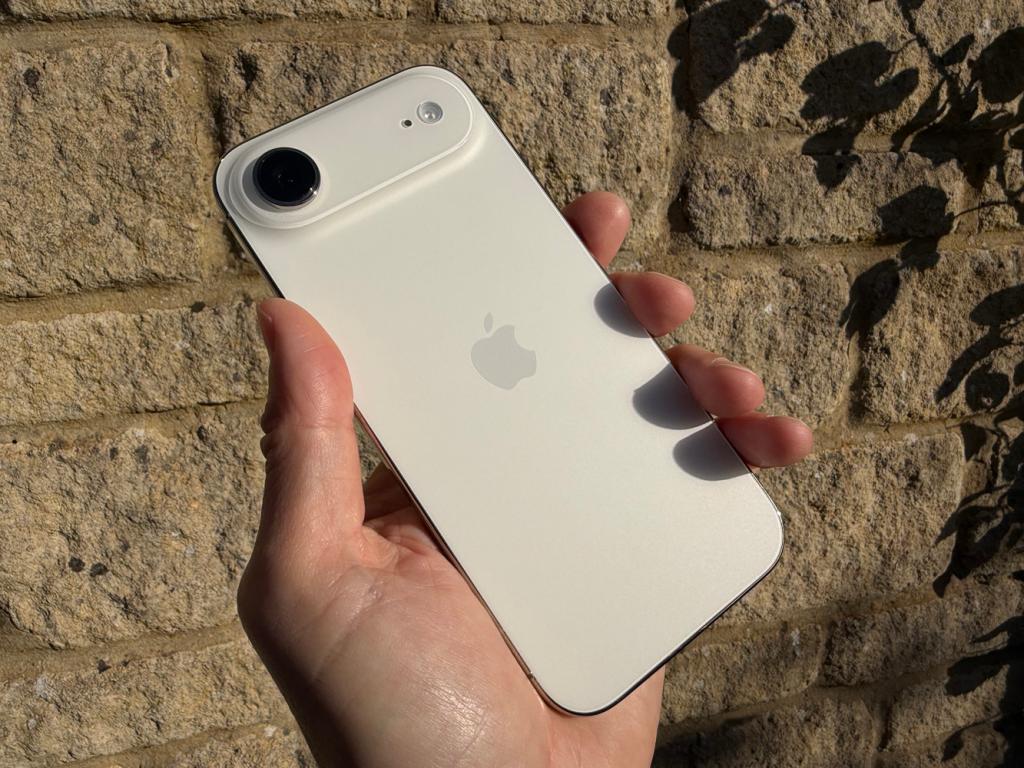
The iPhone Air is the first new iPhone design since the Plus. In fact, it’s arguably the most radical departure in the line since the introduction of the iPhone X. We love its looks – but we don’t think this iPhone is for everyone.
Side-on, it’s 5.6mm thin and yet the build feels reassuringly solid. It looks great. And at just 165g, it won’t drag down your pockets. Around front, you also get a 120Hz 6.5in OLED display that’s only bettered by the screen on the Pro Max. Performance is properly flagship too, thanks to the A19 Pro chip with specs that almost match what’s in the Pros. However, the thin design means this phone can run hot – and not necessarily when it’s being pushed.
There are other downsides too. The battery just about lasted a full day during testing. It’s OK rather than great. The same could be said for the single 48MP camera, which delivers crisp daytime shots, but lacks the ultra wide from the other iPhone 17s and the telephoto from the Pro. Even audio takes a hit, with a single-speaker setup that we haven’t seen in an iPhone since 2016’s budget iPhone SE.
If you value portability and style above all else, the iPhone Air is a visually arresting, pocket-friendly slice of Apple hardware. But if photography, battery life or versatility matter more, the iPhone 17 remains the smarter buy.
- Read more: iPhone Air review
Best iPhone for kids
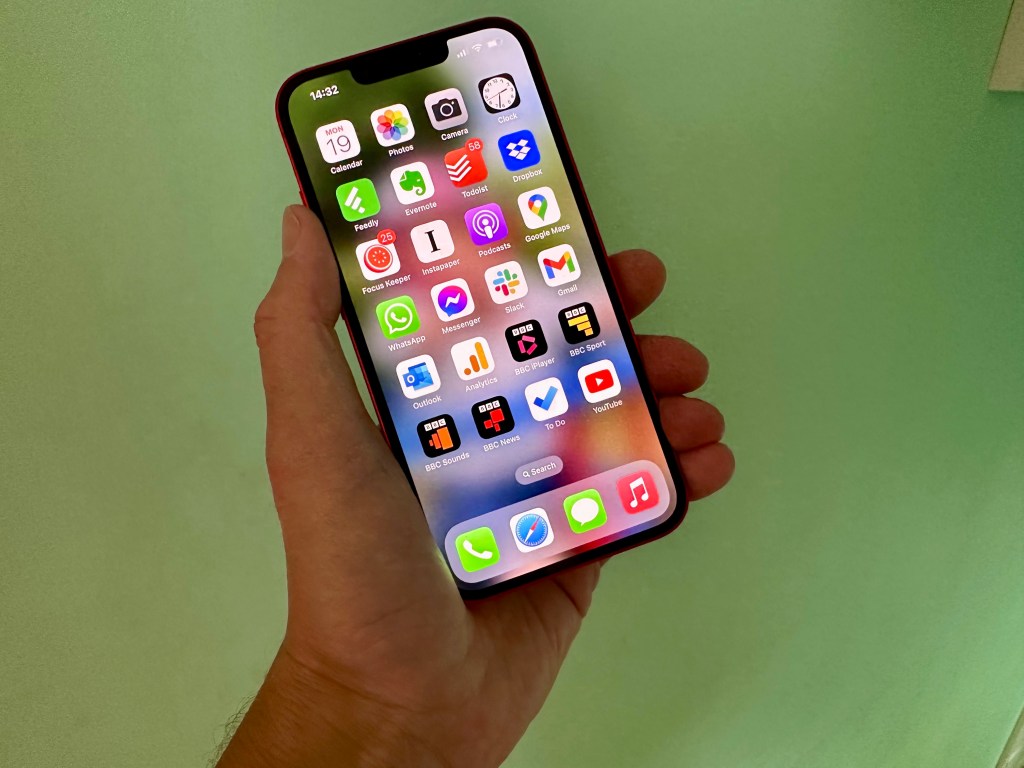
5. iPhone 14
Stuff Verdict
The Apple iPhone 14 is a superb smartphone even though the minimal hardware upgrades take the shine off. It could be a great first iPhone.
Pros
- Still an incredible smartphone
- Brilliant battery life gets a bit better
Cons
- Last year’s Pro hardware
- Wireless charging slow by modern standards
| iPhone 14 specs | |
|---|---|
| Screen | 6.1in 1170×2532px 60Hz OLED HDR at 460ppi |
| Processor | Apple A15 Bionic |
| RAM | 6GB |
| Storage | 128GB/256GB/512GB on-board |
| Software | iOS 16 |
| Cameras | Dual 12MP rear (main, ultra wide) / 12MP TrueDepth front |
| Battery | 3279 mAh / MagSafe wireless charging up to 15W |
| Dimensions | 146.7×71.5×7.8mm / 5.78×2.82×0.31in |
| Weight | 172g / 6.07oz |
You might pause at the thought of handing a brand-new iPhone 17 to a child – or even the cheaper 16e – given that there’s a good chance it’ll get dropped, cracked or left on a bus. That leaves you looking for second-hand fare or refurb units. Right now, we reckon the iPhone 14 is the best option.
It still looks modern. Around front, it’s identical to the 16e but comes in a more interesting range of colours. It also has other advantages over the newer phone, such as an ultra wide camera and MagSafe charging. Where it lags is in having an inferior (but still reasonable) 12MP front camera, the old Lightning connector rather than USB-C and a slower A15 chip. The last of those things means no Apple Intelligence (although you might see that as a benefit) and two to three years less software support. But then if you’re buying a cheap iPhone for a kid, you’re probably not thinking very long term anyway.
On the Apple Refurb store, the 128GB iPhone 14 comes in at $449/£449 – $150/£150 less than the 16 – but we’ve seen cheaper elsewhere. Also, if your kid’s big into photography, consider an iPhone 14 Pro, with its 48MP front camera and 12MP 3x telephoto lens. It also has a newer, faster chip and Dynamic Island, although it’s still lumbered with Lightning.
Both 14s, note, have emergency satellite communication, which lets someone contact help when out of mobile range. That’s not something most people will need every day, but it’s reassuring to have if your kid likes hiking, camping or just tends to wander off with no signal.
- Read more: Apple iPhone 14 review
How to choose the best iPhone for you
Buying an iPhone might seem simple. Walk into an Apple Store. Grab the latest iPhone. Pay. Leave. (Don’t forget the penultimate step!) But Apple sells several models, each with unique features, sizes and prices. So you must think through what you actually need.
Start with your budget and work from there. And to further help you make an informed decision, here are answers to some common questions people ask when choosing an iPhone.
Frequently Asked Questions
What do the iPhone names mean?
iPhone is the standard model. Pro means premium – more features and a higher price. Pro Max is the Pro with a bigger display. Air is Apple’s new-for-2025 skinnier design. E (or ‘e’ as Apple would have it) is a ‘budget’ iPhone that replaced the iPhone SE line.
What size phone should I buy?
You’ll use the phone often, so it needs to feel right in the hand. If possible, try them all in an Apple Store and see what works for you. You may find the Pro Max fantastic or unwieldy. Generally, we think the standard iPhone strikes a good balance of screen space, comfort and pocketability.
What is ProMotion?
On iPhone, a display with a variable refresh rate of 1–120Hz that enables an always-on mode (1Hz) and smoother scrolling (120Hz). Older iPhones had a 60Hz refresh rate (including the iPhone 16 and 16e that are still on sale) and no always-on mode.
How do the A19 Pro and A19 chips compare?
The Pro chip is more powerful, making it more suited to high-end games and editing video. But in most cases, you won’t notice. An A19 is more than enough for most tasks. In fact, even chips in years-old iPhones often more than do the job. Just be mindful that Apple Intelligence requires an A17 Pro/A18 (or newer).
What are the differences between iPhone cameras?
Apple cameras tend to be great and you don’t need an iPhone Pro for quality snaps. The main advantage of the Pro is a telephoto lens. ‘Fusion’ lenses with 2x optical zoom are actually cropping the central part of a higher-resolution image, resulting in less detail than you’d get with a telephoto equivalent. If you’re more into extreme close-ups (macros), you’ll need an ultra wide. The Air and 16e don’t have one.
Should I pay for iCloud+?
Yes. Apple gives you 5GB of online storage for free, which is pitiful. iCloud+ has a range of storage tiers and adds features like Hide My Email. But it’s most vital for backing up your iPhone, ensuring you won’t lose precious data and photos. Note that you can share iCloud+ plans with family members.
How much built-in storage should I buy?
That depends on how you use an iPhone. But be mindful you cannot expand internal storage later, although you can ‘offload’ apps, files, photos and videos to iCloud storage. Regardless, choose wisely. When upgrading from an existing iPhone, check your current usage in Settings > General > ‘iPhone Storage’.
Should I buy a case?
Probably. Modern iPhones are durable but not indestructible. One wrong drop on to a hard surface and your iPhone may require a replacement screen that costs half as much as the phone did. But cases add bulk, so carefully consider which to buy.
Do I need AppleCare?
That depends. Consumer rights in your region might give you protection regarding faults. For accidental damage, though, AppleCare can be a good option, and you’ll know from previous experience if you tend to damage devices. There’s also a theft and loss tier, but those things might be covered by your home insurance.
How long should my iPhone last?
If handled with care, years. The battery is the most likely thing to fail, and Apple can replace that for around $100/£100. In terms of software, iOS 26 supports the iPhone 11 – and that was released in 2019. So six years or so is a good yardstick.
Where is the iPhone 16?
iPhones move fast. In 2024, the iPhone 16 looked like a bargain. A year later, the iPhone 17 has blazed so far ahead that we can’t recommend the 16 anymore. Sure, Apple’s knocked $100/£100 off the price, but any sense of savings evaporate once you look at what you’re losing compared to the 17: a ProMotion always-on display; Ceramic Shield 2; a faster chip; big battery gains; great camera upgrades; double the storage.
This year, Apple won’t even let you bump the storage on the previous year’s iPhone. Why? Because then a 256GB iPhone 16 would cost the same as a 256GB iPhone 17. Yikes.
The only reason to even consider a 16 now is for the Plus version – and even then, only if you absolutely must have a bigger display but won’t pay Air or Pro Max prices. But do ask yourself if you’d sooner pay $100/£100 less than the Plus for an iPhone 17 with all of its superior tech, and just live with the smaller screen.
How we test smartphones
We’ve tested every phone on this list ourselves, so you can trust our picks. We treat each handset like a daily driver – not a staged demo – and that makes a big difference to the recommendations we give.
Typically, we spend a week or more with each phone, using it for calls, streaming, navigation, photos, messaging and gaming. That hands-on time lets us spot real-world strengths and quirks that a quick bench test would miss. We stress-test performance by multitasking and running demanding games like Genshin Impact or Call of Duty: Mobile, check battery life across different usage patterns, and time how long each device actually takes to charge from 0 to 100%.
Displays get judged for brightness, colour accuracy and outdoor readability, but also for how they handle different media. We watch HDR shows on Netflix, scroll through Instagram’s bright feeds, stream YouTube videos in varying resolutions and browse photos to see how punchy – or natural – colours look. We also note how smooth adaptive refresh rates feel when scrolling or gaming, and whether viewing angles hold up under harsh light.
Camera testing includes daylight, low-light and video scenarios – everything from shooting portraits in busy city streets to night scenes and 4K stabilised clips – to see how lenses, autofocus and image processing behave. We also pay attention to build quality (does it scratch easily?), speaker performance when playing music or YouTube, and any software oddities, like app crashes or slow animations. We look at how clean the interface feels, whether there’s bloatware, and how strong the manufacturer’s update promise really is.
Our reviews cover the essentials separately – battery, screen, camera, performance and everyday usability – so you get a clear picture of what owning the phone will be like, not just what its spec sheet says. The goal is simple: help you buy a phone that actually fits your life.
For more information on Stuff’s rating and review process, read our page on how we test products.
Recent updates
- 19th December 2025: Updated title.
- 19 November 2025: Removed the iPhone 16 Pro Max. Reduced iPhone 16 to a small mention. Updated iPhone 16e and iPhone 14 reviews to better align with the current iPhone range. Greatly expanded the FAQ.
- 30 October 2025: Added the iPhone 17, iPhone 17 Pro and iPhone Air. Removed discontinued models, such as the iPhone 15 Pro Max and iPhone SE. Added a FAQ section.
- Now read: Every Apple iPhone ranked in order of greatness