


It’s practically common knowledge within the tech world that Samsung is supplying Apple with flexible OLED screens for its debut foldable smartphone. The iPhone Ultra is widely expected to make its debut in September alongside the iPhone 18 Pro, but I already feel like I’ve had a sneak peek.
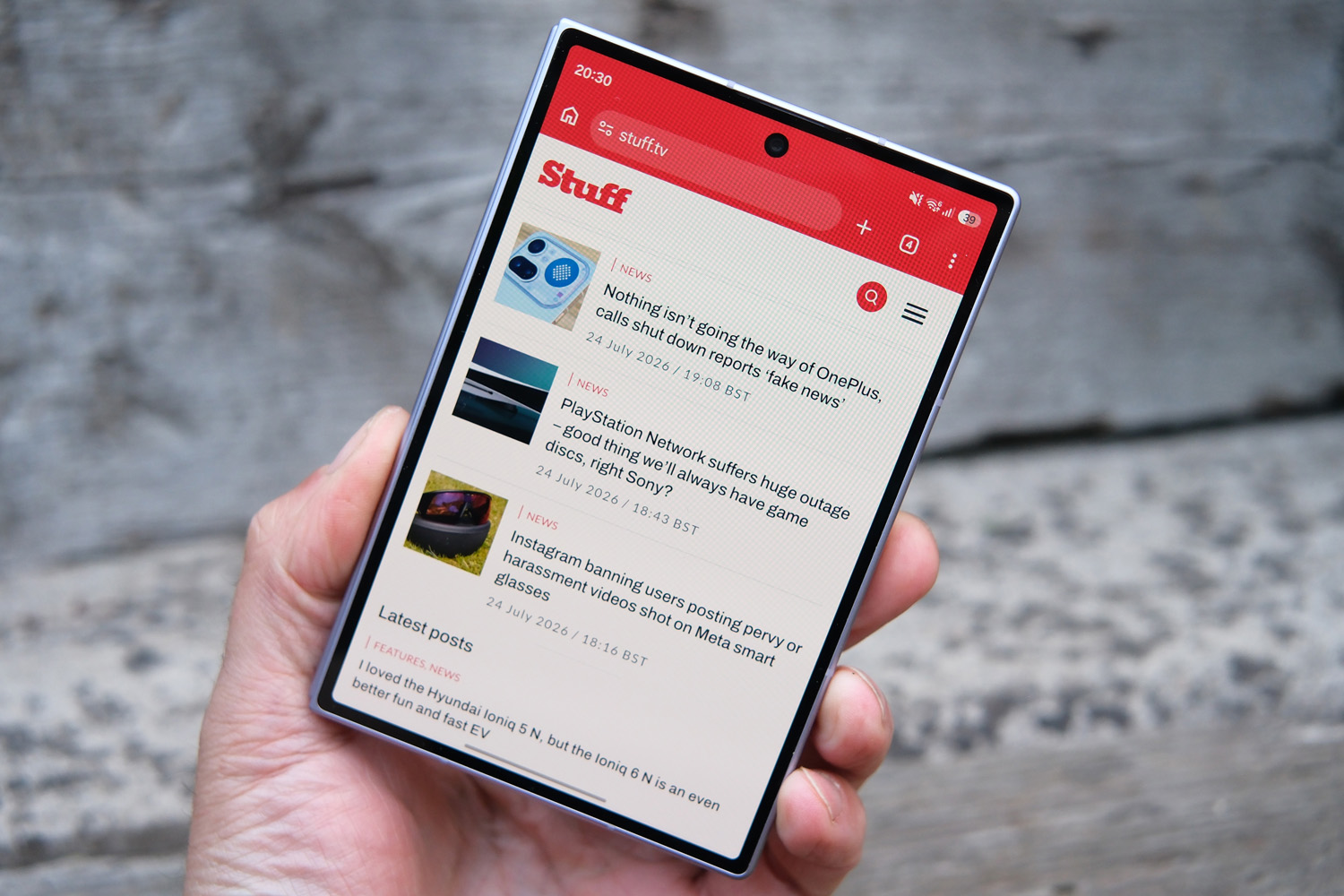
That’s because I’ve just finished testing the Galaxy Z Fold8. Samsung’s first wide book-style foldable uses the same passport-sized outer screen and 4:3 aspect ratio inner display that Apple is believed to have gone for; the upcoming iPhone is also predicted to have a dual camera array at the rear and put the same spin biometric security.
Other than their respective operating systems, the two sound like they’ll be very similar – which is great in a way, given how much I loved the Z Fold8’s palm-friendly size while folded and entertainment-focused inner display. However, I also encountered a few irks and quirks that I’m hoping Apple has taken note of before September rolls around.
Software handoff between screens is tricky
My biggest bugbear with the Fold8 has little to do with Samsung. Google has to take the blame for how Android supports – or rather doesn’t support – switching from one screen aspect ratio to another. Apps Could either look overly stretched or squashed when going from the inner screen to the outer one, or demand I restart them entirely in order to better fit the smaller display. This only happened occasionally – and never with Samsung or Google’s defaults – but
It’s something I imagine Apple will get right at the first attempt, simply because it demands greater control over the design and functionality of third-party apps than Google does for the Play Store. I’ve got no concerns about the outer display feeling compromised compared to a normal iPhone’s taller aspect ratio, as every app I’ve tried on the Fold8 has felt spacious – you just have to do a bit more vertical scrolling.
A return to TouchID could be asking for trouble
Early leaks and dummy handsets show the iPhone Ultra as having a much bigger power button than the ones found on the iPhone generation, which suggests to me that Apple will have it double up as a fingerprint sensor. Analyst reports and insider reports have backed this up.
The move makes sense – the foldable’s two halves will likely be too skinny to house the sensors needed for Face ID, and a Dynamic Island notch would look plain ugly on the inner display anyway. But it’ll cause problems on a wide foldable that encourages you to use the inner display in portrait mode for web browsing and reading.
With the Z Fold8 open and turned lengthways, I’d constantly have to reposition my grip to authenticate banking apps or even unlock the device. It was an extra bit of friction that simply wasn’t there during the chunk of last year I spent with a Google Pixel 10 Pro XL – which has secure facial recognition on the level of Apple’s FaceID – in my pocket.
A high price probably won’t matter
Foldable phones all carry a hefty price premium over their traditional, non-folding counterparts and the consumer electronics cost crisis shows no sign of slowing down any time soon, so I was fully expecting the Galaxy Z Fold8 to cost four figures. It was almost a relief when Samsung confirmed the $1899 launch price, as it had managed to duck under the $2000 mark. I don’t think the iPhone Ultra will manage the same.
While an iPhone 17 Pro Max was, at the time of writing, slightly cheaper than a Galaxy S26 Ultra when bought directly from each firm’s web stores, that’s partly because Apple has yet to apply the same price increases it levied on laptops, tablets and other tech back in June. With an extra $100 or so to account for the skyrocketing cost of RAM, I think a $1999 iPhone Ultra is looking increasingly unlikely.
Then again, Apple fans have rarely been put off by high prices, and based on Samsung’s extraordinary pre-order demand for the Fold8, I fully expect the foldable iPhone to be on back-order almost instantly.
Don’t forget to keep it colourful
Apple’s Cosmic Orange iPhone really gave the Android world a kick up the bum when it came to colour; bright shades were the exception rather than the rule, with black and white by far the most common choices. I was a bit surprised that Samsung’s four Z Fold8 colours – Graphite, Cream and Lavender, plus the Pistachio hue it’s keeping exclusive to its own web store – are all safe bet options rather than head-turning hues.
I’m hoping Apple has something dynamic and attention-grabbing planned for its first foldable, so it properly stands out against the similarly sized competition.
