


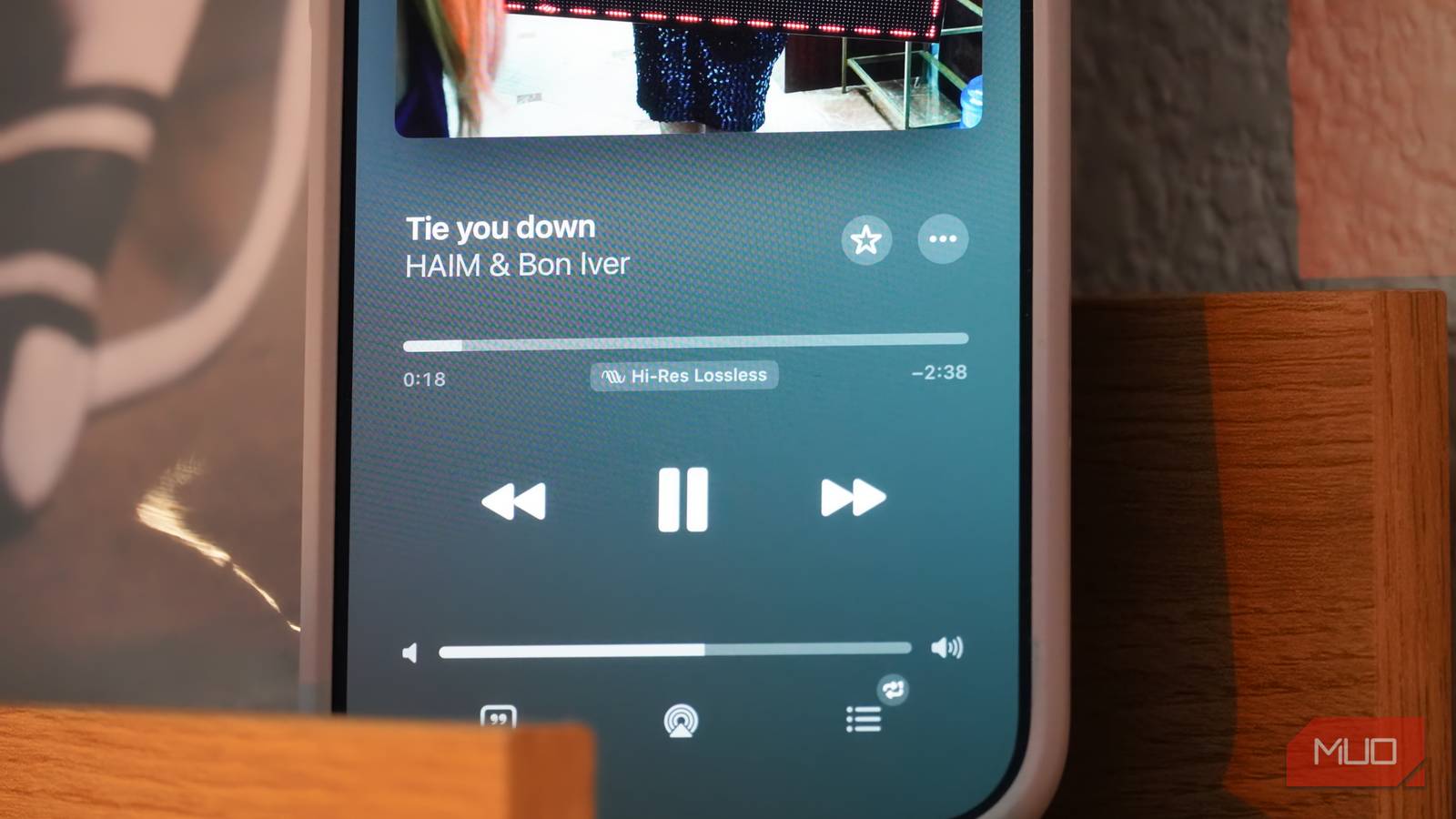
Music streaming became mainstream a decade ago, and the top streaming services have over a billion users combined. Prices keep rising, and platforms like Apple Music, Spotify, Tidal, or Amazon Music need to deliver new features to justify the added cost. For music fans that crave the highest possible quality, streaming services have marketed lossless and spatial audio as upgrades over lossy stereo. The platforms didn’t stop there — beyond CD-quality lossless music, Apple Music, Tidal, and Amazon Music offer “high-resolution” or “hi-res” lossless files.
High-resolution lossless music streaming looks great on a spec sheet, but it offers few practical benefits. The limits of human hearing mean that we can’t hear the extra frequencies offered by high-resolution lossless files, even with the right audiophile gear. By streaming or downloading hi-res lossless songs, you might be wasting bandwidth and storage without reaping any rewards.
Only one tier of lossless streaming truly matters
Beyond CD quality, high-resolution lossless audio is mostly a gimmick
Music streaming comes in a variety of forms, and quality varies. Every streaming service has a baseline lossy codec, like AAC 256kbps or an equivalent. Some platforms, like YouTube Music, lack high-quality files beyond this basic threshold. While these lossy codecs can’t match the quality of true lossy files, they are incredibly efficient and store the audio frequencies humans are most likely to actually here. Since many of us stream music played wirelessly over Bluetooth, the audio is already being compressed, and lossy AAC 256kbps starts to make sense.
This level of music streaming quality doesn’t match that of a CD. Lossless audio technically means an audio file hasn’t lost quality during the compression process, and is still bit-perfect. Colloquially, “lossless audio” has evolved into a marketing term used to describe files that match or surpass the quality of a CD. These files have a 16-bit depth and a 44.1 kHz sample rate. Many modern streaming services support CD-quality audio.
Spotify is one of them, but it is limited to 16-bit/44.1 kHz lossless audio. Other platforms, such as Apple Music, Tidal, and Amazon Music Unlimited, go beyond CD-quality. They offer files at up to 24-bit/192kHz quality, and offer bitrates of nearly 4,000kbps. Amazon Music Unlimited, for instance, claims that its hi-res lossless files provide more than 10x the bitrate of standard lossy files.
It’s easy to look at YouTube Music or Spotify as inferior due to their lack of hi-res lossless audio support. In a way, these streaming services do lag behind the competition, and I’ve criticized them accordingly. However, it’s important to emphasize that 16-bit/44.1 kHz lossless audio is more than enough quality for almost everyone. There are always outliers, generally speaking, humans can’t hear the difference between CD-quality files and hi-res lossless files anyway.
You can’t hear beyond CD quality anyway
Humans can only hear between 20Hz to 20kHz as a general rule
The quality of audio files is often expressed by their bit depth and sample rate. Consider the 16-bit/44.1kHz quality of a CD as an example. The first number, 16, identifies the bit depth of a file. It tells you key details about audio quality, like a file’s dynamic range capabilities and noise floor. The second number, 44.1kHz, is the sample rate. The maximum frequency response of an audio recording is always half its sample rate, and this reveals which sound frequencies can be recreated by a file.
So, a file encoded in 16-bit/44.1kHz quality spans a frequency range of 20Hz to 22.05kHz. This is important, because we can compare the frequency range of a CD-quality file to the frequency range of human hearing. Humans can typically hear frequencies between 20Hz and 20kHz, and this is before natural hearing loss. Our ability to perceive high-frequency sounds is best as children, and this ability degrades over time.
In other words, a CD-quality file already contains more frequencies than humans can hear. A high-res lossless file in 24-bit/192kHz quality contains frequencies between 0Hz and 96kHz, but we can’t hear the extra sounds. The 24-bit depth theoretically improves dynamic range, but again, the bottleneck is our own hearing.
If you don’t believe me, take a high-frequency-range test for yourself. Sites like AudioCheck let you find the limits of your audio gear and your own hearing. A study by researchers E. Brad Meyer and David R. Moran concluded, after a year of testing, that professional recording engineers, recording students, and audiophiles couldn’t distinguish the difference between CD-quality and hi-res lossless files.
Lossless files aren’t the bottleneck in your setup
Focus on wired USB-C DACs or headphones before trying hi-res lossless

You might think there’s no harm in playing hi-res lossless files anyway, but that isn’t always true. Hi-res lossless files take up five times as much storage space as CD-quality lossless ones. With 10GB of space, you can only store about 200 hi-res lossless songs. If storage isn’t a consideration, remember that the larger file sizes will consume more bandwidth on your network and use more cellular data. There are quite a few downsides to streaming hi-res lossless music, and few upsides.
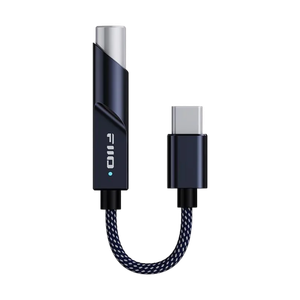
Plus, there are other limitations to address first. If you want to improve your audio quality, start using a cable. Bluetooth uses compression, and it can’t match the bitrate of lossless files and a solid digital-to-analog converter (DAC). Your favorite streaming devices, like phones or laptops, already have a DAC. However, you can add a USB-C DAC to your setup to get even more quality and power out of a wired connection.
Switching to wired headphones or a USB-C DAC is a surefire way to enjoy better sound compared to wireless. Hi-res lossless audio, on the other hand, is more of a marketing ploy than something that’ll actually lead to a better experience.
- Type
-
32-bit/384KHz
- DAC
-
THD+N: <0.0006% SNR: 125dB Noise: <1.7uV
- Amplifier
-
245 Milliwatts
- Connectivity
-
USB-C
The Fiio KA11 is a USB-C dongle digital-to-analog converter (DAC) that brings up to 32-bit, 384kHz sound to any Type-C device, including phones, tablets, and PCs.