


Generally speaking, doing actual scientific research is slow and somewhat dull. You have to be very methodical and precise, and there are few to no opportunities for you to outrun alien bounty hunters or jump into the air dramatically as something explodes behind you.
Sci-fi movies and TV show fix this problem by introducing all kinds of pulse-pounding antics, even if they have to bend the rules of science to do it. But there are some that try to have it both ways and mostly succeed.
For All Mankind
One small step for scientific accuracy, one giant leap for TV
For All Mankind, one of the best sci-fi shows currently on the sit, is set in an alternate reality where the space race between the United States and the Soviet Union never stopped, resulting in the world getting to use advanced technologies like video phones and electric cars far sooner than we did in our world. That’s a reflection of how space travel has often produced all kinds of useful technological knock-on effects for us here on Earth.
Many of the designs on For All Mankind are based on actual NASA concepts, which helps add to the verisimilitude. The new spin-off Star City, which shows us the early days of the Soviet space program, lives up to For All Mankind’s reputation for scientific accuracy.

- Release Date
-
2019 – 2027-00-00
- Network
-
Apple TV
- Showrunner
-
Ronald D. Moore
-

-
Michael Dorman
Gordon ‘Gordo’ Stevens
-

-

2001: A Space Odyssey
The cosmic ballet goes on

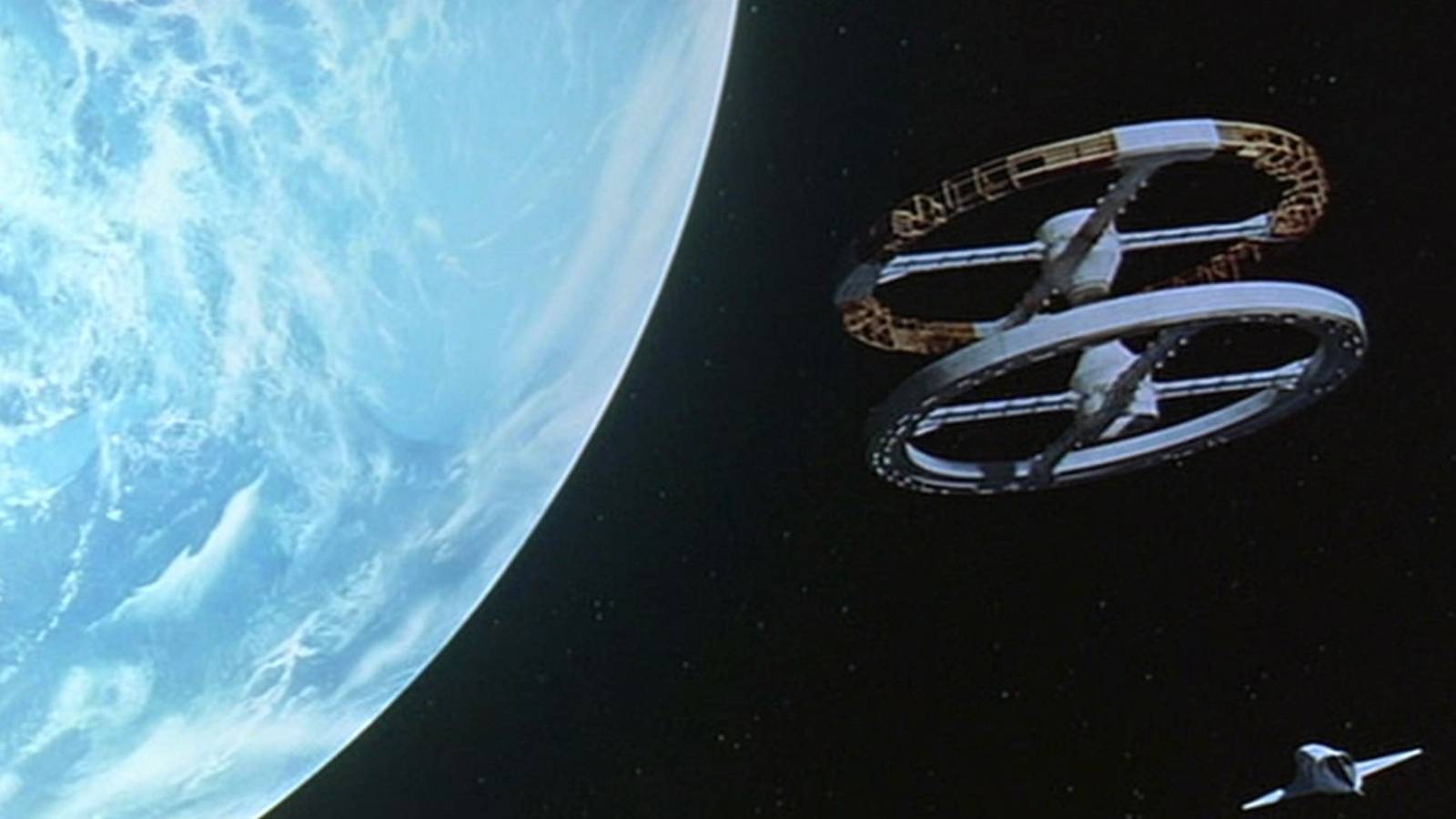
Not everything about Stanley Kubrick’s 1968 sci-fi classic is realistic — we’re pretty sure the Monolith that super-charges human evolution isn’t based on anything real — but producers famously worked with NASA to get the particulars of orbital mechanics right. The movie depicted a realistic vision of how artificial gravity could be achieved in space, predicted the rise of technologies like artificial intelligence and flat-screen displays, and made sure there was no sound present in the vacuum of space. Not everything about the movie is scientifically accurate, but it was way ahead of its time.

- Release Date
-
April 10, 1968
- Runtime
-
149 minutes
- Director
-
Stanley Kubrick
-

Keir Dullea
Dr. David Bowman
-
Gary Lockwood
Dr. Frank Poole
-
William Sylvester
Dr. Heywood Floyd
-
Douglas Rain
HAL 9000 (voice)
Orphan Black
Clone-worthy

Orphan Black is about a woman (Tatiana Maslany) who discovers that she’s actually one of several clones running around the world, all of them produced by the same experiment. The clones were produced using the SCNT method, the same technique made to produce Dolly the sheep. Like actual clones of animals in our world, the clones often suffer health problems. Also, they develop distinct personalities, an acknowledgment that identities are shaped not just by genes but also by how those genes interact with different environments.
Orphan Black is far from scientifically unimpeachable; namely, attempts to cure actual humans have all failed. But if Orphan Black didn’t make at least one leap, there wouldn’t be a show.

- Release Date
-
2013 – 2017
- Network
-
Space, BBC America
- Showrunner
-
Graeme Manson
-

Tatiana Maslany
Sarah / Cosima / Alison / Helena / Rachel
-

Jordan Gavaris
Felix ‘Fee’ Dawkins
-

Maria Doyle Kennedy
Siobhan ‘Mrs. S’ Sadler
-

Kevin Hanchard
Detective Arthur ‘Art’ Bell
Europa Report
The Blair Witch Project goes to the Moon

Europa Report is a found-footage thriller about a group of astronauts who travel to Europa, a moon of Jupiter, on a mission to find extraterrestrial life. The movie accurately depicts how long it would take to get to a place as remote as Europa, reckons with Jupiter’s powerful electrical field, and speculates that a subsurface ocean heated by volcanic, hydrothermal activity could exist beneath the icy crust of the moon, which is in line with scientific theories.
Sure, the astronauts eventually encounter a deadly space alien on Europa, which is less realistic, but we can’t begrudge the producers a little fun.
Planetes
Beware falling space debris

Plantes is an anime series about a group of ordinary working people sent into orbit to clean up space debris that could otherwise damage satellites, spacecraft, and space stations. As outer space gets more crowded, this will increasingly become a problem in our world, and Planetes is very careful when it comes to the particulars of how this kind of work will be done, paying attention to things like the need for propulsion to make orbital changes and the effects of weightlessness.

- Release Date
-
2003 – 2004-00-00
-
Kazunari Tanaka
Hachirouta Hoshino
-
-
Takehito Koyasu
Yuri Mihailokov
-
Ai Orikasa
Fee Carmichael
Gattaca
NASA-approved

In 2011, NASA scientists made a list of the best (and worst) sci-fi films ever made. At the top was Gattaca, a 1997 movie set in a world where it’s easy to edit someone’s genes at birth, and society has become stratified between those with desirable and undesirable genes.
We can’t do everything that can be done in Gattaca just yet, but between gene editing technology like CRISPR Cas9 and businesses like Ancestry.com, we’ll well on our way. We may all live to see the world of Gattaca become a reality. In the meanwhile, you can stream the future.

- Release Date
-
September 7, 1997
- Runtime
-
106 Minutes
- Director
-
Andrew Niccol
Space Odyssey: Voyage to the Planets
A fake documentary with real science

Space Odyssey: Voyage to the Planets (no relation to 2011: A Space Odyssey) is a fake, two-part documentary that follows a fictional crew as they take a tour of the solar system. They encounter real-life obstacles like deadly solar flares, missions utilize technologies based on real concepts like ion propulsion, and we see how they make artificial gravity using a spinning habitat wheel. Everything is kept as grounded as possible, the faux-documentary format gives the show a unique hook.
7 brilliant sci-fi movies under 90 minutes you can finish tonight
Whether you want something fun and accessible or dense and difficult, there’s a short sci-fi movie out there with your name on it.
The Martian
Matt Damon, stranded again

The Martian is about a botanist (Matt Damon) stranded on Mars who has to make the best of his situation. He creates water by catalytically decomposing hydrazine and burning the hydrogen, which is scientifically sound. He converts Mars’ carbon dioxide atmosphere into oxygen in a way that NASA has proven is at least possible. He grows crops in Martian regolith by mixing it with organic material like the crew’s waste.
The movie always tries to keep its plot points grounded in real science, even if it occasionally bends the truth for dramatic effect.

- Release Date
-
October 2, 2015
- Runtime
-
2h 24m
- Director
-
Ridley Scott
The Expanse
You knew this was coming

The Expanse is routinely brought up in discussions about the most scientifically accurate shows on TV, and it deserves to be. The show is set in a future where there’s tension between people living on Earth, Mars, and the asteroid belt. It accounts for things like messages taking a long time to cross the vacuum of space, how to create artificial gravity on space stations and long-range spacecraft, and more. It doesn’t get everything right, but it goes further than most shows do.

- Release Date
-
2015 – 2022-00-00
- Network
-
SyFy, Prime Video
- Showrunner
-
Naren Shankar, Mark Fergus, Hawk Ostby
-

-

Dominique Tipper
Naomi Nagata
-

-

Interstellar
Christopher Nolan strikes again

Interstellar is about a group of astronauts who travel through a wormhole near Saturn in an attempt to find a new habitable planet, and is widely hailed as one of the most scientifically accurate films ever made. Director Christopher Nolan collaborated with Nobel Prize-winning theoretical physicist Kip Thorne to make sure that the physics in involved were as realistic as possible. The depiction of the black hole “Gargantua” is based on Einsteinian field equations provided by Thorne. The movie puts Einstein’s theory of general relativity to work in its depiction of time dilation, where one hour on a planet near a huge gravity source is equal to seven years back on Earth.
Nolan is known to go all out when it comes to realism in his films. We’ll see if The Odyssey, which comes out in July, can compete.
Further watching
There are other shows out there that strive to be scientifically accurate within their genres, like ReGenesis and Mr. Robot. And once you watch those, you can always turn on Star Wars or something and know that there’s no shame in watching something that isn’t scienticially accurate but is a lot of fun.