


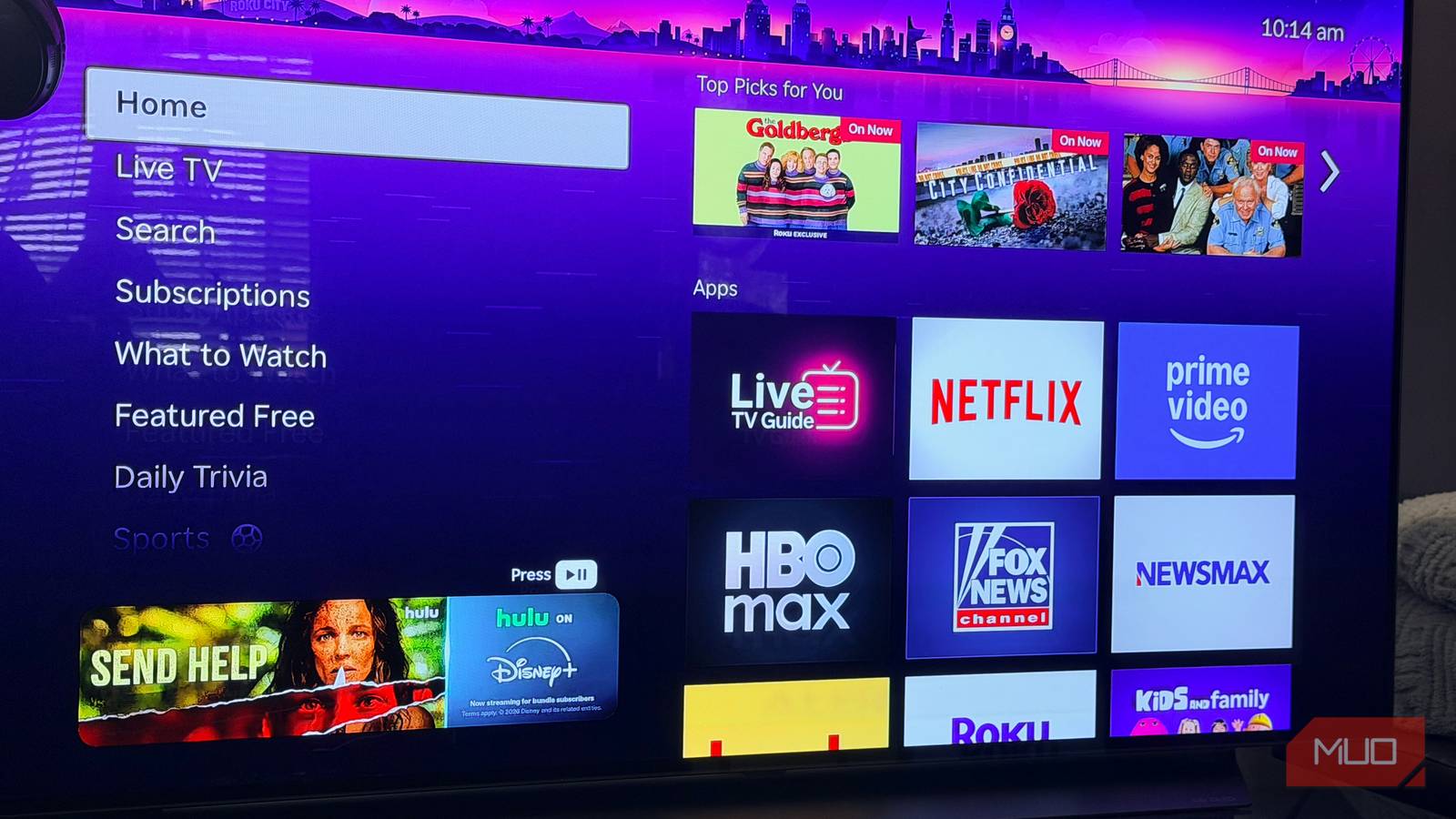
I spent a long time thinking my TV was mediocre. Movies looked flat and cheap, as if I were watching behind-the-scenes footage. Action scenes looked off. The picture and colors were fine, but the motion always felt wrong.
A friend finally identified the issue: motion smoothing. My Roku, which I use to access all sorts of programming, had it enabled by default, making everything look like amateur video. Turning it off took 30 seconds. I wish I had known sooner.
Roku’s new home screen promises less clutter, but I’m not convinced
Promotional content is still everywhere
What motion smoothing actually does to your picture
How your TV fills in frames that were never filmed
Motion smoothing goes by different names depending on the manufacturer. On Roku devices, it appears as Action Smoothing, but you may have also seen it called Motion Enhancement, TruMotion, MotionFlow, or Smooth Motion Effect on various TVs and streaming sticks. Motion smoothing is a picture-processing feature that tries to make motion look smoother on screen by creating extra frames. The label changes, but the underlying behavior is the same.
Films are typically shot at 24 frames per second (fps), meaning there are 24 still pictures shown each second in a movie. That frame rate is not a technical limitation; it is a deliberate creative choice that has defined the visual language of cinema for nearly a century. Your TV, however, often refreshes its display 60 or more times per second. ‘Refresh rate’ refers to how many times per second the image on your TV updates. Motion smoothing connects the gap between movie frame rates and TV refresh rates by generating and inserting artificial frames between the real ones, filling in movement the camera never actually captured.
The result is motion that looks hyper-fluid and immediate. On paper, this sounds like an improvement. In practice, it removes the cinematic quality that makes movies feel like movies. The effect is so jarring to trained eyes that it has its own widely used name: the ‘soap opera effect.’ This term refers to the overly smooth motion that resembles daytime television, which is usually shot on video cameras at high frame rates rather than on film.
Why this setting ships turned on
Motion smoothing tends to render sports and live television looking genuinely better. Fast-moving action benefits from the extra frames in ways that narrative filmmaking does not, and a TV showing smooth, fluid motion on the sales floor is easier to sell than one that looks identical to every other panel next to it. Manufacturers default to having it on because it makes an immediate visual impression, even if that impression works against you the moment you sit down to watch a film.
Roku is not unique in this. Nearly every major TV brand and streaming device ships with some form of motion processing active. What makes it worth addressing specifically on Roku is how many people use these devices as their primary way of watching movies and never think about digging into the picture settings at all.
How to turn off Action Smoothing on Roku
Finding the setting on your device

The setting is buried just enough that you would not find it by accident, but once you know where to look, it takes under a minute to fix. The exact path varies slightly depending on your Roku model and software version, but the process is consistent across current devices.
Press Home on your Roku remote. Go to Settings, then TV Picture Settings or Display Type. Open Advanced Picture Settings and find Action Smoothing. Toggle it off.
On some Roku models, look for Motion Enhancement or Picture Clarity as well. If found, turn them off along with Action Smoothing. Leaving anyone still alters the image.
There is no need to save or confirm. The change takes effect immediately, and if you are already playing something when you make the adjustment, you can watch the difference happen in real time. Most people notice it within seconds.
These settings are only available on Roku TVs, not Roku sticks.
What your picture looks like after you turn it off
What motion blur actually is (and why it belongs there)

The first thing most people notice is that motion in fast scenes looks slightly less sharp than before. That is not a problem with your TV. It is exactly what a 24fps (frames per second) film is supposed to look like. The subtle blur during quick camera pans is called motion blur. Motion blur is the softness introduced when objects move faster than the camera’s shutter can capture them sharply, and cinematographers use it intentionally to create a sense of weight and momentum. Motion smoothing was eliminating it, which is part of why everything looked oddly weightless.
Films will look more like you are watching them in a theater. The image will feel less aggressive and processed. Some people take a few minutes to adapt if they have been watching with smoothing on for a long time, but the consensus among filmmakers, cinematographers, and aficionados is overwhelming: this is how the director intended the film to be seen.
Directors have been vocal enough about this issue that it has become something of a public campaign. Christopher Nolan, Ang Lee, and Judd Apatow are among the filmmakers who have spoken out against motion smoothing over the years, and several have explicitly asked audiences to check their settings before watching their films. When the people who made the movie are issuing viewer advisories about your TV settings, that tells you something.
When leaving it on actually makes sense
Sports and live TV

Turning off motion smoothing universally is the right call for most people who primarily watch films and scripted TV. But there are cases where it works in your favor, and it is worth knowing them rather than treating the setting as permanently broken.
Sports broadcasting is the clearest example. Live football, basketball, and soccer are already shot at higher frame rates on broadcast cameras, and the smoothed motion makes tracking fast action easier and more comfortable to watch. If you regularly switch between movies and live sports, you may find yourself toggling through the settings depending on what is on. Roku makes that quick enough that it is not unreasonable to do so .
Some people also prefer the smoothed look in animation, particularly in older cel-animated content produced at lower frame rates. Whether smoothing helps or hurts, there is genuinely a matter of preference, so it is worth trying both and deciding for yourself.
It is a minor adjustment with a noticeable payoff
After I made this change, the people I recommended it to noticed immediate relief and were frustrated that no one had told them sooner. Adjusting this setting is simple, free, and merely alters how motion shows on screen.
If movies on your Roku have always felt a bit off, turning off motion smoothing may be the key. The improvement is clear from the very first scene. You should also take a look at Roku’s secret menus.