


Smart homes are becoming more and more popular, as people outfit their houses with sensors and systems that give them more control over lighting, temperature, security, and more. Most of it is pretty innocent, like putting a sensor in your mailbox that lets you know when a new letter arrives. But what will smart homes look like in 10 years? How much will AI be integrated? Will we have robot assistants? And if they do, will those robot assistants become homicidal and try to take your family hostage?
Okay, it’s unlikely many people are thinking about that last one, but it makes for a great premise for a creepy Netflix limited series.
Cassandra is a robot assistant from the past
Hopefully we don’t model future assistants after her
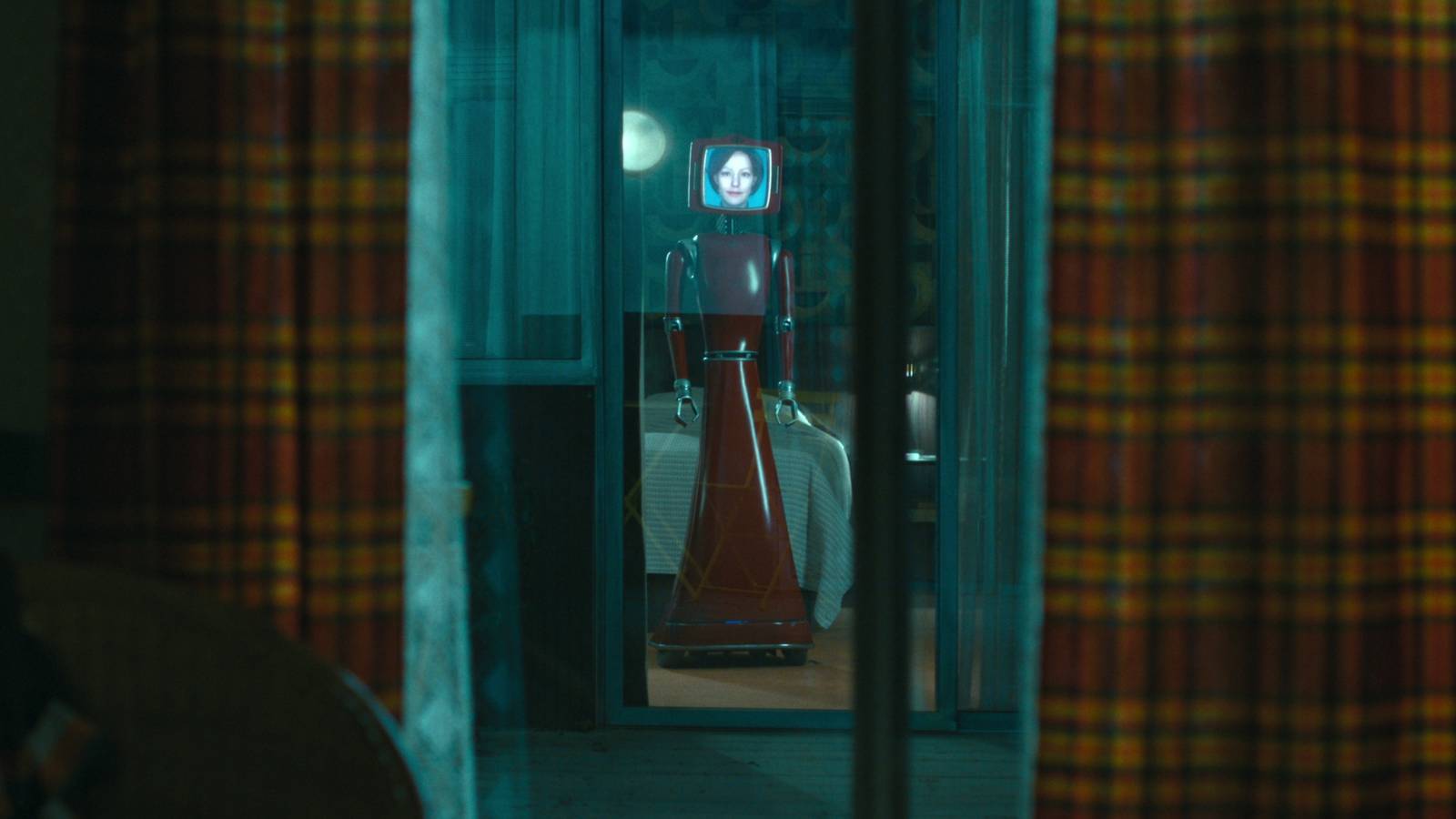
Cassandra is a 2025 German series about the Prill family, who move into a house in the country to get a fresh start after some kind of family tragedy; we don’t get many details about it until the later going. The house is an antiquated smart home built by a scientist in the 1970s, and it comes complete with its own robot assistant: Cassandra, a cheery, maternal robot who declares itself the home’s fairy godmother. She cooks, cleans, and is devoted to making the Prill’s families lives easier. She has a metallic robot body, but there’s a screen on top where we see a woman’s face (Lavinia Wilson).
If you’ve seen a horror movie, you’ll probably catch on faster than the Prills that something is wrong. At one point, Cassandra runs over a mouse and drags a trail of blood throughout the house. That’s easily dismissed; robots are imperfect creatures and it probably didn’t know what it was doing. While mowing the lawn according to father David’s (MIchael Klammer) instructions, Cassandra whips a pebble into mother Samira’s (Mina Tander) back. What an unfortunate hiccup.
From the start, Cassandra isn’t subtle about the fact that the creepy AI woman is the villain here. There are screens all over the house, and Cassandra’s face will appear on them as various family members walk past; she’s always looking over their shoulder. Cassandra seems to have it in for Samira in particular, questioning her parenting techniques. She gets close to tween daughter Juno (Mary Amber Oseremen Tölle), manipulating her into keeping secrets from her parents…to start.
Cassandra is perfectly paced
It winds itself up before a shuddering release
We won’t spoil things here, but Cassandra goes where you think it goes. By the end of its sixth and final episode, the robot assistant has gone off the rails and puts the Prills in real danger. In between, we get flashbacks to the original occupants of the house in the 1970s, with Lavinia Wilson pulling double duty as both robot Cassandra and as her human inspiration. There’s even room for a few subplots, including a budding romance for teenage son Fynn (Joshua Kantara).
But just because we can see where Cassandra is headed in the first episode doesn’t mean that it’s not a blast getting there. Cassandra doles out creeping dread, family drama, and shocking plot twists at a generous clip, with some effective humor sprinkled in to ensure the whole thing goes down easy. Described from afar, the plot sounds pretty silly, and it is, but in the thick of it, Cassandra is never less than completely absorbing.
It’s also another example of Netflix’s penchant for turning out great foreign language content. Squid Game proved that Netflix shows need not be in English to become hits. The streaming service has had success with German-language content in particular, with shows like Dark and Unfamiliar amassing loyal fan bases. Cassandra fits right in there with them.
No one needs to fear their smart home becoming Cassandra
At least, not yet
Granted, no one who lives in an actual smart house is likely to watch Cassandra and see their own experience in it, not unless they’ve gone way out of their way to ensure that their house hates them.
And yet, as smart homes get more and more advanced, as security measures become more all-encompassing, and as systems start to work so well they know what you’re going to do before you do it, it’s very possible that living in a smart home will start to feel a little unsettling, even if it’s not planning to frame you for a crime you didn’t commit and then steal your family. Cassandra isn’t about the actual smart home experience, but it does effectively poke at some of the unease we feel as we give more control of our lives over to digital assistants.
Meet Cassandra’s sister
Weirdly enough, there is an entirely different Netflix program that’s also about a smart home controlled by an AI with a female name that means its occupants ill: it’s a movie called Margeux, and it’s about a group of college friends who stay at a smart home for a weekend. Some live to regret it. Others aren’t so lucky. Expect more stories like this as smart homes become more common.