


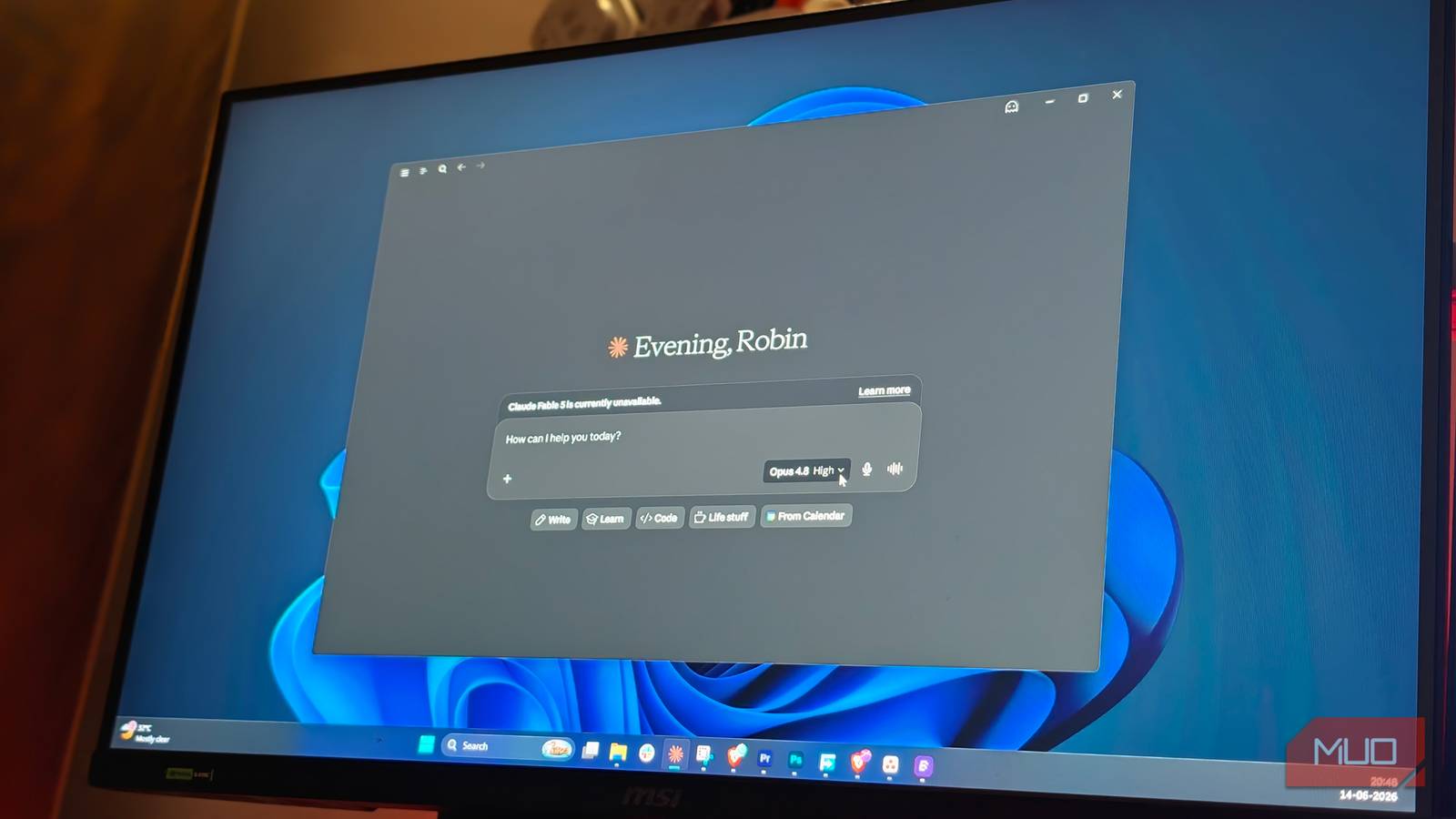
I spend a lot of my day moving between AI tools, and for the past several months, I’ve been paying for the premium tiers of Claude, Gemini, and ChatGPT all at once. It sounds excessive when I write it out, and it probably is, but my work involves enough drafting, research, and repetitive busywork that I wanted to give each one a fair shot at earning a permanent place in my routine. I figured I’d settle into a clean split eventually: one tool for writing, another for quick lookups, and so on.
That’s not what happened. What happened instead was that I’d open ChatGPT or Gemini, poke at a task for a while, and then find myself back in Claude, finishing the job. After watching myself do this for weeks, I stopped treating it as a coincidence and started paying attention to why it kept happening.
ChatGPT’s decline is real — I tested it against Claude on 3 routine tasks, and it lost every time
What happened, ChatGPT? We used to be cool.
Claude just understands what I mean the first time
And that alone saves me more time than any feature

The biggest thing is that Claude gets what I’m asking without me having to rephrase myself four different ways. When I hand it a prompt, the answer that comes back is usually clear, usable, and close to what I had in my head, which means I’m not stuck in a loop of corrections trying to drag the tool toward the point.
For a long time, I assumed I was the problem. I thought my prompts just weren’t detailed enough, so I kept padding them with more context. Then I started running the exact same prompts through all three tools side by side, and the difference stopped being something I could blame on myself. ChatGPT handled them reasonably well, but Claude landed closest to what I actually meant almost every single time. Gemini was the one I found myself fighting with most, explaining the same idea over and over until I was more drained than when I started.
It asks questions instead of guessing wrong
Turns out a tool that pauses beats one that charges ahead
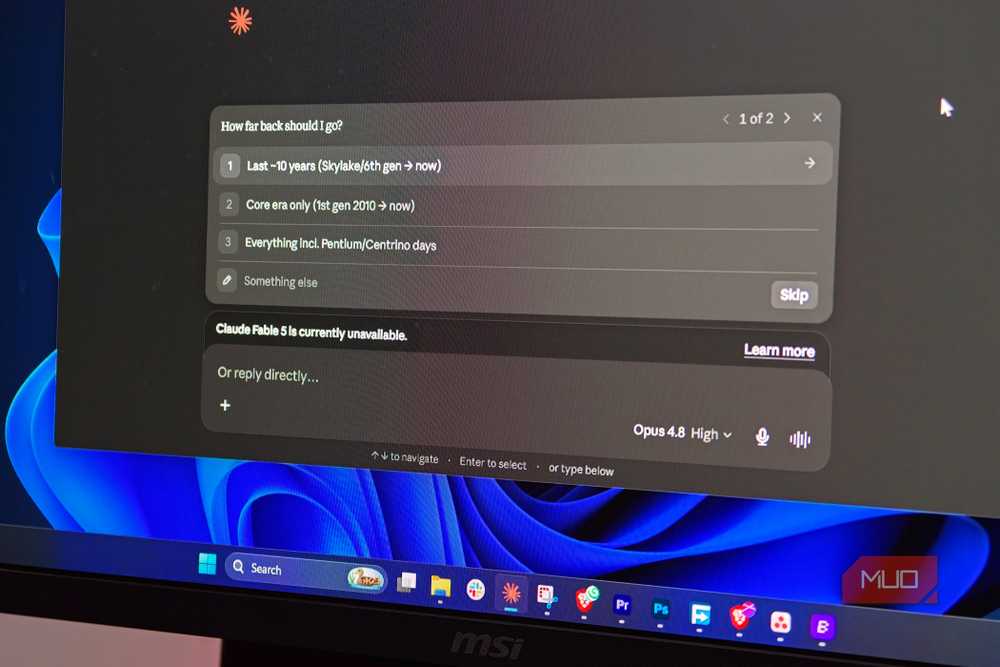
This is the part I didn’t expect to care about as much as I do. Most AI tools, when they misread a request halfway through, just keep going. They don’t stop to check; they don’t flag the confusion; they simply hand you a finished result that technically exists but has nothing to do with what you wanted.
Claude does something different. When something is unclear, it pauses to ask a follow-up question before charging ahead. I noticed this most while experimenting with Artifacts, where instead of demanding a perfectly structured brief up front, it starts with a conversation and figures things out alongside me. It feels like talking an idea through with a colleague who actually wants to get it right. That simple habit of clarifying as it goes has saved me from starting over more times than I can count.
Cowork is the feature that sealed the deal
A quiet assistant runs in the background while I do something else
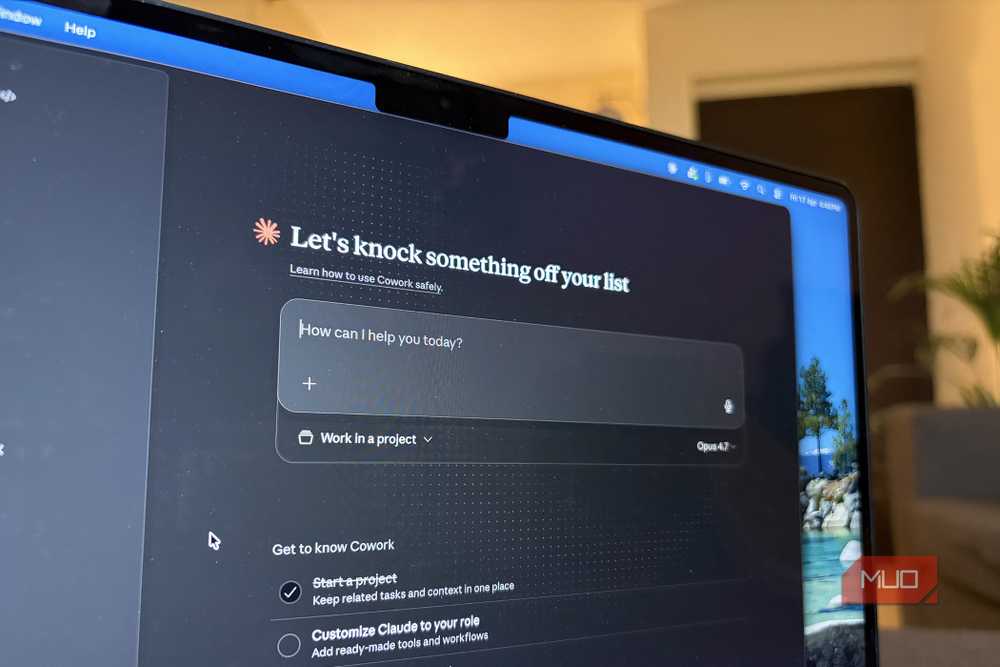
If the conversation quality is what made me prefer Claude, Cowork is what made me stop drifting back to the others entirely. In my workflow, it functions like a digital assistant running in the background, handling the chores I either forget or just don’t want to spend energy on. I’ve asked it to put together a daily schedule for 10 am and email it to me, so the moment I sit down, I already know what my day looks like, including meetings and any pending work. You just have to feed it the context beforehand, and from then on it quietly handles the rest. I’ve also set it loose on my downloads folder, which had become a graveyard of screenshots and half-named files, and now it sorts and renames the clutter for me, so I’m not the one digging through “Screenshot_2026_final_final_2” at midnight.
There’s a dispatch feature that takes this further. When I’m away from my desk and remember something I need done on my computer, I can send a message from my phone, and Claude handles it remotely. It feels a bit like carrying a walkie-talkie wired straight to my desktop, and it means a task I’d otherwise forget is already finished by the time I sit back down. That’s the whole appeal for me.
The other two aren’t bad, they just ask more of me
Capability isn’t the only thing that matters when you use them all day

I want to be fair here, because ChatGPT and Gemini are genuinely capable. They’re strong at generating images, organizing information, and performing plenty of everyday tasks, and there are days I still reach for them. But capability isn’t the only thing that matters when a tool is part of your daily routine. Effort matters too, and across months of use, Claude has consistently been the one who asks the least of me to get something good out of it.
There’s also the way Claude holds onto context that I didn’t appreciate until I lost it elsewhere. Over time, it has started to understand how I phrase things and what I’m usually after, so I spend less time re-explaining myself at the start of every session. With Gemini, especially, I often felt like I had to introduce myself from scratch each time. Claude feels more like picking up a conversation than starting a new one, and that continuity is a big part of why it slots so naturally into my day.

6 Reasons I Use Claude Instead of ChatGPT
ChatGPT is great; don’t get me wrong. But Claude is so much better.
The tool I’d actually put my money on
After months of keeping all three subscriptions active and genuinely trying to spread my work across them, my recommendation is simple. If you want an AI that understands you fastest, checks in before it goes wrong, and handles the boring parts of your day without supervision, Claude is the one I’d back. I’m still paying for the other two for now, but I already know which tab I’ll have open tomorrow morning.

- Developer
-
Anthropic PBC
- Price model
-
Free, subscription available
Claude is an advanced artificial intelligence assistant developed by Anthropic. Built on Constitutional AI principles, it excels at complex reasoning, sophisticated writing, and professional-grade coding assistance.