



Wired audio is making a serious comeback, and it’s not just about nostalgia. If you spend your day hopping between video calls and deep-work playlists, you’ve likely realized that Bluetooth devices are riddled with compromises — especially on a platform like Windows. I reached a breaking point after realizing that my Bluetooth earphones would always sound mediocre during calls. It doesn’t matter which brand you buy or how powerful your Bluetooth adapter is; the protocol itself forces the audio into a low-bandwidth.
Disappointed by the ceiling of wireless tech, I decided to dive into the world of Chi-Fi IEMs. For the uninitiated, IEM stands for In-Ear Monitors. In practical terms, they look like regular earphones, but the internal philosophy is different. The distinction between consumer earphones and IEMs is much like the difference between standard home speakers and studio monitors. While consumer headphones often color the sound to make it more fun or sensational, a monitor is designed for accuracy.
Chi-Fi, or Chinese High-Fidelity, has disrupted this market by offering incredible hardware at a fraction of the cost of legacy brands. I decided to see if the hype was real and settled on the Linsoul 7Hz G1. At $30, it felt like a low-risk entry point into high-end audio.
These Chinese earphones are eating the audio market — and I get it now
Colloquially coined as “Chi-Fi,” low-budget Chinese earbuds and IEMs are giving the big brands a run for their money, and it’s easy to see why.
The quality was really disappointing
But it was my fault

When the package arrived, I was immediately impressed by the build quality. Unlike the hollow plastic feel of most budget buds, these had a satisfying weight to them. I hooked them up, hit play on a high-bitrate track, and… I was underwhelmed. The sound was fine, but it didn’t feel like a $300 experience for $30.
In fact, the bass and sub-bass were almost non-existent. I knew that monitors were supposed to be flat, but this felt too thin. All I could hear were the mids and highs, while the soul of the music — the rhythm and the punch — was missing. I began to wonder if I had received a defective unit, or if the entire Chi-Fi movement was just an internet-fueled exaggeration. I almost threw them in a drawer and went back to my wireless buds.
But, not long after, I realized it was no fault of the device.

- Brand
-
Linsoul
- Additional Tips
-
Yes
The 7Hz G1 is a high-performance in-ear monitor designed for gamers and audiophiles seeking precision and comfort. Featuring a 10mm dual-magnetic dynamic driver with a DLC diaphragm, it delivers a balanced sound profile tuned to the Harman Target Curve.
The earphone tip matters
A lot
The turning point came a week later while I was setting up a pair of AirPods Pro 3. I noticed how much emphasis the setup process placed on the “Ear Tip Fit Test.” Apple’s software literally uses internal microphones to check if you have a proper seal. That’s when I remembered that, hey, I didn’t do any of this on the 7Hz G1 IEMs.
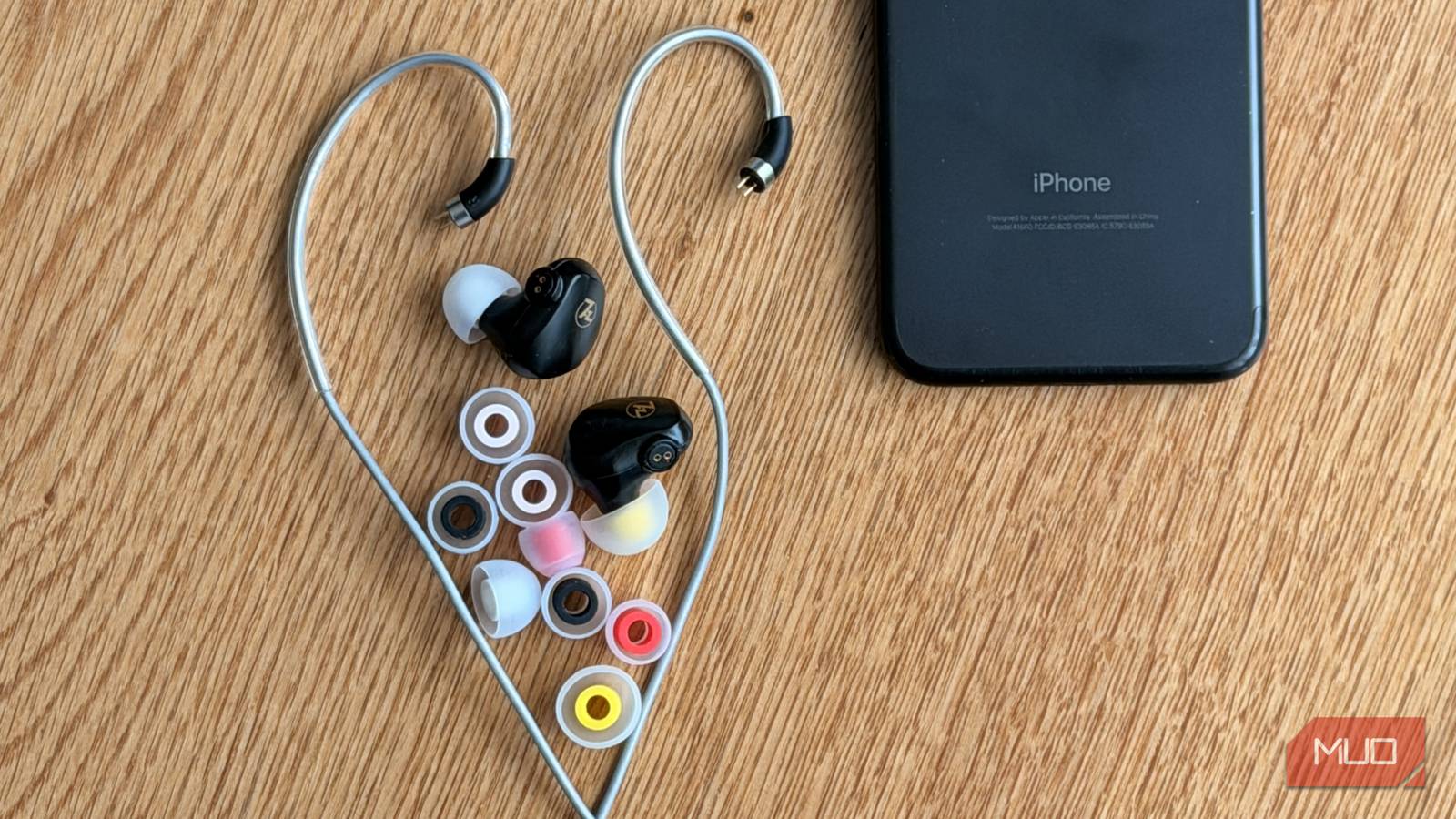
The 7Hz IEMs also came with not one, not two, but five pairs of tips in different sizes and colors. I should have seen the sign. To be frank, I’ve always used the default medium tips that come pre-installed on every pair of earphones I’ve owned. I never had a fit problem; they stayed in my ears just fine, so I assumed they were the right size.
So this time, too, I had stuck with the medium, average-sized tips that came already attached. But after seeing all that emphasis on the seal, I went back and tried the different sizes. As it turns out, the tips I was using were too small. And if the tip is smaller than your ear canal, it will fit easily, sure, but it won’t necessarily make a proper seal.
I ended up going two sizes bigger, and boom. The bass was back. Back back. The sound quality was so much better that I went back to all my earphones, wired and wireless, and started changing the tips on them too.
How to find the right seal
Mess around and find out

Don’t assume your ears are “medium” just because that’s the default. Ear canals vary wildly; in fact, it’s quite common for your left and right ear canals to require different sized tips.
Start by finding the right size. The tip should create light but consistent contact around the whole ear canal. It should not be so large that it hurts, and it should not be so small that it slides in easily without pressing gently against the canal walls.
Once inserted, do a quick seal test. Play some music with low bass, then cup your hands over your ears. If the sound changes dramatically or the bass suddenly improves, you probably don’t have a proper seal. You had a partial seal, and cupping your ears just helped close the acoustic gap.
If you want to go further, you can use a glass cup and cup it around your ears. If the earphone seal is good, you should not notice a major pressure or sound change when you put the cups over your ears.
If you wear glasses like me, take them off before trying this, because glasses can also break the seal or change how things sit around your ear. Also, you don’t necessarily have to use the same size tip in both ears. In my case, I had to use one size smaller for my left ear to get a proper seal on both sides.
Why does earphone seal matter so much?
It’s physics

A good fit does not automatically mean a good seal. An earbud can feel secure in your ear and still fail to seal properly. And without a good seal, you’re missing out on a lot. The tip isn’t just a comfort accessory. It is, indeed, a structural part of the acoustic system. The driver inside the earphone is designed to work with the small air volume between the driver and your eardrum. Every part of that chain matters.
Bass is especially sensitive to leakage. Low frequencies depend heavily on the earphone maintaining pressure in that small enclosed space. When there’s a gap between the tip and your ear canal wall, the bass energy leaks out before it reaches your eardrum properly.
That’s why a poor seal can rob you of almost all sub-bass and make the midbass sound thin. You might think the earphones are weak, badly tuned, or overhyped, when really the sound is escaping through a poor seal.
This was the biggest change for me. The IEMs, of course, didn’t suddenly become bass monsters, and they weren’t supposed to. But they finally sounded complete. The bass had weight.
A poor seal can rob you of almost all sub-bass and make the midbass sound thin.
A tight seal also gives you passive isolation. Not active noise cancellation; this is simpler and more primitive: the ear tip physically blocks ambient sound from reaching your ear.
That has two effects. First, you don’t need to crank the volume as much to hear over background noise. Second, and more importantly for sound quality, the outside world doesn’t mix with your music and mask the details.
A poor seal does the opposite. It lets noise in, which makes your music feel flatter and less detailed. Then you raise the volume to compensate, which is not a good long-term strategy for your hearing.
Go fix your audio
It is a tragedy that many people spend hundreds of dollars on premium audio gear only to hear a fraction of its potential because of a $0.50 piece of silicone. An earbud can sit in your ear all day without sealing, and no software EQ or Bass Boost setting can fix what you’ve lost to the laws of physics.
If your earphones feel underwhelming, don’t give up on them just yet. Go back to the box, find those spare tips, and spend ten minutes experimenting. Your ears will thank you for it.