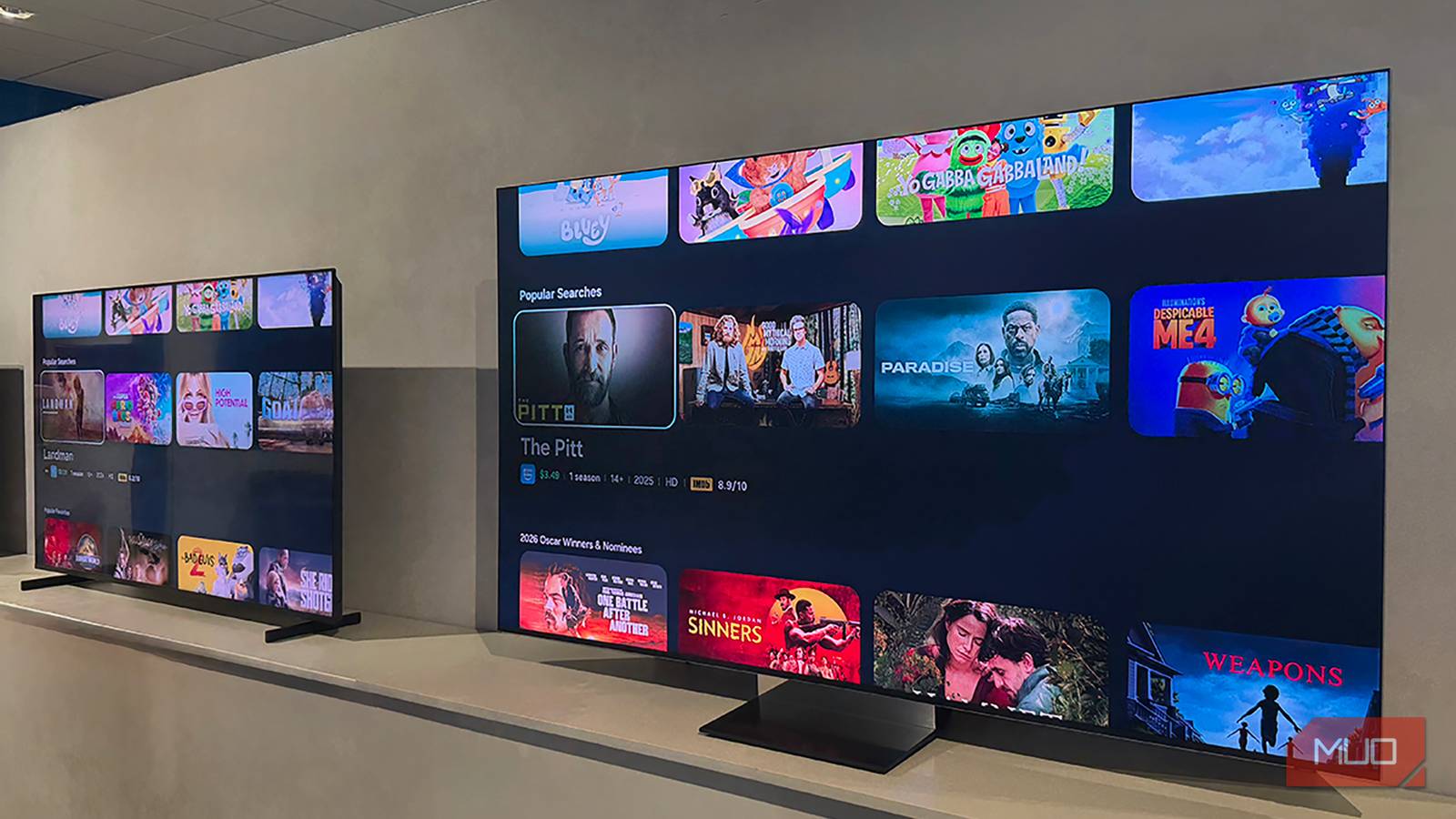






Streaming services offer content at high resolutions and relatively low costs, making them appealing to casual movie and TV watchers. You might think that a 4K video stream is superior to a 1080p Blu-ray disc or an old DVD, but that isn’t always the case. In fact, the best Blu-ray 4K Ultra HD discs will always outperform seemingly comparable 4K streaming content, and there’s a technical reason for it. Resolutions, like 1080p or 4K, only provide a snapshot of visual quality. They demonstrate the potential visual quality of a piece of content, not the actual visual quality.
Resolution is a specification that outlines how many pixels are available, and typically, higher is better. However, high resolutions also need a high bitrate — the amount of visual data shared per second — to realize their full crispness. A video with high-resolution pixel dimensions and a low bitrate might look worse than a lower-resolution video with a high bitrate. This concept is crucial to understanding why Blu-ray still looks better than streaming, and it helps explain why people still swear by physical media in the streaming era.
Streaming services and Blu-ray discs offer 4K resolution
Resolution is just one aspect of video quality — it’s not everything
Streaming and Blu-ray have quite a bit in common. Of course, the medium is vastly different. When using a streaming service, you’re accessing movies and TV shows from the cloud using your home network, and can optionally download those to your device. On the other hand, Blu-ray uses a special kind of physical disc and requires a compatible Blu-ray player. While the discs look the same, the picture quality isn’t. DVDs are limited to just 480p resolutions, Blu-rays are usually 1080p, and 4K Ultra HD Blu-rays are, as the name suggests, 4K resolution.
Streaming is similar to Blu-ray because there is just as much variety. You can stream media at a variety of resolutions reaching 4K, and in some rare cases, beyond. To watch your favorite movies and TV shows in 4K, you’ll need an eligible streaming subscription plan, a supported streaming box, and a 4K display. Theoretically, a 4K video stream from a provider like Netflix or Disney+ is equivalent to a 4K Ultra HD Blu-ray disc, but that isn’t the case.
Resolution is simply a measurement of how many pixels are displayed in a video. They’re typically represented as a dimension, representing the number of horizontal pixels and vertical pixels. However, these pixel dimensions — otherwise known as resolutions — are displayed in somewhat confusing ways. You might see shortened versions like “2K” or “4K” that symbolize the number of horizontal pixels in a resolution. Or, you could see figures such as “720p” or “1080p,” and this format represents the number of vertical pixels in a resolution.
To make matters worse, 4K is the name for a resolution of 3840×2160. You’d think the 4K moniker would represent a resolution of at least 4,000 pixels wide, but that isn’t the case here. So, it can be tricky to keep track of all the resolutions and what they mean. But there’s another factor to consider — bitrate.

Why it’s still worth buying Blu-rays
I’m still all in on physical media, and Blu-ray is an excellent option.
Blu-ray has the superior bitrate, and streaming suffers here
Resolution is just the potential for quality; you need a high bitrate to realize it

Bitrate is crucial for any kind of data transmission, whether we’re talking about file transfers, audio playback, or video streaming. It’s a number that quantifies how much data can be moved at once, typically expressed as a bits per second (bps) figure. Digital files are stored as 1s and 0s in binary digits, and bitrate represents how much of them you can share in a single second. The higher the bitrate, the better your picture quality. You need a high bitrate to avoid compression and preserve the rich color, fine details, and visual clarity that can be offered at high resolutions.
This is exactly where Blu-ray pulls away from streaming for high-quality media playback. A normal Blu-ray disc, with a 1080p resolution, has a max bitrate of 40Mbps. Meanwhile, the 4K Ultra HD Blu-ray discs offer higher bitrates, depending on their size. The 50GB discs offer 72Mbps or 92Mbps bitrates, and by comparison, the 66GB/100GB discs come with bitrates of either 92Mbps, 123Mbps or 144Mbps. The size of 4K Ultra HD Blu-ray discs isn’t advertised, so you can expect typical bitrates somewhere between 72Mbps and 144Mbps in the real world.
Here’s the kicker: the best streaming services offer bitrates that just barely match that of regular Blu-ray discs. Apple TV, the gold standard for 4K bitrates, offers up to 40Mbps bitrates in ideal conditions. On the low end, streamers like Netflix tend to cap 4K video at as low as 15Mbps. The lower bitrate available while streaming results in a more compressed video with less visual detail available. Additionally, the bitrate can fluctuate in real time based on your internet connection, and might perform worse on slow or congested networks.
Is streaming or Blu-ray the better option in 2026?
The answer isn’t the same for everyone, but I trust physical media
Blu-ray clearly has the bitrate advantage over streaming, which is why it’s the superior choice when resolutions are equal. If you’re looking for the sharpest, richest, and most detailed 4K picture, a 4K Ultra HD Blu-ray disc delivers that. While streaming services match the 4K resolution of the best Blu-ray discs, the real-world picture quality is worse due to the much lower bitrates. In fact, a standard 1080p Blu-ray disc can be a more enjoyable watch than a 4K video stream because even it offers a higher bitrate than most streaming services.
That said, investing in Blu-ray is more expensive than using a streaming service. You can find standard Blu-ray players for dirt cheap at thrift stores, but then you’re limited to 1080p discs. A player with 4K Ultra HD Blu-ray support is more costly, and the individual discs are expensive as well. I tend to like investing in physical media for a few reasons, regardless of the added upfront cost. For one, you own it forever, and discs often come bundled with free digital downloads. There’s no perpetual subscription, and companies can’t change the content after you’ve purchased it.
The big perk is the higher quality — 4K resolution, high bitrates, and Dolby Atmos support are just a few ways 4K Ultra HD Blu-ray stands out compared to streaming.