






When people think of realistic sci-fi media, their minds might go to a TV show like For All Mankind, which meticulously charts out how the world would be different had the United States and the Soviet Union never stopped running the space race, doing its best to take the science seriously. They probably wouldn’t think of a century-old silent movie where a group of characters travel to the Moon only to find that the atmosphere is breathable.
And yet, when NASA scientists put together a list of the seven best sci-fi movies ever made back in 2011, a movie that matches that description exactly — director Fritz Lang’s 1929 sci-fi epic Woman in the Moon — came in fifth place. And it deserves to.
Woman in the Moon is a visionary sci-fi film…
…if not a completely accurate one
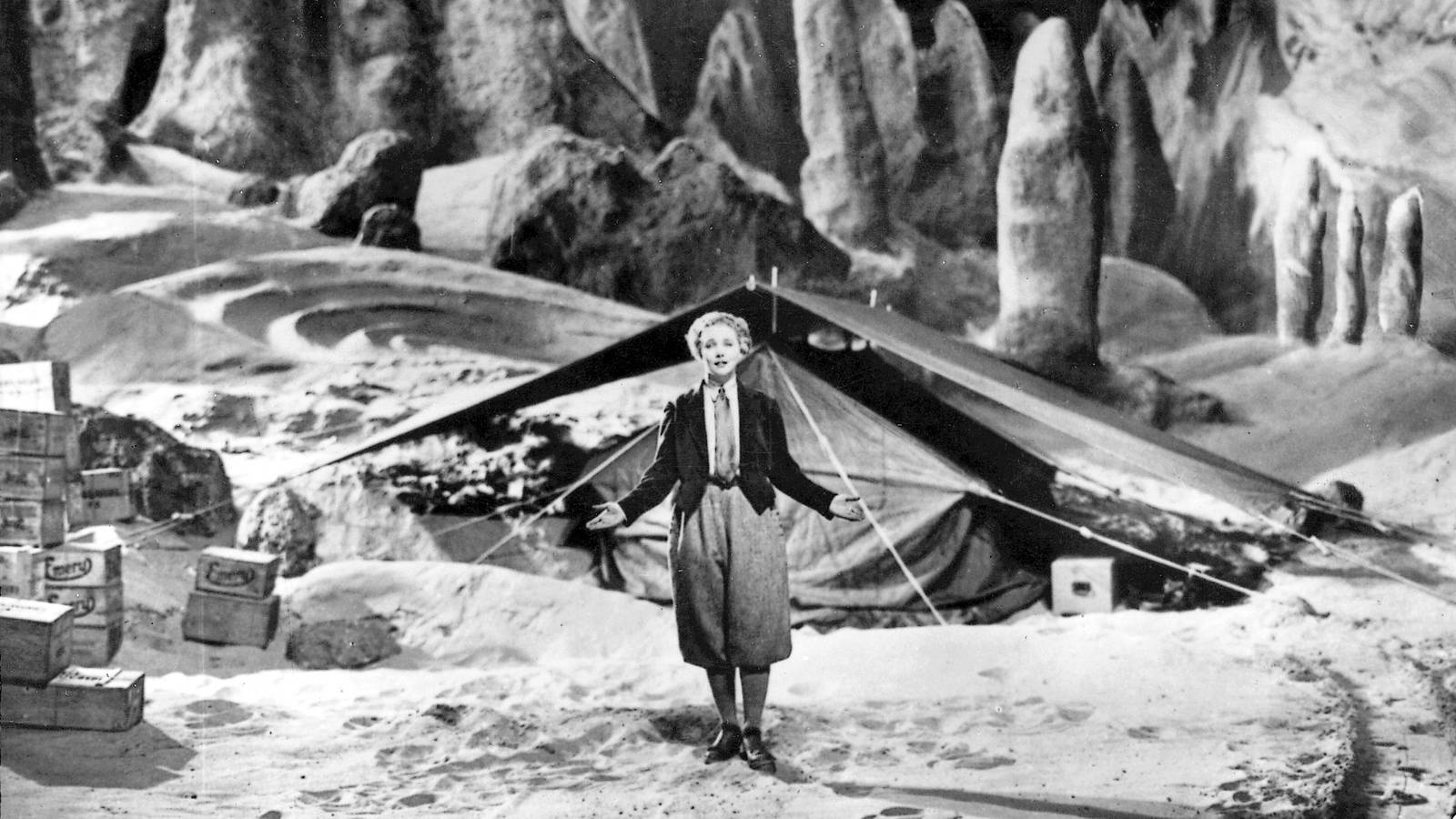
Woman in the Moon is about an entrepreneur named Wolf Heilus (Willy Fritsch) and Professor Georg Manfeldt (Klaus Pohl), who put together a team to go to the Moon, theorizing that there’s gold for the digging up there. Also going are Helius’ assistants, Windegger (Gustav von Wangenheim) and Friede (Gerda Maurus), a stowaway named Gustav (Gustl Gstettenbaur), and a spy sent by an evil gang of businessmen there to cut in on the group’s discoveries, who calls himself Walter Turner (Fritz Rasp).
This sounds like a pretty cheesy setup, and it doesn’t stop there; there’s also a love triangle between Helius, Windegger, and Friede, and the movie ends with Friede deciding to stay on the Moon with Helius for who-know-how-long, enjoying each other’s company and breathing the air that we all know exists on the far side of the Moon. Also the astronauts all wear cardigans when launching into space, probably not the kind of thing NASA considers appropriate attire.
So if Woman in the Moon is such a goofy lark, why do NASA scientists think so highly of it? Well, even though it gets some big things wrong, what it gets right is incredibly impressive given when it was made.
Woman in the Moon predicted how space travel works today
Watch the full colorized version of the movie below
Woman in the Moon came out nearly 30 years before the Soviet Union launched Sputnik 1, the first-ever craft sent into space. At the time, air travel was still new and exciting; Charles Lindbergh had just flown the first solo, non-stop transatlantic flight a couple of years prior, a flight that took him an insane 33 hours to complete. We knew almost nothing about space travel at the time, so Woman in the Moon can be excused for getting some of the details wrong.
And when it comes to the mechanics of rocket travel, Woman in the Moon was many years ahead of its time, predicting a lot of things that would become common practice in space travel decades before it was realistically possible, things like:
- The rocket ship everyone takes to the moon is built in a separate building and then moved to the launch area later, which is the standard way it’s done today so everyone can work in controlled conditions.
- Woman in the Moon is the first movie to have a countdown before launch. It’s done today to give astronauts time to synchronize themselves, Fritz Lang used it to build tension.
- The rocket ship, named Friede, takes off in a submerged pool of water, used on launch pads today to absorb extreme hard and to cut down on noise.
- The characters strap their feet to the floor to deal with artificial gravity and lay down on horizontal beds to cope with G-forces during liftoff.
- The Friede is a multistage rocket that sheds dead weight as it breaks the atmosphere, which is how a lot of space-faring ships operate now.
Woman in the Moon was so prescient that it was actually banned in its home country of Germany before and during World War II, since the Friede was similar to the government’s V-2 rocket project. So the movie thinks there’s air on the Moon. Everyone makes mistakes. So far as the rockets go, it was eerily dead-on. Of course NASA scientists would appreciate that.
Thank the nerds of the 1920s for dreaming up Woman in the Moon
They were legion then as now
Rocket scientist Hermann Oberth worked as an advisor on Woman on the Moon, which accounts for why it gets so much right about rocket science. Science writer Willy Ley also served as a consultant.
But it was Fritz Lang who had the foresight to hire those sorts of advisors at all. Lang was a huge dork who had amassed a large collection of sci-fi magazines, a hobby that Gustav also shares in the movie. He’s also the director behind 2027’s Metropolis, another visionary sci-fi movie that, not unlike Woman in the Moon, was panned by critics at the time but which went on to be very influential.
These time-travel movies actually try and get the science right
Unravel the mysteries of time travel in these scientifically-grounded movies.
NASA’s other favorite movies
If you’re wondering, NASA’s full list of picks for the best sci-fi movies ever made included, counting up from seven to one: Jurassic Park, The Thing From Another World, Woman in the Moon, The Day the Earth Stood Still, Metropolis, Contact, and Gattaca. Most of the movies on that list are from the ’50s and ’20s, which tells me that NASA is less concerned with stone-cold scientific accuracy — which no movie is really going to give you, even the ones that try to keep things grounded — and more with movies that boldly imagined the future, and Woman in the Moon definitely does that.

- Release Date
-
October 14, 1929
- Runtime
-
170 minutes
- Director
-
Fritz Lang
- Writers
-
Fritz Lang, Thea von Harbou, Hermann Oberth
-

Willy Fritsch
Wolf Helius
-
Gerda Maurus
Friede Velten
-
Klaus Pohl
Georg Manfeldt
-