





VLC media player has been the default video player for most since 2001. If you have used a computer in the last two decades, you have the orange traffic cone installed on your PC. It’s one of the first software programs I install the moment I boot any new PC. And why not? It supports any and all file types you throw at it. If you have a video, VLC will play it. No questions asked.
But like most users, I’ve been using VLC solely as a playback engine. But that was until I decided to open it without a purpose and fiddle with its menus. And I was pleasantly surprised. VideoLAN didn’t just build a player; they built a Swiss army knife of everything media, too, without any ads, bloat, or trackers found in modern counterparts.
- OS
-
Android, iOS, Windows
- Price model
-
Free, open-source
VLC media player is a free, open-source, and cross-platform multimedia player that plays most audio and video formats (like MP4, MKV, MP3, etc.), DVDs, and various streaming protocols, often without needing additional codecs.
Desktop screen recorder
You don’t need to learn OBS just to capture your screen

I can use Windows’ default Snipping Tool, but it’s too basic and often churns out choppy, laggy video. Other third-party tools like OBS are too complex for a 30-second clip, and others want to make sure everyone knows what I am using, with huge, ugly, and obstructing watermarks.
VLC bridges this gap perfectly. It offers a native, watermark-free recording engine buried in its menus. By navigating to Media -> Open Capture Device, you access a suite of input tools. But that is not it. Don’t just open the recording tool and start recording; you have to take a minute or two to tweak a few settings.
When you switch the Capture Mode to Desktop, VLC defaults to one frame per second (fps). This is useless for video. You must manually crank this up to 30fps or 60fps for fluid playback. Don’t just hit Play. Instead, click the arrow next to the Play button and select Convert. This allows you to choose a destination file and an encoding profile (like H.264 + MP3). If you skip this and stream to a raw file, you will end up with an uncompressed AVI file that eats gigabytes of space for seconds of footage.
Universal format converter
Transcode video and audio without sketchy online tools

If there’s a video that is not natively playing on your TV or smartphones, or there is a video of a song that you only need the audio of, then you have to resort to sketchy ad-filled tools and websites. But if you have VLC, you’ll never need to use anything else. VLC has a built-in media converter.
Since VLC has its own codecs, it isn’t just capable of playing files; it can rebuild them. You can find the media converter under Media -> Convert / Save. But it doesn’t just convert one file to another. VLC can change the media files on a granular level.
You can pick Audio – MP3 to remove the video part from recorded Teams or Meet calls, or pick Video for MPEG4 1080p TV/device to shrink big 4K videos into smaller files with lower quality and size, all in one step from the menu. The best part? Nothing leaves your computer; everything is done right there and stays private.
IPTV streaming client
Stream Live TV channels via network protocols

I have been on a streak of cutting subscriptions and dozens of pay-to-watch services. And VLC brought an unexpected bonus. VLC has a feature that lets you stream IPTV. There are many IPTV apps and websites for streaming free channels, but most share a common trait. Almost all of them are filled to the brim with ads. Some of them force you to watch two to three ads before you even start watching the stream, and serve you more in between.
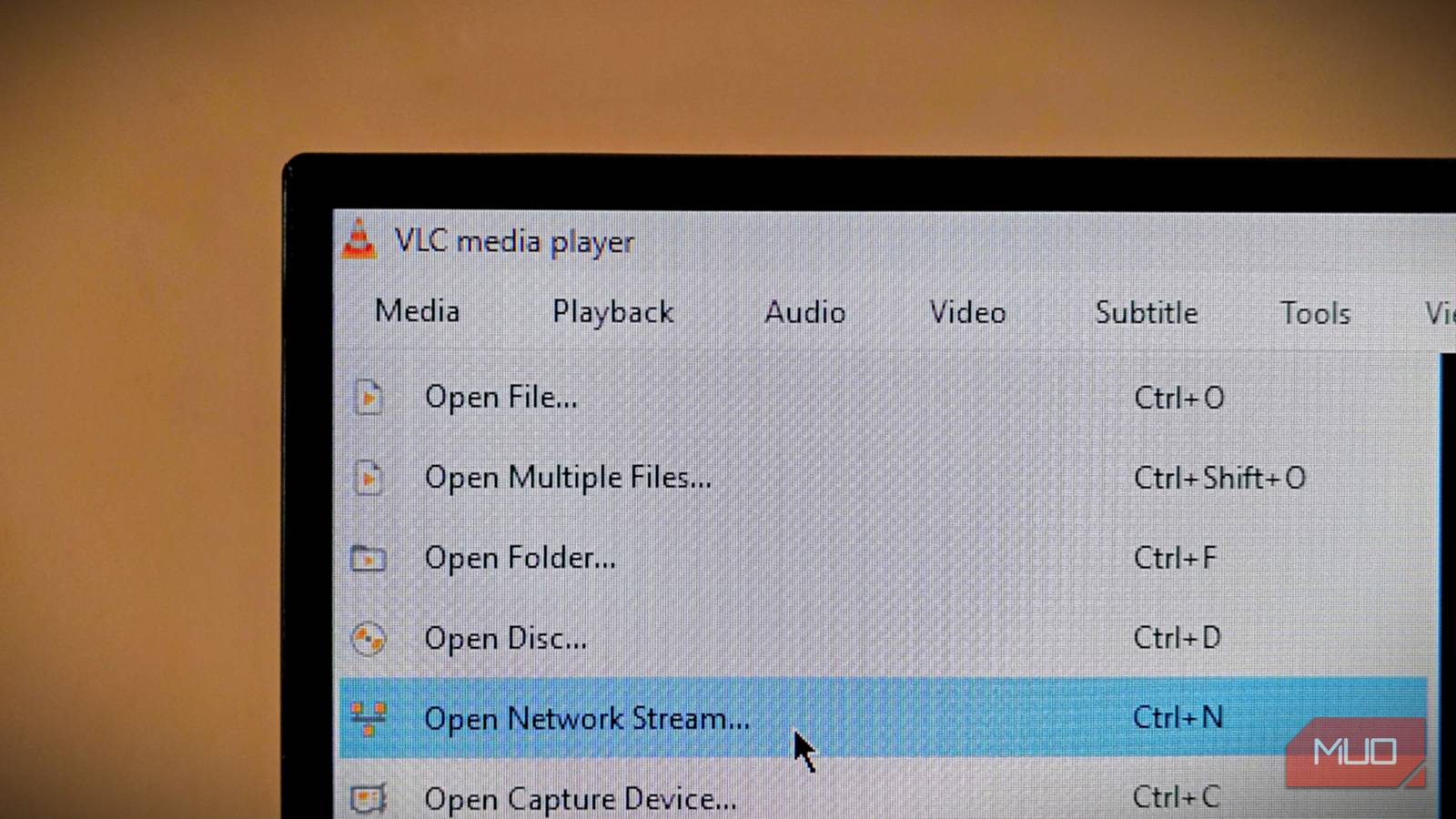
None of these are issues with VLC. With VLC’s native stream playback, you can just navigate to Media -> Open Network Stream. This allows you to paste an open-source link to IPTV streaming services like iptv-org to stream free-to-air channels within VLC media player. You can watch any free-to-air channels from around the world without any pop-up ads or tokens with one click.
Podcast Manager
Spotify and Apple Podcasts are great, but they are not just music/podcast players; they are data trackers. These and many other podcast apps track what you listen to, when you pause, and what you skip to build your profile to “serve” your content and “enhance” your data. But like me, if you want to de-Google your experience and prevent these giants from sniffing your boots, VLC offers a robust but bare-bones podcast manager.
This feature is completely invisible until you go to the View tab -> Playlist -> Internet -> Podcasts to access this feature. Adding a podcast isn’t intuitive either. To add a podcast, you will need to look for the podcast’s RSS feed (I usually prefer castos), copy the RSS link to the podcast, and then add it to VLC by clicking the Plus (+) button next to the Podcast tab on the Internet.

How to Watch Plex in VLC (and Why It’s Worth Doing)
As if I really needed another reason to love VLC.
Once added, your subscribed podcasts are staged below the Podcasts tab in VLC’s Playlists. All you need to do is click the subscribed podcast, and you will be presented with a playlist of your favorite creators’ podcasts.
The initial process does look a bit complex, and it’s not as intuitive as the other VLC features, but once you get used to it, you won’t want to use any other podcast player. It’s auto-updated whenever you launch VLC and doesn’t track you or bombard you with ads.
Make the best of VLC media player
VLC media player is the best example of legacy software done right. It survived for 25 years not because it was flashy, but because it respects the user’s intent and privacy. Moving forward, before you decide to download yet another app just to convert a media file, or you resort to a sketchy website and upload your private data, check the traffic cone first. You likely already have the tools you need.