





AI subscriptions come a dime a dozen, but few match up to what the best in the industry can offer. While most AI services like Perplexity and Gemini offer tiers starting at $20, ChatGPT has introduced a new Go tier starting at just $5 for basic access.
Now you can stack free AI chatbots so you never pay a cent for AI, but usage limits will still hamper your progress after just a few prompts. $5 a month is quite competitive considering subscription pricing from the competition. So I tried ChatGPT Go, and here’s what you actually get for your money.
Going from Plus to Go
The real differences aren’t as dramatic as they seem
I’ve been a ChatGPT Plus subscriber in the past, dropping $20 monthly on the power-user experience any time I needed it. When Go launched, the price difference was hard to ignore. Considering it’s a 75% price drop, I decided to downgrade and see if I’d immediately regret it.
The transition itself was seamless. My chat history remained intact, custom GPTs I’d created still worked, ChatGPT automations that make my day faster still function, and there were no upgrade prompts every two prompts. For all intents and purposes, you’re likely to get a similar user experience with Go as with any of ChatGPT’s other subscription tiers.
What ChatGPT Go gives you day to day
The core experience is intact, just trimmed around the edges
ChatGPT Go includes access to GPT-5, the same flagship model powering Plus subscribers. That’s the headline feature, and it matters more than you’d think. You’re not getting some watered-down older model—you’re getting OpenAI’s latest reasoning engine. The free tier’s usage limits on GPT-5 are far too low for any reasonable work, but the Go tier solves that problem.
Beyond the base model, Go throws several other features at you. You get extended image generation, file uploads for documents and spreadsheets, extended memory, so ChatGPT remembers context across conversations, data analysis using Python, and the ability to create and use Custom GPTs. Even Shopping Research, ChatGPT’s game-changing new feature for holiday shopping, works too.
The memory feature is particularly useful. When using the free tier, you’d constantly have to re-explain the project context. On Go, ChatGPT remembers your workflow across sessions. I could jump back into a conversation from a week earlier, and it would retain the relevant details without me retyping everything.
I mostly used ChatGPT Go for ideation, writing assistance, and code analysis. For drafting ideas, brainstorming concepts, and refining text, GPT-s’s more nuanced responses beat the free tier by miles. Reviewing code, suggesting optimizations, and explaining logic also works well.
You can also easily upload multiple-page documents and ask questions about specific sections with ease. The extended context window you get with the Go subscription meant it didn’t lose track of earlier arguments.
Complex data analysis is where the tier starts hitting its limits, though. It’ll breeze through straightforward CSV files with ease, but if you’re working with a complicated multi-sheet dataset requiring cross-referencing and custom calculations, the limits start showing.
There are still limits you need to account for
Heavy use exposes the boundaries faster than you might expect

As good as it is, Go isn’t unlimited—and you’ll feel it if you’re a heavy user. That is, if it’s available in your region in the first place. ChatGPT Go is only available in a select number of regions. OpenAI has a full list of regions you should check out before considering the downgrade.
The message limits are the most obvious constraints. While OpenAI doesn’t publicly specify exact numbers, I could send 10 to 15 messages on average in a three-hour window during peak hours. This might sound crippling, but I rarely hit these limits with my research or writing work.
As long as you’re crafting thoughtful prompts, letting the model think, and not machine-gunning questions, you’re good. Building one ChatGPT prompt that works for any scenario can help, especially if you’re using the AI service for repetitive tasks.
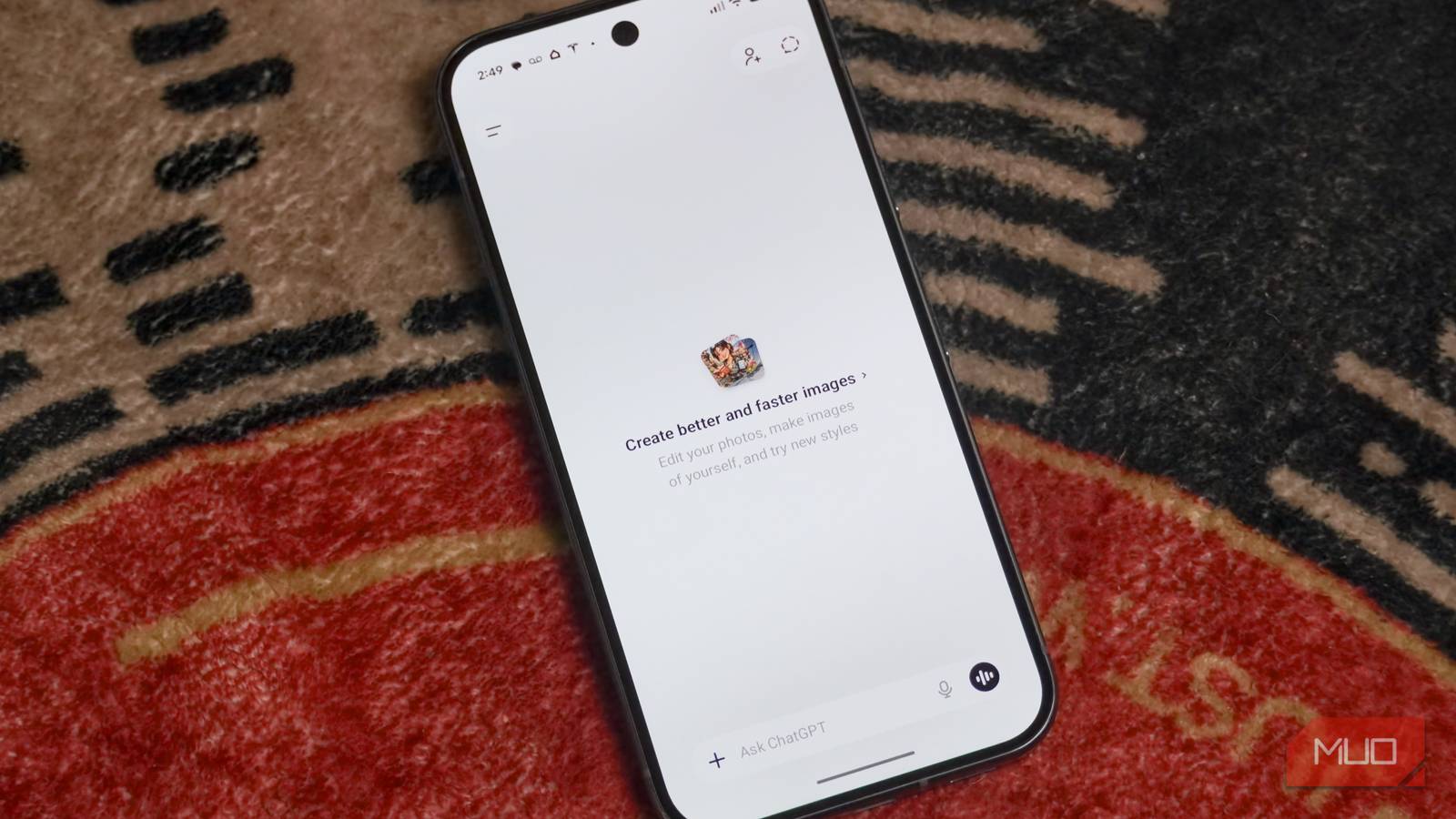
Image generation also comes with a daily budget, although it’s more inconsistent compared to text conversations. The most I was able to generate in a day was 10 images before ChatGPT refused to output more images. For someone doing light creative work or making the occasional AI-generated photo, that’s fine. For a designer pumping out variations? Go won’t cut it.
File uploads are also expanded compared to the free tier, but still capped. That said, I never hit the limit during normal use, though if you’re uploading massive datasets regularly, Plus is the better option.
The most significant missing feature, however, is Sora, OpenAI’s video generation tool. If you need to create videos from text prompts, Go is a non-starter. Deep Research, another advanced feature that lets ChatGPT autonomously investigate topics, is also exclusive to Plus and above. Although Go does include limited deep research capabilities.

You also lose model flexibility. With Plus, you can switch between GPT-4o, GPT-4 Turbo, and GPT-5 depending on the task. Go locks you into GPT-5 primarily. This isn’t much of an issue, especially if you’re not the type to use specific models for specific tasks. Most of the time, GPT-5 is more than enough for any task you throw at it. But if you do like specific ChatGPT models, Go might not be enough.
Last but not least, you might experience more throttling than the Plus plan at times, especially during peak hours. Responses are usually instant, but if you catch ChatGPT at a busy time, you’ll be waiting longer than Plus subscribers, but less than free tier users. Most questions get answered within a couple of seconds, and for $5 a month, this is understandable.
Finally, a sensibly priced AI subscription
ChatGPT Go finally matches what most people actually use AI for
ChatGPT Go makes perfect sense if you’re a student, freelancer, or anyone hitting the free tier’s limits but not needing enterprise features. The price is genuinely compelling, and you get just about everything in the Plus tier at a quarter of the cost.
Additionally, if you’re in a region with Go’s 12-month free promotional offer (like India or select Asian countries), there’s literally no reason not to activate it now. You get a full year to try it risk-free, and by the time you’re charged, you’ll know exactly whether it’s worth keeping.
With OpenAI considering putting ads in ChatGPT, the free tier might offer better value in the future. But at just $5 per month, ChatGPT Go is the most accessible entry point into premium AI assistance. It won’t replace the Plus subscription for power users, but for the vast majority of people who just want faster responses, better memory, and access to GPT-5 without message caps every few minutes, it’s an absolute steal.