



YouTube dominates online video. There is no other site with as much free video content; YouTube is incomparable in this department. But that doesn’t always mean what you find on YouTube is the best quality content. There are numerous other video streaming sites focused on user uploads that provide arguably better viewing experiences, with greater depth of content, often covering topics deemed too controversial for YouTube (rightly or wrongly).
It’s hard to judge the outright best streaming platform. Most folks will default to YouTube because it’s become so embedded in our daily lives. It’s on our smartphones, smart TVs, tablets, smart home hubs, and more; it’s a cultural phenomenon that keeps growing. But if you’re tired of the increased ads, content policy changes, shady strike system, and more, it’s time you gave one of these YouTube alternatives a go.
One of the longest-running YouTube alternatives
Dailymotion is one of the longest-running video platforms outside of YouTube, and it still attracts a large global audience thanks to its mix of professionally produced clips, publisher content, and independent creators. I find Dailymotion to be a good mixture of curated and editorial-style video uploads, and in that, it’s similar to YouTube’s mixture of content. But you’ll find news highlights, entertainment segments, music videos, sports recaps, interviews, and documentary shorts from major media partners alongside creator channels, which makes Dailymotion easy and familiar to use.
One notable difference is that Dailymotion feels less US-centric than YouTube, with more variety in its default broadcasters and channels. I can’t specifically verify this with any stats, but it also feels like there are fewer overblown reaction videos and creator drama that drives parts of YouTube, which I appreciated.
However, there are some small issues here and there. For example, clicking Dailymotion’s default Fun tab revealed videos titled “Double Weather Emergency: Cyclone Hits WA, 700mm Rain for Queensland”, “Ukraine Bombarded Overnight as Zelenskyy Heads to US”, and “Europe’s Defense Just Leveled Up: Inside the UK-Germany $72M Artillery Pact”. Now, I don’t know about you, but that’s not fun.
Live streaming, live gaming, 24/7

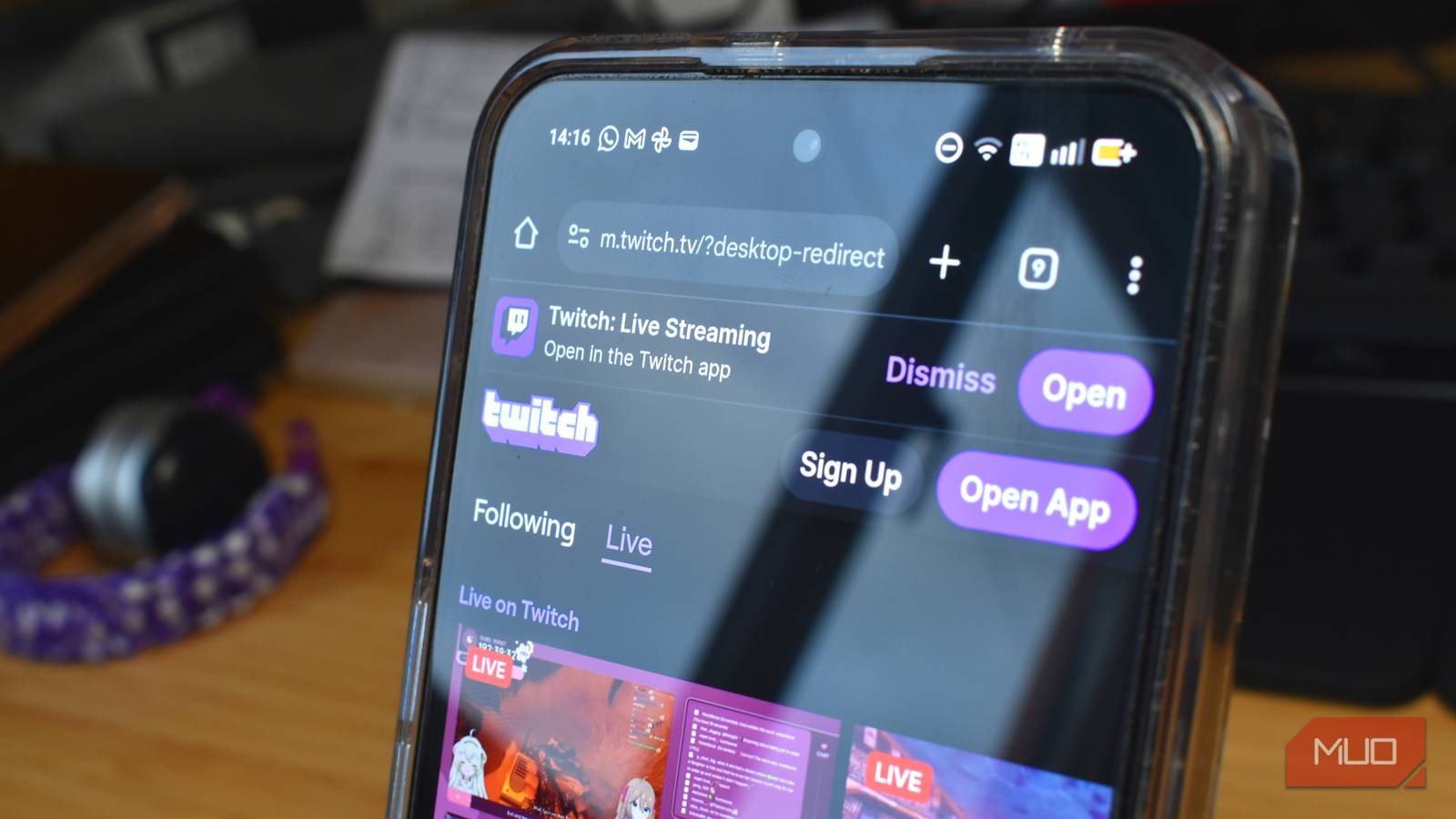
According to Statista, Twitch has over 7 million active streamers, with some estimates putting the number above 8 million. Either way, Twitch remains the world’s largest live streaming platform, best known for its enormous range of gaming content, but now with a considerable amount of real-time content such as music performances, creative streams, talk shows, live podcasts, coding sessions, IRL travel streams, and esports events.
Twitch is all about live-streaming versus YouTube’s heavier focus on video uploads. Its videos revolve around interaction, with viewers chatting with streamers in real time, taking part in polls, sending emojis, and so on. YouTube has caught up with Twitch in many ways, but for most gamers, Twitch remains the go-to.
Browsing Twitch feels very different from YouTube because discovery is built around live categories, featured channels, and game or topic directories, rather than algorithmic recommendations. Streams can run for hours at a time, and the focus is as much on personality and atmosphere as it is on the content itself. Replays and highlights are available, but the experience is still primarily about being there “in the moment.”
Free speech and almost any topic goes

Rumble is a video-sharing platform that has grown rapidly in recent years, thanks to its focus on creator monetization and its more relaxed approach to content moderation compared to YouTube. It covers a broad mixture of content, including commentary channels, podcasts, news shows, gaming streams, tech reviews, fitness content, and lifestyle creators, with a rapidly growing live-streaming section.
Rumble feels more personality-driven than YouTube, given that many creators who have been pushed off the platform have ended up here instead. That makes Rumble a great place to find alternative viewpoints on a wide range of topics, along with discussion-based content you won’t find on YouTube, and perhaps any other platform, too.
Navigation feels familiar if you’re used to YouTube, with recommended feeds, channel pages, and subscription tools, but Rumble places stronger emphasis on independent creators and long-form talk content.
Decentralized, federated, video sharing

I’ve always been interested in the concept of PeerTube. It’s basically a decentralized video platform that operates as a “federated” network of thousands of independently run servers (called instances). Each instance hosts its own community and content focus, from tech and education to activism, gaming, and niche creative projects, but many can still interact and share videos across the wider network via ActivityPub.
Because there’s no single algorithm or corporate platform sitting on top, PeerTube tends to feel more like a collection of community spaces than a commercial video site. You’re encouraged to choose an instance that aligns with your interests or values, and moderation is handled locally rather than dictated by a global policy team. There are no intrusive ads, no engagement-driven recommendations, and no monetization rules that shape how creators produce content.
That freedom can make PeerTube feel sparse at times, especially if you are specifically looking for those big-budget YouTube-style videos, but overall, it reminds me more of early YouTube than anything else. In that, PeerTube is worth using if you’re interested in open-source platforms, value digital independence, or want to support smaller creator communities that exist outside mainstream algorithms.
Thanks for coming to my TED Talk

Everyone has heard of TED Talks at this point. It even has its own meme to with long-winded rambling social media posts wound up with “thanks for coming to my TED Talk,” such is the platform’s impact on conversational and essay-like video content. And that’s the focus of TED Talks: short, ideas-driven talks from experts, researchers, innovators, authors, activists, and creatives from around the world.
Most videos are recorded at TED and TEDx events, and they’re typically structured as focused, 10–20-minute presentations that aim to explain a concept, challenge perspectives, or share personal insights across a huge range of topics, including technology, psychology, science, design, education, health, culture, and social issues.
TED Talks are a different proposition from YouTube. The whole platform is focused on thoughtful, curated content rather than the free-for-all we have on YouTube, and that makes a big difference to the overall feel. There is also no algorithm pushing endless recommendations, and most videos are designed to stand alone rather than feed into long series, which paradoxically makes it feel more personal to me; without being bombarded, it’s easier to choose new topics.
Everything is vertical now

Facebook and video content have always had a tumultuous relationship. It’s always been one of those things that Facebook believes it should be doing, but has never specifically nailed down a specific focus. But if YouTube is doing it, it should also be doing it, right? That was what Facebook Video was. But now everyone loves vertical video reels that never end, courtesy of Instagram and TikTok. So it only makes sense to force every video on the platform to do the same, right?
That’s the status of video on Facebook at the start of 2026. In September 2025, it switched to a Reels-only focus, with any video uploaded pushed into this format. Reels appear throughout the Facebook feed and in a dedicated Reels tab, mixing clips from creators you follow with recommended content from across the wider platform, with a healthy pinch of content either reused or directly stolen from TikTok, Insta, and so on.
As Facebook Reels interact with the “social graph,” you’ll often see content that overlaps with your interests, local area, or existing communities, rather than purely influencer-driven feeds. Comments, reactions, sharing, and group reposts also play a much bigger role than on most short-form platforms, which can make discovery feel more social and conversational.
Old movies, shows, and content galore

Let’s round this list up with the most underrated entertainment site on the whole internet: The Internet Archive. It’s not an entertainment site in the traditional sense, but I do think its range of video content (and other content) is broad, encompassing huge slices of films, TV recordings, documentaries, public domain media, educational videos, home movies, news broadcasts, and historical footage spanning decades.
Its video section feels like a time capsule of online and broadcast history, with everything from vintage commercials and classic cinema to government training films, early web videos, live music recordings, and restored archival footage uploaded by libraries, researchers, and preservation groups. It can feel more like exploring a digital museum rather than a straight-up video streaming platform, but that’s what makes it a wonderful option.

I Love Watching YouTube, but It’s Getting Worse in These 8 Ways
YouTube just isn’t what it used to be, despite how many hours I still spend watching it.
What’s the best YouTube alternative?
There isn’t a single “best alternative to YouTube,” as everyone wants to watch different video formats, genres, and so on. For example, some folks love Facebook’s never-ending stream of videos, while others will love Twitch’s non-stop gaming content, and so on. In the end, it’s all about finding what you want to watch and the platform you can access it on, especially given some of YouTube’s well-documented demonetization and deplatforming issues.
I should also note that some video platforms have been removed from this list as they no longer fit the brief. Vimeo is still a useful site for professional video hosting, but it has moved to a more premium model and doesn’t offer many forward-facing search tools for its free content. DTube is now filled with AI-slop and other pointless content and has long forgotten its decentralized roots, and other platforms like Playeur have drifted away from their initial promise or been decommissioned, like the Open Video Project.
Overall, you’ll do best with a mixture of platforms rather than putting all of your eggs in one basket.