






If you want to learn about science, your best bet is to read a textbook. The problem with that is that it’s boring. If you want to be entertained, you should watch a sci-fi TV show, but precious few of those are going to really teach you anything about how our world actually works. Usually, “fiction” is more important than “science.”
And most of us know that going in, it’s not as though Star Trek thinks that everything in that franchise is stone-cold accurate. But there are some rare sci-fi shows that do try to get the details right. We’re here to honor them.
The Expanse
Accurate enough
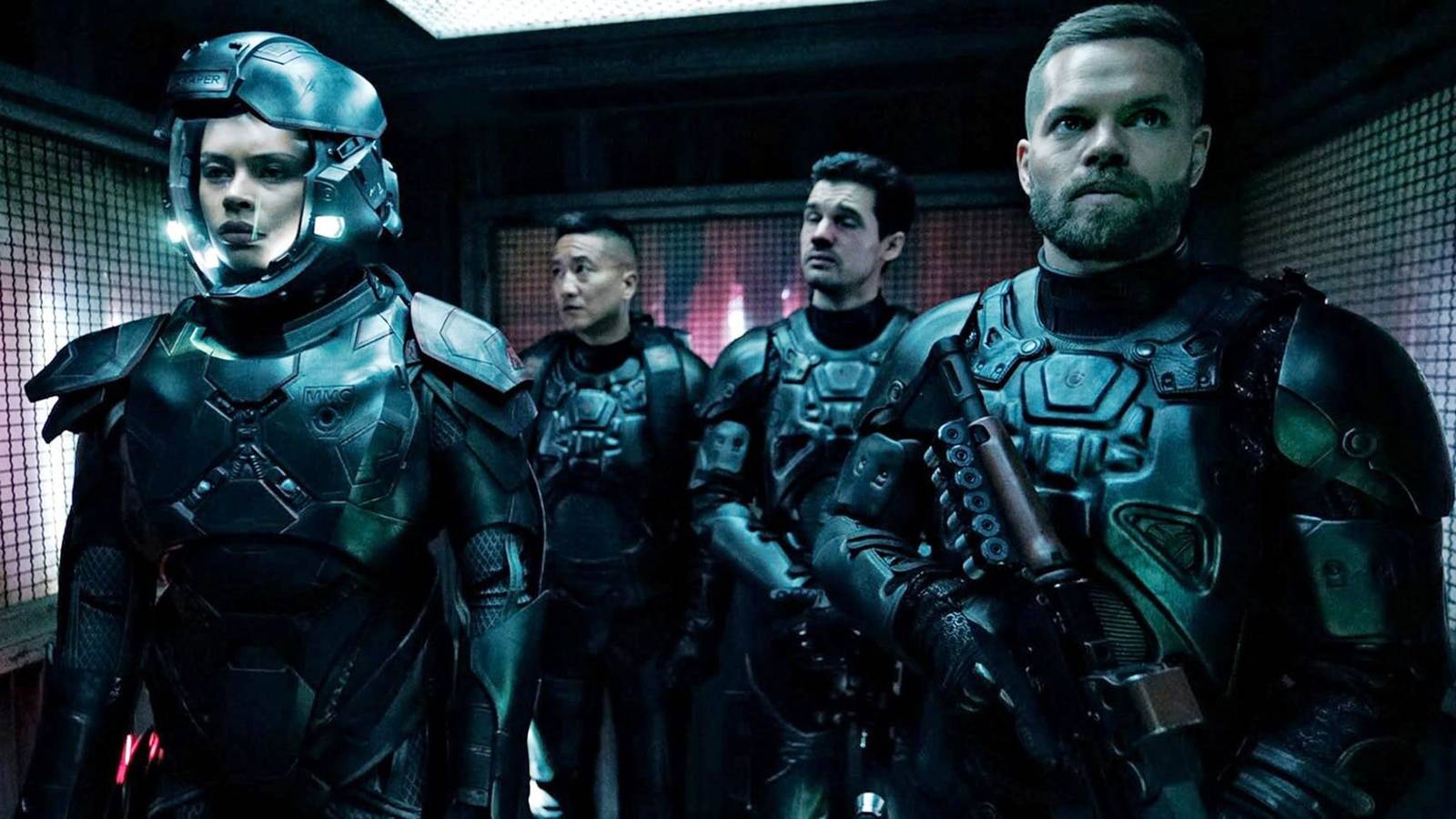
You can’t have a list of science-accurate sci-fi shows without including The Expanse, a six-season odyssey set in a future where the human race has spread out to live not just on Earth but also on Mars and on the asteroid belt. The show is based on a book series by James S. A. Corey, who did their best to make the science at least appear plausible. Thanks to multiple science consultants (and showrunner Naren Shankar had a Ph.D. in applied physics and engineering), the show gained a reputation for scientific accuracy.
One example is that, in The Expanse, humans born in the asteroid belt can’t handle Earth’s gravity because their bodies haven’t evolved to withstand it. The show pays attention to how spaceships would realistically behave when negotiating the gravity around planets and planetoids. There are communication delays when talking over vast distances between planets. The examples go on and on like that.
The Expanse does invent some quasi-magic sci-fi devices that feel a little closer to Star Trek. The Epstein Drive, for example, allows fast travel throughout the solar system. How does it work? Don’t worry about it. But this show is still way more accurate than most sci-fi series out there.
- Release Date
-
2015 – 2022-00-00
- Network
-
SyFy, Prime Video
- Showrunner
-
Naren Shankar, Mark Fergus, Hawk Ostby
- Directors
-
Breck Eisner, Jeff Woolnough, David Grossman, Kenneth Fink, Rob Lieberman, Terry McDonough, Thor Freudenthal, Bill Johnson, David Petrarca, Jennifer Phang, Mikael Salomon, Sarah Harding, Marisol Adler, Anya Adams, Nick Gomez, Simon Cellan Jones
- Writers
-
Georgia Lee, Robin Veith, Hallie Lambert, Matthew Rasmussen, Ty Franck, Naren Shankar, Mark Fergus, Hawk Ostby, Daniel Abraham, Dan Nowak

For All Mankind
Fake historical accuracy
For All Mankind has my vote for the most underrated sci-fi show currently on the air, and a big part of that is its commitment to keeping things grounded in real-world science. It’s about an alternate reality where the space race between the United States and the Soviet Union in the 1960s never stopped. Because the original space race helped develop technologies we still use today, like GPS and CAT scans, For All Mankind reasons that a never-ending space race would help us leap even further ahead, so we have, for example, commonplace video calls in the 1990s, long before we actually got FaceTime in our world.
Each season of For All Mankind jumps forward several years, so we keep seeing how technology evolves. We spent time with NASA engineers on the ground as well as astronauts in space, a lot of them working together to advance technology bit by bit. Many of the designs are based on actual NASA concepts, and even as the series moves further into the future and becomes more speculative, it strives to remain rooted in our reality.

- Release Date
-
November 1, 2019
- Showrunner
-
Ronald D. Moore
- Writers
-
Ronald D. Moore, Matt Wolpert, Ben Nedivi
ReGenesis
Welcome to “near-fi”
Regenesis is a Canadian series about the North American Biotechnology Advisory Commission (NorBAC), a fictional organization tasked with responding to threats such as bioterrorism, mysterious diseases, environmental changes, and other problems with a scientific dimension. This procedural was hailed for its dedication to scientific accuracy, not just getting the technical details right but diving into the ethical dilemmas around subjects like cloning and gene therapy.
Regenesis doesn’t have the production values of The Expanse or For All Mankind, but the writing is so solid that it’s endured to this day. It’s a good example of “near-fi,” which is sci-fi that deals with technology that could plausibly come along in the near future

5 great sci-fi movies that no one talks about
These overlooked sci-fi films will take you on a thrilling journey through unexplored worlds and thought-provoking themes.
Planetes
Beware space litter
Planetes is a two-season anime series that aired in the mid-2000s. It’s about a crew tasked with clearing up space debris to prevent damage to satellites, spacecraft, and space stations, a growing problem in our world as we send more and more stuff into orbit. The show may be set in outer space, but the fact that the characters are mostly working stiffs just trying to do their jobs makes the show feel very down-to-earth.
What’s more, the series is careful about depicting how junk collection in space would actually work, with attention paid to stuff like the effects of weightlessness and the need for propulsion to make orbital changes. Planetes is some excellent hard sci-fi.

- Release Date
-
2003 – 2004-00-00
-

Kazunari Tanaka
Hachirouta Hoshino
-
-
Takehito Koyasu
Yuri Mihailokov
-
Ai Orikasa
Fee Carmichael
Mr. Robot
Hack away
Mr. Robot is another example of near-fi; the world that super-hacker Elliot (Rami Malek) moves in is a lot like ours, but not quite; it’s a bit more dystopian and cyberpunk. The story follows Elliot as he joins a group of hacktivists trying to take down a corrupt global corporation.
The show has been lauded for its realistic depiction of hacking. The characters use actual tools like Kali and Metasploit, and the show knows that social engineering — that is, manipulating people themselves rather than the systems they maintain — can be just as important to hacking as manipulating code.
That said, while the methods are often sound, the speed at which Elliot can pull off complex hacking operations tends to be unrealistically fast, but I guess that’s why he’s a prodigy.

- Release Date
-
2015 – 2019
- Network
-
USA Network
- Showrunner
-
Sam Esmail
- Directors
-
Jim McKay, Christoph Schrewe, Niels Arden Oplev, Nisha Ganatra, Tricia Brock
- Writers
-
Sam Esmail, Adam Penn, Randolph Leon, Kor Adana, Robbie Pickering, Lucy Teitler, Kate Erickson
Firefly
Hear me out
Firefly is a one-season (plus a movie) sci-fi series about a crew of mercenaries living aboard a banged-up spaceship taking jobs where they can. It’s basically a “space western”…and one of the characters is a psychic. You might think that doesn’t sound particularly realistic, and you’re right, but the truth is that there aren’t a ton of shows out there that really care overmuch about scientific accuracy. Firefly does at least try. For instance, it knows that sound does not exist in the vacuum of space; there’s just an eternity of deadly quiet. All of the other shows on this list that are set in space pick up on that.

- Release Date
-
2002 – 2003-00-00
- Network
-
FOX
- Showrunner
-
Joss Whedon
- Directors
-
Allan Kroeker, David Solomon, James A. Contner, Marita Grabiak, Michael Grossman, Tim Minear, Vern Gillum
- Writers
-
Cheryl Cain, Drew Z. Greenberg, Jane Espenson
-
Nathan Fillion
Mal Reynolds
-

Gina Torres
Zoë Washburne
-
Alan Tudyk
Hoban Washburne
-

Morena Baccarin
Inara Serra
Realism is great, but…
Sci-fi shows that try to get the science right are rare, but they do exist. It’s the same with movies. But that doesn’t mean the more fantastical sci-fi shows can’t be fun anyway. What about a sci-fi comedy like Murderbot? How about a slow-burning sci-fi epic like Star Wars: Andor? Realistic or not, there’s value to be gleaned from all of them.